


Accessories for smoking


- Available


- Available


- Available


- Available


- Available


- Available

- Available


- Available



Buy incense accessories: incense pans, incense charcoal and containers for every method
If you want to burn resins, herbs or woods, you need the right tools – from the incense burner and incense charcoal to the right container for the burner. This page shows you which incense accessories you need for which method and what really matters when it comes to materials and handling. Whether you’re burning pure resins and incense for the first time or expanding your setup for the Twelve Days of Christmas – the accessories determine the result.
An overview of incense-burning methods: charcoal, tea light holder or incense stick holder?
- Direct embers for intense heat
- Ideal for resins, woods and blends
- Requires a smudging pan, sand, tongs and charcoal
- Burning time approx. 30–45 minutes per tablet
- Most intense smoke and aroma
- Gentle smouldering at a lower temperature
- Ideal for delicate herbs and sensitive incense
- Requires a tea light holder with a sieve and a candle
- More continuous, even fragrance
- No charcoal – gentler on delicate incense
- The simplest method for pre-pressed incense
- Only a holder is needed – no charcoal, no sand
- Ideal for incense sticks and cones
- Minimal effort, great for everyday use
- Mobile incense burning in larger rooms
- Smoke is actively dispersed by swirling
- Traditional, ceremonial use
- Brass with chain, various sizes
Incense burners: a comparison of materials: brass, soapstone, clay and more
| Material | Suitability | Properties |
|---|---|---|
| Brass | Classic | Robust, heat-resistant, polished or antique patina – a long tradition in incense burners |
| Soapstone | High quality | Natural heat retainer, handcrafted, even heat distribution – comfortable to hold |
| Clay | Entry-level | Lighter, affordable entry-level option, various shapes and patterns – decorative and functional |
| Cast iron | Robust | Excellent heat retention, durable, heavier – best suited to fixed locations |
Brass incense burners are particularly suitable for festive or ceremonial occasions – for example, for house blessings during the Twelve Days of Christmas or for atmospheric rituals. Due to its natural heat-conducting properties, soapstone is the first choice when it comes to slow, even smouldering. Clay incense burners, on the other hand, offer an affordable entry-level option with a decorative look.
What you need for burning incense on charcoal

Anyone wishing to work with incense charcoal needs a manageable yet well-thought-out basic kit. At its core, it consists of five elements:
- Incense burner or incense bowl – the base vessel made of brass, soapstone, clay or cast iron. An incense burner with a wooden handle allows you to move around rooms whilst burning incense.
- Smoking sand – is placed in the bowl before the charcoal is added. The sand does not conduct heat and protects the vessel from overheating. Never place charcoal directly on the base of the vessel.
- Incense charcoal – quick-lighting tablets with a diameter of 27–40 mm are the most common. Burning time per tablet approx. 30–45 minutes. The charcoal contains calcium nitrate as an ignition agent and begins to spark when lit by a candle or lighter.
- Tongs – for safely lighting and positioning the charcoal in the bowl. A short, heat-resistant pair of metal tongs is essential.
- Spoon – for adding measured quantities of incense woods, resins or incense blends. A small brass spoon or soapstone spoon is practical and suitable.
A brass incense swivelling vessel is a suitable alternative for mobile incense burning and larger rooms – it allows the smoke to be actively dispersed by swivelling and is known from ceremonial traditions worldwide.
Getting started or expanding your collection: Which set is right for you?
A soapstone bowl or a simple clay burner forms the basis. Add incense charcoal, a small spoon and a pair of tongs – everything you need for your first incense sessions. For anyone who simply wants to get started with incense herbs and incense.
A brass incense pan with a handle for home use, complemented by a handmade soapstone mortar for grinding your own resins and herbs. Ideal for anyone who wants to develop their own incense blends or work specifically with individual resins.
A brass incense swing vessel – rustic or polished – for the Twelve Days of Christmas, rituals or the atmosphere of a medieval market. Complement it with matching incense sets for the Twelve Days of Christmas or with frankincense and resins for the full effect.
The incense burner and the sieve method: gentle burning without charcoal
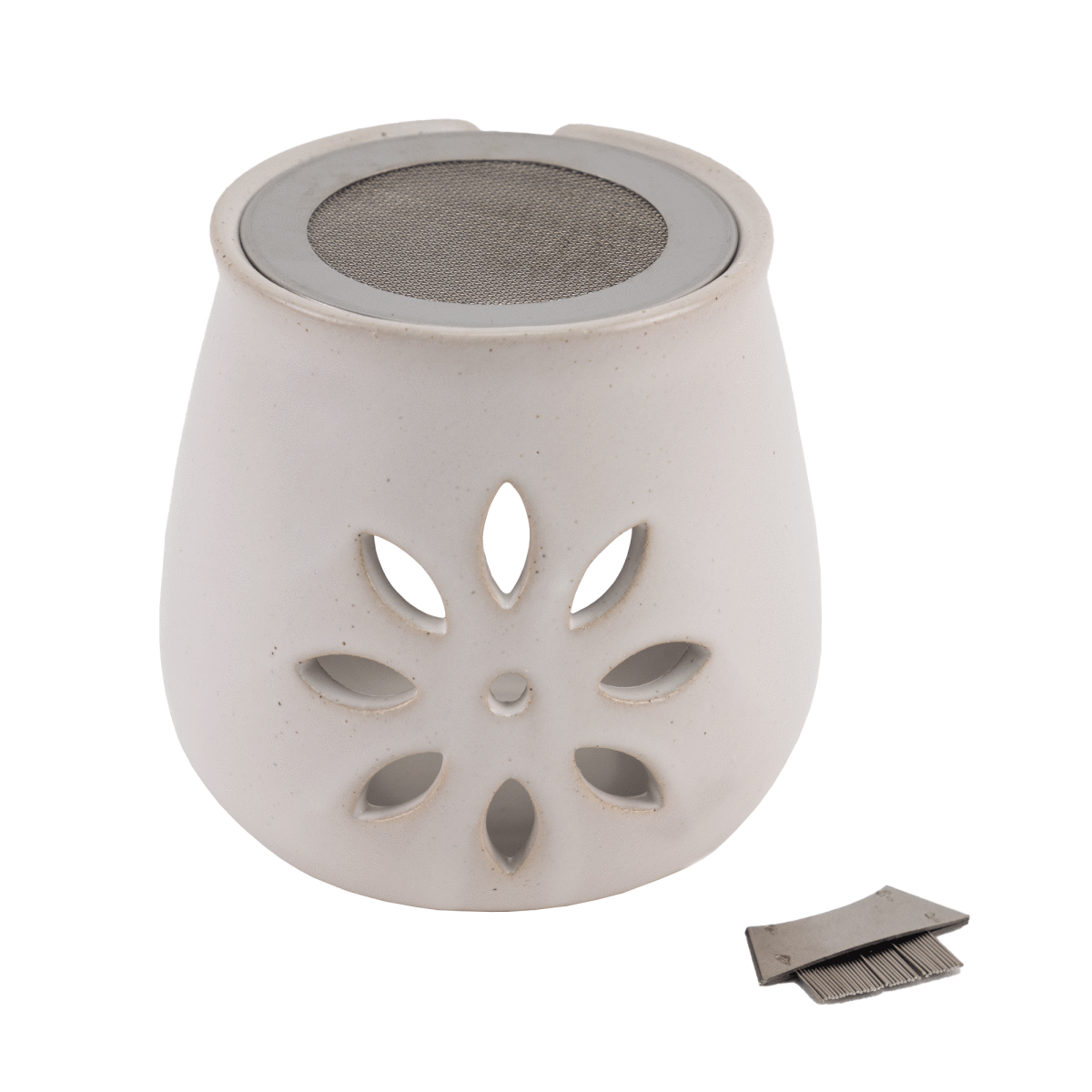
The incense burner is a vessel with a fine metal sieve and a candle underneath. The heat from the candle – no embers, no charcoal – is sufficient to slowly cause delicate herbs and certain resins to smoulder. This method is particularly suitable for delicate incense such as lavender, mugwort or fine herbal blends, which would burn quickly on hot charcoal and lose their scent.
A beeswax candle is recommended: it burns for a long time, evenly, and has a natural, warm scent of its own – without synthetic additives. The incense smoulders slowly and continuously in the sieve, producing a lingering, less intense scent than the charcoal method.
Important: Not all incense is suitable for the tea light holder. Resins such as frankincense or benzoin, as well as thick wood shavings, require more heat – in these cases, the charcoal method is the better choice. The tea light holder is not a complete substitute for charcoal, but rather a complementary method for a different range of incense.
Incense pans and swing vessels: for home incense burning and the Twelve Days of Christmas

The incense pan with a handle is the classic tool for home incense burning: you light the charcoal, add incense and walk through the rooms with it. This is the traditional method, as practised for centuries during the Twelve Days of Christmas, cleansing rituals and festive occasions. The version with a Flower of Life ornament in brass combines function with a spiritual symbol.
The swinging incense burner with chain is the portable version: by swinging it, the smoke is actively distributed throughout the room and reaches even the furthest corners. Variants range from highly polished brass to a rustic antique look – depending on your taste and the occasion. The swinging chain allows the burner to be hung up.
After burning incense, ensure the room is well ventilated: opening windows and allowing the room to air for approx. 15–30 minutes allows the smoke to dissipate and the air to become fresh again. This is particularly important for children, the elderly and pets: do not burn incense in enclosed spaces for longer than necessary and ensure adequate ventilation.
Using incense charcoal correctly: step by step
Handling incense charcoal tablets is easy once you know the sequence:
- Hold the charcoal with tongs – never with your fingers, as the tablet sparks when lit.
- Hold a lighter or candle to the edge until the charcoal begins to spark and glows evenly.
- Place the charcoal on the smoking sand in the tray – the sand protects the container from the heat. Never place it directly on the bottom of the container.
- Wait briefly until the surface of the charcoal turns white-grey – only then is it fully glowing and ready.
- Add the incense in small amounts – a small spoonful is enough to start with. Too much at once produces acrid, unpleasant smoke.
Common mistakes: placing charcoal directly on the bottom of the vessel, adding too much incense at once, poor ventilation in the room. If you prefer natural charcoal without a quick-lighting agent, you can use this as an alternative – but the process takes longer and requires more patience when lighting.
Whether you’re burning incense for the first time or specifically expanding your setup for the Twelve Days of Christmas – the right incense accessories make the difference between acrid smoke and a pleasant, fragrant experience. Take a look at the products in this category and combine them with the matching incense from our related categories.
Frequently asked questions
First, fill the pan with some incense sand so that the heat from the charcoal does not act directly on the vessel. Light the incense charcoal tablet with tongs and a lighter, place it on the sand and wait until the surface turns white-grey. Only then should you add small amounts of resins, herbs or incense blends to the glowing charcoal. If you have a smoking pan with a handle, you can walk around the room with it and direct the smoke where you want it.
Hold the incense charcoal tablet with metal tongs and hold a lighter or candle to the edge until it sparks and begins to glow. Place it on the incense sand in the bowl or pan – never directly on the bottom of the container. Wait until the surface is completely white-grey before adding incense. Quick-light tablets have a diameter of 27–40 mm and burn for approx. 30–45 minutes.
Yes – using a small incense burner with a candle underneath, delicate herbs such as lavender or mugwort can be gently smouldered. This method works well for delicate incense that burns quickly on hot charcoal. For resins such as frankincense or thicker wood shavings, however, the temperature of the candle is usually not sufficient – in this case, the charcoal method is the better choice.
After burning incense, it is advisable to open the windows and air the room for approx. 15–30 minutes. This allows the smoke to clear and the air in the room to be refreshed. Particular care should be taken with children, the elderly and pets, and one should not burn incense for too long in enclosed spaces.
As a general rule, you should not burn any unknown plants or materials, as some substances can produce toxic fumes. Certain woods, such as yew or oleander, are poisonous and must not be burned. Also to be avoided: synthetic materials, treated wood or plastic parts. If you want to be on the safe side, only buy products specifically labelled as incense.