



Medieval buckles for belts and bags


Belt buckles are among the most commonly found metal objects from the Middle Ages — hardly a belt, bag or strap was complete without one. Anyone who puts together their own garments or makes a belt from vegetable-tanned leather needs the right buckle: functional, historically accurate and made from the correct material. Here you will find buckles sorted by strap width — from narrow bag fastenings to wide weapon belts.
Belt buckles in the Middle Ages: history and significance

Buckles are not a medieval invention — they can be traced back to antiquity. In Roman times, solid frame buckles made of iron and bronze fastened military belts and pieces of armour. In the early Middle Ages, buckles remained rather rare at first; many belts were instead secured with garment fastenings, strap ends or simple knots.
From the High Middle Ages onwards, frame buckles became widespread among the general population — finds made of bronze, brass and iron attest to their diversity. The belt buckle was far more than a piece of jewellery: it was a technical tool that fastened belts, secured pouches and attached straps to pieces of armour. Rich examples with chiselled frames or elaborate gilding show that buckles were also status symbols — simple iron buckles, on the other hand, served everyday purposes in crafts and agriculture.
A frequently asked question: did Vikings even have belt buckles? The answer is nuanced. The Nordic warriors of the 8th–10th centuries preferred to use belt hooks made of bronze or iron — the actual frame buckle only became the dominant solution during the High Middle Ages. Anyone wishing to create a historically accurate Viking-era belt is therefore more likely to opt for a belt hook than a classic pin buckle.
Buckles for bags, footwear and other strap applications
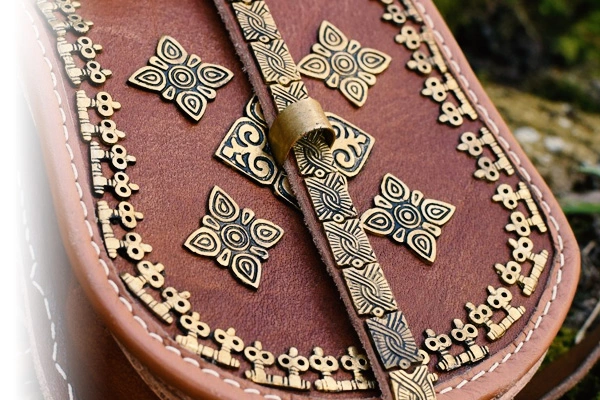
For medieval bags and satchels, narrow buckles with an internal width of up to 20 mm are usually used. The strap on the bag flap is generally kept narrow — a buckle that is too wide looks out of proportion and is rarely attested historically. For belt bags with a flap, a simple oval or D-shaped frame buckle without excessive ornamentation is recommended.
Arm and leg guards are fastened to the body with straps and buckles. Here, sturdy buckles with a slightly wider frame are required — usually in the 20–30 mm range. The buckle must withstand repeated stress when putting on and taking off the armour; brass or bronze have a clear advantage over zamak in this regard.
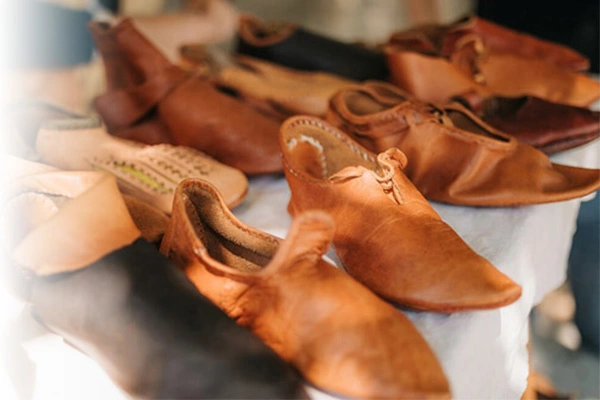
Historical buckle shoes use very small buckles with an internal dimension of less than 15 mm. The leather of the shoe strap is correspondingly thin — the pin must be able to pierce the leather cleanly without damaging it. Delicate frame buckles are particularly suitable for shoe fastenings, as they do not visually overload the appearance of the shoe.
Buckles are also used on sword scabbards, shield straps and quivers. The width and strength of the required frame vary greatly depending on the application. As a rule of thumb: the more tensile force the strap has to withstand, the more robust the buckle frame should be — and the more important the choice of the right material becomes.
Materials: brass, bronze, zamak — which is historically accurate?
| Material | Suitability | Historical context |
|---|---|---|
| Brass (copper-zinc) | Reenactment | Widespread from the High Middle Ages onwards, cheaper than bronze, warm golden appearance |
| Bronze (copper-tin) | Authentic | An older material, particularly attested in Early Medieval and Viking finds |
| Zamak (zinc-aluminium) | LARP | Modern alloy, inexpensive to cast, not suitable for re-enactment with a focus on authenticity |
| Iron / Steel | Re-enactment | Historically accurate for simple everyday buckles, rusts without maintenance |
The patina and surface treatment significantly influence the appearance of a buckle. Freshly cast brass shines golden and often looks too modern — after a few weeks’ use or through targeted treatment with polish or oxidising agents, the surface acquires the characteristic antique look of historical finds. Bronze develops a greenish patina over time, which is often desired in re-enactment.
Leather straps and buckles: how to make a historical belt

Vegetable-tanned cowhide is the historically correct choice for medieval belts. Chrome-tanned leather is softer and more supple, but was not available in the Middle Ages — those who prioritise authenticity opt for vegetable-tanned material. Our leather straps for medieval belts, made from vegetable-tanned cowhide, are available in light brown, dark brown and black and are specifically designed for use with historical buckles.
The basic process for making a belt is straightforward: cut the strap to the desired length, punch holes with an awl, thread the buckle through the split back of the strap and secure it with a rivet or fitting. If desired, the belt can be enhanced with matching belt fittings, which are riveted along the strap — this creates a harmonious overall look that corresponds to the archaeological evidence of many belt finds.
The choice of leather colour noticeably influences the character of the garment: light brown has a natural, early medieval feel; dark brown suggests skilled craftsmanship and goes well with high medieval outfits; black was historically achieved using oak bark or iron vitriol and is a good choice for knightly depictions. The combination of buckle, strap and matching belt loops creates a harmonious overall look.
Choosing the right buckle for the strap width
- Buckles up to 15 mm: bags, shoe straps, delicate accessories
- Buckles up to 20 mm: narrow everyday belts, satchel straps, lightweight belt bags
- Leather for these widths is usually 1.5–2.5 mm thick
- The pin must be slim and pointed — otherwise thick leather will get stuck
- Typical for women’s belts and more delicate men’s attire
- Buckles up to 30 mm: Standard men’s belts, exhibition combat gear
- Buckles up to 60 mm: weapon belts, breaking belts, sword hangers
- Leather for wide belts 3–5 mm thick — a sturdy frame is required
- Tolerance between strap width and inner buckle dimension: 1–2 mm is standard
- Typical for depictions of knights and warriors from the High Middle Ages onwards
A common mistake in belt-making: the buckle is chosen based on appearance without checking the internal dimensions. If the frame does not match the strap width, the strap cannot be guided properly — it rubs against the frame or sits loosely within it. Vegetable-tanned leather also swells slightly when damp; allow for an additional tolerance of 1 mm here.
Shapes and types of historical buckles
Simple frame buckle
Oval or D-shaped frame with a simple pin — the most common find at medieval excavation sites. No fittings, no decorative elements. Made from brass or iron, available for almost all strap widths. Functional and timeless in design.
Buckle with fitting
The frame sits on a flat fitting plate, which is riveted to the strap. Often decorated with hallmarks, incised patterns or figurative motifs. Typical of courtly attire and ceremonial belts of the Late Middle Ages — recognisable by their wide, rectangular shapes.
Belt hook
Not a classic buckle, but a hook-shaped bronze element that is hooked into an eyelet or a slit at the end of the belt. Particularly authentic for Viking Age depictions — frame buckles were not yet widespread during this period.
Whether you’re putting together a simple everyday belt, finishing a belt pouch with a strap fastening or lacing up a full suit of armour — with the right buckle in the correct strap width, you’re on the safe side. Have a look around the subcategories for strap widths and find the buckle that suits your leather.
Frequently asked questions
Yes, belt buckles were widespread in the Middle Ages — particularly from the High Middle Ages (11th–13th centuries) onwards, frame buckles made of bronze, brass and iron were used extensively. Finds from archaeological excavations reveal a wide variety of shapes and sizes, ranging from simple everyday buckles to elaborately decorated examples for the upper classes.
Buckles can be traced back to antiquity — the Romans were already using solid frame buckles on military belts over 2,000 years ago. In the Early Middle Ages, they were still less common; many belts were fastened with hooks, clasps or knots. The classic pin buckle became the dominant belt fastening in Europe, particularly from the High Middle Ages onwards.
Vikings preferred to use bronze or iron belt hooks — hook-shaped elements that were hooked into an eyelet at the end of the belt. The classic frame buckle with a pin was not yet as widespread in the Viking Age (c. 8th–10th centuries) as it later became in the High Middle Ages. Anyone seeking an authentic Viking-era look will be more historically accurate with a belt hook than with a pin buckle.
The inner dimension of the buckle must match the width of the leather strap — a tolerance of 1–2 mm is standard. With vegetable-tanned leather, a little more leeway is recommended, as the material swells slightly when damp. Narrow straps up to 20 mm are suitable for bags and shoe fastenings; wide straps from 30 mm are used for standard belts and weapon belts.
Brass is a copper-zinc alloy that was actually used in the Middle Ages — brass buckles are therefore suitable for re-enactment with a focus on authenticity. Zamak is a modern zinc-aluminium alloy that is cheaper to cast but has no historical basis — it is well suited to LARP, but less suitable for re-enactment groups with strict authenticity requirements. Bronze is the oldest of the three materials and particularly authentic for early medieval re-enactments.