
Wooden goods
Wooden items are among the oldest everyday objects known to humankind — and in the Middle Ages, wood was the material of choice for the kitchen, the table and the storeroom. Whether it’s a turned wooden plate, a handcrafted wooden bowl, an oiled cherry wood ladle or a sturdy oak bucket with wrought-iron rings: here you’ll find functional wooden goods for re-enactment, LARP and authentic medieval market needs.
 Ancient…–476
 Early Medieval500–1066
 High Medieval1050–1250
 Late Medieval1250–1500
 Renaissance1400–1600
Modern era
Renaissance1400–1600
Modern era
 Market-Medieval / Larptimeless
Wood in the Middle Ages: The material of everyday life

No other material shaped everyday life in the Middle Ages quite like wood. It was available in abundance in almost every region of Europe, could be worked with simple tools, and was significantly lighter than ceramics or metal. This combination of availability, workability and light weight made wood the material of choice — from peasant households to noble encampments.
Wood was used in all areas of life: in the kitchen for ladles, cooking spoons and chopping boards; at the table for plates, bowls and cups; and in the storeroom for vats, buckets and transport containers. The choice of wood species depended on the intended use. Beech is hard, dense and food-safe — ideal for turned plates and bowls. Oak impresses with its extreme robustness and weather resistance, which is why it was traditionally used for cooperage. Cherry and alder, thanks to their hardness and fine grain, are excellent for ladles and cooking utensils that regularly come into contact with moisture and heat. Spruce is light and therefore well-suited to larger transport containers, whilst aspen and lime, being soft and easy to work with, have been used for centuries to make flat bowls.
Archaeological finds provide impressive evidence of the widespread use of wooden tableware: excavations in Constance and Freiburg have yielded turned wooden plates from the High Middle Ages, which closely resemble modern replicas in both form and function. Nordic excavation sites — such as those from the Viking-era town of Hedeby — reveal bowls, spoons and containers that attest to the craftsmanship of the turners of that era.
What tableware was used in the Middle Ages? An overview by vessel type
Plates & bowls
Turned wooden plates and bowls made of beech or maple were common in households across all social classes. Flat plates served as individual dinner plates, whilst deeper bowls were used for soups and stews, as well as serving dishes.
Bowls & Troughs
The molle — a flat, oval trough made of aspen or lime wood — was the workhorse of the medieval kitchen. It was used for kneading dough, washing vegetables and storing provisions temporarily. Handcrafted molles in various sizes are now part of the classic basic equipment in re-enactment camps.
Ladles & Cooking Utensils
Wooden ladles and cooking spoons made from cherry wood or black alder are indispensable kitchen tools. Their hardness makes them heat-resistant and durable. Oiled versions are additionally protected against drying out and cracking.
Cooperage
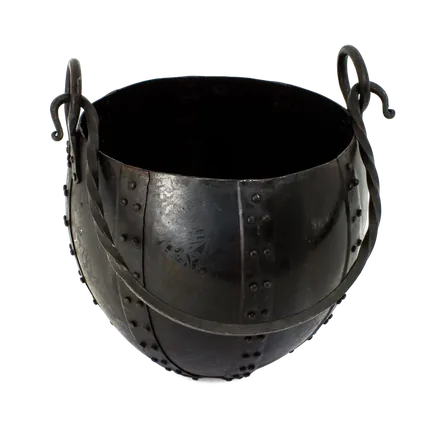
Cooperage items such as vats and buckets made from spruce or oak with wrought-iron hoops were indispensable in everyday medieval camp life for transporting water and provisions. Oak stave buckets with forged hoops remain masterpieces of craftsmanship to this day.
Wooden jugs & containers
Wooden jugs and wooden storage containers complemented the ceramic tableware in medieval households. They were lighter than clay, more break-resistant when travelling and easier to maintain — ideal companions for marches and field camps.
Birch bark: a natural material with a history

Birch bark is one of the oldest materials used in Northern and Eastern European cultures. As early as the Bronze Age, Scandinavian and Slavic peoples crafted containers, baskets and vessels from the supple, durable bark of the birch tree. In the Viking Age and medieval context, it played an important role, particularly in the Baltic and Russian regions, as a material for storage containers of all kinds.
What makes birch bark so special is that it possesses natural antibacterial and moisture-regulating properties. Food stored in birch bark containers therefore stays fresh for longer — an advantage that was known in the Middle Ages, even though the biochemical reasons were unknown. Birch bark contains betulin, a natural compound with antimicrobial properties.
Our range includes birch bark containers ranging from small spice jars (from approx. 8 cm in diameter) through to tea, coffee, sugar and herb jars, right up to large bread baskets and lunch boxes. All Sagaan products are 100% vegan, chemical-free and produced sustainably — without plastic or synthetics. This makes them not only historically authentic but also suitable for modern everyday use.
Material comparison: Which wood for which purpose?
| Wood type | Properties | Typical use |
|---|---|---|
| Beech | Historical | Turned plates, bowls — hard, dense, food-safe |
| Oak | Historical | Cooper’s wares, buckets with metal fittings — very robust, weather-resistant |
| Cherry | Historical | Ladle, cooking utensils — hard timber, fine grain, oiled for durability |
| Black alder | Historical | Ladles, cooking spoons — water-resistant, good heat resistance |
| Spruce | LARP | Vats, transport containers — lightweight, ideal for cooperage |
| Aspen & lime | Historical | Molles, flat troughs — soft, easy to work with, traditional kitchenware |
| Birch bark | Historical | Tins, baskets, containers — antibacterial, moisture-regulating, vegan |
Wooden goods in reenactment and LARP: What you need for your camp

An authentic camp stands or falls on having the right crockery and camp supplies. Anyone taking part in Viking, Early Medieval or High Medieval reenactment should know what is historically documented — and what actually works in everyday camp life.
Basic camp equipment: A flat wooden plate, a deeper bowl, a wooden spoon and a ladle cover daily needs and are historically documented for virtually all periods from the Early to the Late Middle Ages. The set is usefully complemented by a wooden trough as a work tool in the field kitchen.
Cooper’s wares are indispensable for transporting water and provisions in the camp: a spruce wood tub with a capacity of 2–3 litres is sufficient for most camp tasks, whilst an oak stave bucket with wrought-iron rings is both functional and visually appealing.
Those wishing to further equip their camp will find, among the medieval furniture, a folding chair in Viking design made of sturdy wood with a backrest — a piece that creates atmosphere both at LARP events and at medieval markets. Birch bark containers round off the camp equipment: they are ideal for storing spices, herbs, tea or bread, and are lightweight, robust and visually appealing.
An important care tip: Oiled wooden items — such as the cherry wood ladles in the range — are more durable, resistant to moisture absorption and remain food-safe. Un-oiled items should be rubbed with linseed oil or a neutral cooking oil after purchase.
How was crockery washed in the Middle Ages? Care and cleaning of wooden items today
In the Middle Ages, washing-up liquid as we know it today did not exist. Wooden tableware was usually scrubbed with sand or wood ash — both materials are slightly abrasive and have a disinfecting effect. It was then rinsed with hot water. Lightly soiled crockery was often simply scraped clean and wiped dry. Soaking in water was deliberately avoided, as it causes the wood to swell and promotes cracking in the long term.
The same applies today: wooden items do not belong in the dishwasher. The combination of prolonged heat, aggressive washing-up liquid and steam causes the wood to crack, warp and roughen the surface. Instead: wash briefly with lukewarm water and mild washing-up liquid, dry immediately and leave to air-dry. Do not soak, do not leave standing.
Regular oiling keeps wooden items food-safe and prevents cracks. Suitable oils include linseed oil (traditional, historically proven), neutral cooking oil or special wood care oil. Simply apply a thin layer, allow it to soak in, then wipe off any excess. New items should be oiled two to three times; after that, once or twice a year is sufficient. Oiled products such as the cherry wood ladles in our range are pre-treated and easy to care for.
Containers made from birch bark are easier to care for than traditional wooden items. Simply wipe with a slightly damp cloth — no soaking or oiling required. The natural compounds in the bark (particularly betulin) have an inherent antibacterial effect. For heavy soiling, a quick wipe with a slightly damp cloth followed by thorough air-drying will suffice.
Price guide: Wooden goods for every need
Flat oval wooden plates made from beech wood, small birch bark spice and herb jars — ideal for those new to reenactment or as an addition to existing camp tableware. You can get functional, historically accurate pieces from as little as €10.
Turned wooden bowls made from beech, molles made from aspen and lime, oiled cherry wood ladles, tea and sugar tins made from birch bark, and small vats made from spruce. This range covers all the essentials for an authentic camp.
Large bread baskets and lunch boxes made from birch bark (up to approx. €75), tubs with a capacity of 2–3 litres, and the oak staves bucket with wrought-iron rings and handle (up to approx. €151). High-quality craftsmanship for discerning re-enactors and market traders.
From small birch bark spice jars to heavy oak buckets with wrought iron rings — the wooden goods in our range cover the practical needs of everyday camp life. Take a look at the subcategories and put together your tableware: wooden plates and bowls, cooper’s wares, ladles and cooking spoons, as well as birch bark containers are waiting for you.
Frequently asked questions
In the Middle Ages, tableware consisted mainly of wood and ceramics. Turned wooden plates and bowls made of beech or maple were part of the basic equipment in almost every household. These were supplemented by molles (flat wooden troughs for the kitchen and storing provisions), ladles, cooking spoons, and cooperage items such as buckets and vats for transporting water and provisions. Ceramics complemented the wooden tableware, but were more expensive and more prone to breakage.
Soap was not a common cleaning agent for tableware in everyday medieval life. Instead, sand or wood ash was used for scrubbing — both materials have a slightly abrasive and disinfecting effect. The items were then rinsed with hot water. Lightly soiled wooden tableware was often simply scraped out and wiped dry to avoid prolonged soaking, which would have caused the wood to swell.
Wood was available almost everywhere in the Middle Ages, easy to work with and significantly lighter than pottery or metal. It could be turned, carved and shaped using simple tools — without the need for elaborate kilns or smithing techniques. As a result, wooden tableware was cheaper and more accessible than pottery, less likely to break when travelling and easier to repair.
For an authentic campsite, a flat wooden plate, a deeper wooden bowl, a spoon and a ladle are sufficient to start with. This combination is historically documented for almost all periods from the Early Middle Ages to the Late Middle Ages. Add to the set as required with a Molle as a kitchen utensil and a tub for water. Birch bark containers are also suitable for spices, herbs and bread.
Wooden items should not be put in the dishwasher. Wash by hand in lukewarm water with a mild washing-up liquid, dry immediately and leave to air-dry. Regularly rubbing with linseed oil or a neutral cooking oil maintains food safety and prevents cracks. Oil new items two to three times; after that, once or twice a year is sufficient. Oiled products such as the cherry wood ladles in the range are already pre-treated.