


Further weapon replicas


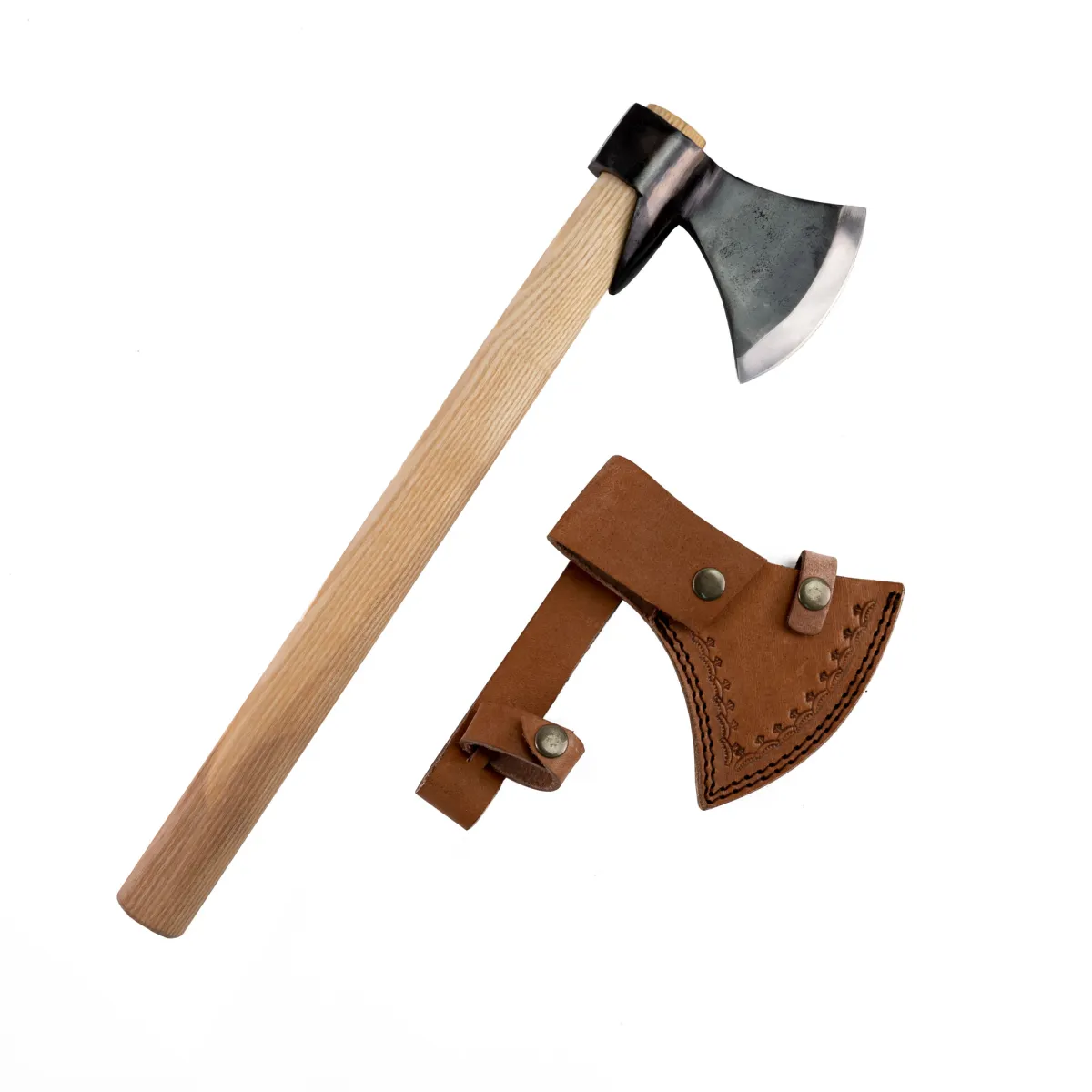


Weapon replicas for re-enactment, stage combat and collectors combine craftsmanship with historical accuracy. From the Germanic spatha and Viking sword to Renaissance polearms, here you will find replicas modelled on historical originals and developed for specific purposes. This category encompasses everything beyond the classic medieval sword: daggers, axes, polearms, crossbows and rare types such as the corseque and glefe.
What are weapon replicas? Definition, purpose and legal classification

A replica is a reproduction of a historical original — not a fantasy design, but a replica based on archaeological finds, paintings or written sources. This fundamentally distinguishes it from a LARP foam weapon or a purely fictional fantasy weapon with no historical basis. Within the category of weapon replicas, there are three fundamentally different categories that you should clearly distinguish before making a purchase.
Decorative replica: Intended exclusively for display, wall mounting or as a collector’s item. Not intended for combat use; no special requirements regarding impact resistance. Often cheaper to purchase and a good starting point for beginners.
Stage combat weapon: Developed for actual use in choreographed or full-contact stage combat. Here, steel hardness grades, blade geometry and handle finish determine safety and durability. The stage combat class (SK-A, SK-B, SK-C) indicates the type of use for which the weapon is suitable.
Sharp weapon: A functional blade with a real cutting edge — legally relevant. In Germany, decorative weapons and blunt display weapons are generally permitted, provided they do not resemble firearms. The intended use and design are always decisive. Sharp blades are subject to the Weapons Act and may not be carried in public. If you are unsure, check with the relevant authority or a legal expert before purchasing.
What is not a replica: A LARP foam weapon, even if it is visually modelled on a historical prototype, does not count as a replica in the strict sense — it is a standalone product intended for a different purpose. The same applies to modern fantasy creations without a historical prototype.
An overview of weapon classes: from swords to polearms
Swords
One-handed swords, two-handed swords, Viking swords, spathas and basket-hilt swords — these sword types cover periods from the 6th to the 16th century. Oakeshott classifications aid in historical categorisation. Early medieval and Viking swords, as well as Renaissance swords, form their own sub-categories.
Polearms & Axes
Polearms are among the rarer and historically most authentic categories. Lances and spears, as well as the Renaissance corseque as a mercenary weapon of the 16th century, are typical examples. Medieval axes exist in both combat and tool forms.
Hand weapons & crossbows
Daggers and the Viking sax are indispensable for a complete historical kit. Testicle daggers with carved handles and leather sheaths are among the typical short weapons of the late Middle Ages. Bows and crossbows form a separate category as ranged weapons.
Exhibition combat classification: SK-A, SK-B and SK-C explained
In the German-speaking re-enactment and stage combat community, a three-part classification has become established, defining the scope of use for a weapon. Choosing the right class is not a question of budget, but of safety — selecting the wrong stage combat class can be dangerous.
- The toughest requirements for steel, tempering process and workmanship
- For professional fighters in full-contact
- Tinker-Line Viking swords and Kunkel-Schmiede as typical examples
- Price range: from approx. €200–380
- Blade geometry and hilt attachment designed to withstand heavy blows
- SK-B: Mid-range — for semi-contact and choreographed exhibition fights
- SK-C: Light contact and re-enactors, often lighter in weight and price
- The Hanwei and Ulfberth ranges cover the SK-B segment
- Price range: approx. €100–250
- Suitable for exhibition combat beginners and performers at markets
Decorative variants without combat-grade certification are intended exclusively for display purposes and wall mounting — not for combat use, not even occasionally.
Historical periods and their typical weapons
Early Middle Ages & Germanic peoples
Germanic spathas and early one-handed swords characterise this era. Archaeological finds from burial grounds provide direct models. Germanic swords such as the spatha of the 6th–8th centuries are regarded as precursors to later knight’s sword types.
Viking Age
Sword types according to Oakeshott (Type X, X11), saxes as short weapons, long spears and axes — all with direct archaeological models from Scandinavian grave finds. Viking swords from the 9th and 10th centuries are particularly well represented in the range, from SK-B to SK-A class.
High Middle Ages
Crusader and Templar swords with characteristic crossguards, Norman influences, shield and sword as a tactical unit. High Medieval swords of the ‘Frankish’ or ‘Templar’ type demonstrate the diversity of this era.
Late Middle Ages
Long blades, developed crossguards, the fencing sword tradition. Types such as the 15th-century Tewkesbury type reflect the refined art of fencing. Late Medieval swords of this kind are equally suitable for re-enactment and exhibition combat.
Renaissance
Basket-hilt swords and the cutlass as sidearms for mercenaries and townspeople. Corseques and gleves as polearms of the Lansquenets — historically documented and represented in our range as a rare category. Hanwei delivers high-quality craftsmanship here.
Price ranges and quality levels: What do I get for my budget?
Daggers, testicle daggers with leather scabbards, simple decorative pieces and accessories such as individual scabbards. Ideal for trying out, for occasional re-enactment at medieval markets or as a first collector’s item. Not suitable for display combat, but a solid look for beginners.
SK-B swords from Ulfberth or Hanwei, complete sword-sheath sets, solid workmanship for beginners in stage combat. The sheath is often included — you should take this into account when comparing prices. Covers the majority of requirements for re-enactors and semi-contact fighters.
Hanwei blacksmith quality, Tinker-Line Viking swords and SK-A-certified pieces for serious reenactors and collectors. Carbon steel, precise balancing, intricate hilt design. The Renaissance broadsword from Hanwei and 9th-century Tinker Viking swords are examples from this segment.
Materials and workmanship: What matters in weapon replicas
| Material / Component | Suitability | Note |
|---|---|---|
| Carbon steel (blade) | Authentic | More authentic appearance and behaviour; requires regular maintenance (oiling), rusts if neglected |
| Stainless steel (blade) | Low maintenance | Requires less maintenance, but is less historically accurate; well suited for decorative purposes |
| Wooden handle / imitation bone | Authentic | Affects feel and authenticity; carved design enhances visual appeal |
| Leather sheath (simple) | Standard | Good grip; must be regularly maintained with leather grease, otherwise it will become brittle |
| Wooden core with leather covering | Reenactment | Better grip on the blade, more stable construction; preferred for display weapons |
| Tempering process (steel) | SK-A/SK-B | Determines impact resistance; particularly critical for SK-A weapons |
Carbon steel blades should be treated with a light oil after every use — weapon oil or camellia oil are suitable. Leather scabbards benefit from regular treatment with leather grease to prevent cracking. Accessories for swords include suitable care and storage products.
Who are weapon replicas suitable for?
Anyone performing historically accurate reenactments needs a replica that suits the era and region. Oakeshott type designations, archaeological models and correct materials are crucial. A 10th-century Viking reenactor would choose a Type X sword with a matching sax — not a Renaissance basket-hilt sword. In many cases, the product descriptions specify the historical model.
In stage combat, safety takes precedence over appearance. The stage combat class (SK-A, SK-B, SK-C) must be suitable for the combat group and the agreement with your combat partners. Many events stipulate minimum requirements. Before purchasing, clarify which class is required in your group or at your event — an SK-C weapon in an SK-A tournament is not an option.
For wall mounting, display in a cabinet or as a gift, a decorative version is perfectly adequate. Here, visual details such as handle design, blade etching and the included scabbard are what count. Many decorative items in the range are nevertheless modelled on historical prototypes — so they are not purely fantasy products, but recognisably period-appropriate.
Film and theatre productions have their own requirements: lighter versions, blunted or rubber-coated blades where necessary, and no real sharpness. Suitability for stage combat is usually of secondary importance here. In the film and theatre props section, you will find products developed specifically for this purpose.
Those visiting a medieval market for the first time and wishing to take something home often choose a dagger or a small axe as their first item. These entry-level products are affordable, historically inspired and complement a simple costume well. For the next step, it’s worth taking a look at complete equipment sets.
Whether you’re looking for your first dagger for the medieval market, need an SK-A exhibition weapon for your next tournament, or want a historically accurate replica for your collection — browse through the range and find the weapon that suits your era, your intended use and your budget.
Frequently Asked Questions
A replica weapon is a reproduction of a historical original — in other words, a replica based on archaeological finds, historical paintings or written sources. It therefore differs from a purely fantasy weapon or a LARP foam weapon. Replicas come in various forms: as blunt display weapons, as decorative replicas with no combat purpose, or as sharp, functional pieces.
Decorative weapons and blunt display weapons are generally permitted in Germany, provided they do not resemble firearms. The intended use and design are decisive factors. Sharp blades are subject to the Weapons Act and may not be carried in public. In case of doubt, it is advisable to consult the relevant authority or a legal expert.
SK-A stands for full-contact re-enactment combat with the strictest requirements regarding steel and workmanship. SK-B covers semi-contact and choreographed re-enactment combat — the broad middle of the market. SK-C is intended for light contact and performers, often being lighter and more affordable. The class must be suitable for the intended use: choosing the wrong re-enactment combat class can have safety implications.
For beginners, daggers or simple short swords in the price range of approx. €30–50 are recommended to start with. These are affordable, historically inspired and complement a simple costume well. Those entering the stage combat segment should choose an SK-B sword from the Ulfberth or Hanwei range in the €100–200 price bracket — often including a scabbard, which should be taken into account when comparing prices.
Carbon steel blades should be treated with a light oil after every use — weapon oil or camellia oil work well. Without regular maintenance, rust spots may form, particularly in damp environments. The leather scabbard also benefits from regular treatment with leather grease to prevent cracks and brittleness.