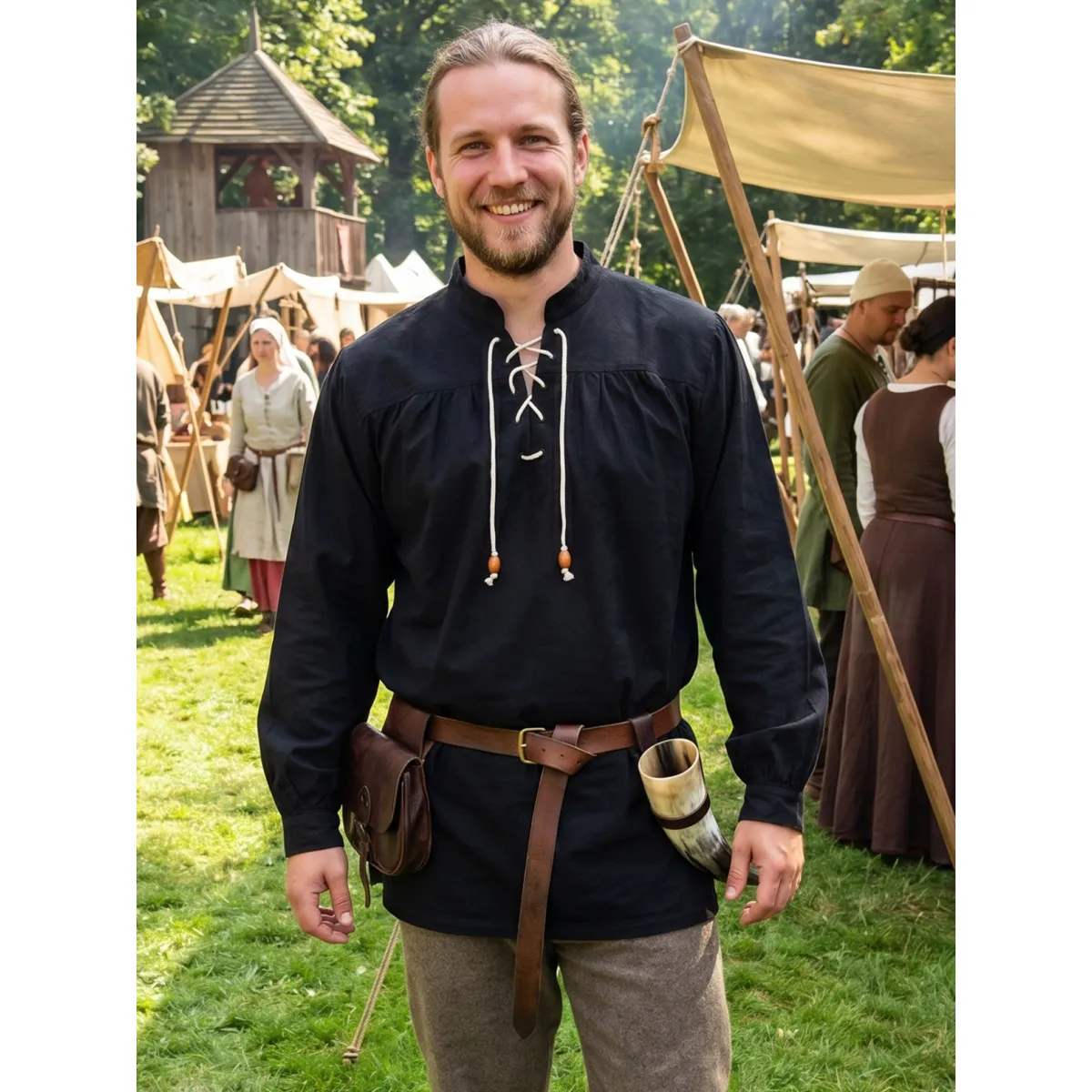
Halloween costume knight
- Available
- Available
- Available
-
Delivery time: 2 - 3 working days* (US - int. shipments may differ)
- Available
-
Delivery time: 2 - 3 working days* (US - int. shipments may differ)
- Available
-
Delivery time: 2 - 3 working days* (US - int. shipments may differ)
- Available
-
Delivery time: 2 - 3 working days* (US - int. shipments may differ)
- Available
-
Delivery time: 2 - 3 working days* (US - int. shipments may differ)
- Available
Halloween Knight Costume – A medieval vibe for a spooky night
A knight costume for Halloween is more than just a quick outfit from the discount store shelf. It combines the spookiness of the night with the fascination of the Middle Ages – and with the right pieces, you can create an outfit that you’ll still be wearing after 31 October. Whether you want to embody a grim crusader, an undead Black Knight or a richly detailed High Medieval warrior: here you’ll find everything you need for a convincing look – from a simple starter set to a high-quality ensemble made from natural materials.
What a knight actually wore in the Middle Ages

Anyone wanting to put together a credible knight’s costume for Halloween will benefit from understanding the layering principle of historical knight’s clothing. A knight never wore metal directly against the skin – there were several layers of clothing between the body and the armour.
The base layer consisted of a long linen shirt and simple trousers. Over this came the gambeson – a padded or quilted doublet made of wool or linen, which served as padding and cushioned blows. Over the gambeson, knights in the High and Late Middle Ages wore a chainmail shirt (hauberk) made of riveted iron rings, which protected the neck, arms and upper body. The armour was supplemented by plate pieces: vambraces, greaves, a breastplate and a helmet.
In everyday life – away from battle – the knight wore a tabard over his armour or chainmail, displaying his colours and symbols. This was accompanied by a leather belt, medieval shoes and a bag. This everyday attire is particularly practical for a Halloween costume: it is comfortable to wear, looks convincing and allows freedom of movement at the party.
The main materials used in historical knightly armour were wool and linen for the layers of clothing, steel for chainmail and plate sections, and leather for belts, shoes and straps. This knowledge will help you set the right priorities when putting together your costume.
Knight’s outfit for Halloween: an overview of the key garments
Base clothing
A medieval shirt as the base layer, paired with medieval trousers or breeches – this combination forms the foundation. A wide leather belt ties the outfit together and gives it structure. Clogs or leather shoes complete the look and are often underestimated.
Armour elements
The gambeson is the most versatile piece: it acts as armour, is comfortable to wear and, even without metal parts, serves as a complete costume in its own right. For a more menacing look, add chainmail, a helmet, as well as arm and leg guards.
Accessories & props
A tabard with a cross or dark pattern instantly gives the costume character. A medieval pouch on the belt, a cloak for chilly autumn nights and a sword as a prop go well with this. For that Halloween effect: dark colours, a weathered look.
Synthetic or natural materials: what makes the difference in a knight’s costume?
Many cheap Halloween costumes on the market are made from 100% polyester. There’s a reason for this – production is cost-effective. But the drawbacks quickly become apparent, especially at an indoor party. A comparison:
- Inexpensive to buy (often €20–40)
- Hardly breathable – uncomfortable at parties
- Unstable in damp and warm conditions
- Often has a shiny appearance, not very convincing
- Difficult to wash and maintain
- Hardly reusable for other occasions
- Breathable and temperature-regulating
- Comfortable to wear even in heated rooms
- Attractive, matt finish – historically accurate
- Durable and washable multiple times
- Can be reused at medieval markets or in LARP
- Vehi Mercatus own brand: exclusively natural fibres
Our own brand, Vehi Mercatus, deliberately uses only natural fibres – cotton, linen and wool. This is not a given in the market and makes a noticeable difference to comfort. Natural materials are also easier to clean: linen shirts can be washed at 40–60 °C, whilst woollen items should be washed gently at 30 °C or by hand. This means the costume will easily last through several Halloweens.
Knight costumes for children for Halloween

When it comes to Halloween knight costumes for children, the priorities are different from those for adults. Safety and freedom of movement come first – sharp-edged metal parts or heavy helmets have no place in children’s costumes.
A cotton or linen tabard, worn over a simple shirt, is particularly suitable for children. Add a child-friendly belt. A lightweight fabric helmet or a plastic helmet without sharp edges is suitable headgear. A wooden sword is recommended as a weapon – it is part of the standard range at many medieval retailers.
The Vehi Mercatus range includes medieval clothing for children in various sizes, including items in children’s sizes. The advantage of natural materials is particularly evident here: a linen shirt or a cotton tabard worn for Halloween can easily be worn in everyday life too – for school fetes, medieval-themed children’s birthday parties or simply as sturdy casual wear. This means the purchase pays for itself quickly.
Halloween Knights: Spooky variations and themed ideas
The Black Knight is a classic for Halloween night. The basis is a black tabard or gambeson, complemented by a black helmet and dark armour pieces. No coloured coat of arms, no ornaments – just deep black. The effect comes from consistency: keeping all pieces in one colour creates a convincingly menacing look. Make-up: darkened eye area, weathered skin.
A standard medieval outfit can be transformed into an undead crusader with little effort. Start with a light-coloured linen shirt with bloodstains (theatre paint or red paint), a weathered tabard with a cross, and a rusted chainmail. Make-up can enhance the effect: sunken cheeks, skull make-up, scars and wounds created with latex paint. Props such as a cracked sword or a bent shield reinforce the zombie soldier aesthetic.
The Templar combines ecclesiastical symbolism with military equipment. A white tabard with a red cross is the distinguishing feature – for the Halloween version, this is rendered in sombre colours: a dark grey or black tabard with a red cross. A chainmail coif, a gambeson and a heavy belt complement this look. With dark make-up and a piercing gaze, this creates a striking, spooky look.
Light, faded colours are ideal for the ghostly knight: a white or cream-coloured linen shirt, a grey or beige chainmail shirt, and a pale cloak. White and grey make-up, along with dark circles under the eyes, create the illusion of appearing armour. Luminescent paint on metal parts can create special effects under black light. This look is more stylishly eerie than aggressively creepy.
Costume levels: From a quick Halloween look to a detailed knight’s outfit
A medieval shirt made of cotton or linen, paired with a simple tabard and a leather belt – that’s all you need for an instantly recognisable knight’s look. Clogs or simple leather shoes complete the outfit. This combination is ideal for a one-off Halloween party, but also works well for a first visit to a medieval market. In the Vehi Mercatus range, shirts and tabards start from under €50.
If you want to add more depth to the look, complement the basic set with a gambeson, woolen breeches (e.g. late medieval 15th-century breeches from approx. €54) and leather shoes. A helmet or chainmail coif makes the outfit much more convincing. This level is suitable for people who intend to wear the costume on multiple occasions and also use it for LARP or at medieval markets.
The complete knight’s outfit with chainmail, plate armour (arm and leg guards, breastplate), a high-quality helmet and a tabard made from natural materials. The materials correspond to historical models: wool, linen, steel, leather. Those who invest at this level are not getting a one-off costume, but an ensemble that can be used long-term at re-enactment events, medieval markets and LARP events.
Whether you’re a spooky, dark crusader or a detailed High Medieval warrior – with the right pieces, your Halloween knight costume will become an outfit you can still wear after 31 October. Browse through the range and put together your knight’s ensemble to suit the occasion and your budget.
Frequently asked questions
A convincing Halloween knight typically wears a linen shirt as a base layer, a tabard in dark colours, a leather belt and, optionally, a gambeson or chainmail as armour. For a spooky effect, dark or weathered colour schemes, make-up featuring wounds and scars, and a helmet or chainmail coif are ideal. Depending on your budget, you can build your outfit from a basic set for around €50 up to a full armour ensemble starting at €200.
In the Middle Ages, knights wore several layers: a linen shirt and trousers as a base, over which a quilted gambeson served as padding, followed by a chainmail hauberk made of riveted iron rings. In the late Middle Ages, plate armour was added – breastplate, arm guards, leg guards and a full-face helmet. In everyday life, the knight wore a tabard bearing his insignia, as well as leather shoes and a belt.
For children, a lightweight costume without sharp metal parts is recommended: a tabard made of cotton or linen over a simple shirt, along with a child-friendly belt and a plastic or fabric helmet. A wooden sword makes a suitable weapon. Many items made from natural materials can be worn by children even after Halloween, in everyday life, at school fests or children’s birthday parties.
A simple but authentic knight’s costume made from natural materials can be put together from around €50: a shirt, tabard and belt are enough for the basic look. With a gambeson, trousers and shoes, the total comes to €100–200. If you want to add chainmail and plate armour, expect to pay €200–300 or more – but in return you get an ensemble that can also be worn at medieval markets and LARP events.
Yes – that is a major advantage of high-quality pieces made from natural materials. A gambeson, chainmail or tabard made from wool and linen can easily be worn at medieval markets, LARP events or during re-enactments. Cheap polyester costumes, on the other hand, are usually disposable items. If you set your budget a little higher, you’re investing in an outfit that will last for many years.