


Roman clothing


The tunic was the centrepiece of everyday Roman clothing – worn by legionaries, craftsmen and senators alike. If you’re looking for authentic Roman attire for re-enactments, stage combat or a medieval market, you’ll find 86 items here: from simple cotton tunics to warm woollen tunics in historical colours, for men, women and children.
What did the Romans really wear? An overview of clothing

The most important item of clothing for the Romans was the tunic – a simple, belted garment made of wool or linen, worn by all social classes. Slaves, craftsmen, soldiers and senators wore them, albeit with clear differences in quality, colour and trimmings. The tunic usually reached down to the knees and was gathered at the waist with a belt (cingulum).
The toga, on the other hand, was not an everyday garment, but the ceremonial symbol of a free Roman citizen. Only cives romani – free male citizens – were permitted to wear it, and even then usually only on official occasions such as court hearings, processions or state receptions. In everyday life, even senators preferred the more comfortable tunic.
In addition, the Roman wardrobe included other garments: the paenula was a semi-circular woollen cloak with a hood, which served as travel and weatherwear. Women wore the stola over the tunic – a long, belted outer garment signifying their status as citizens – as well as the palla as a cloak. The subligaculum, a cloth wrapped around the hips – comparable to a simple loincloth – served as underwear.
In the Roman Empire, colour and trim were not merely aesthetic, but clear status symbols. The clavus, a vertical purple stripe on the tunic, indicated the wearer’s rank: a wide stripe (latus clavus) denoted senators, a narrow one (angustus clavus) signified knighthood. Purple was an expensive and rarely accessible colour – those who wore it displayed power and wealth.
Tunic vs. toga – the difference explained
- A simple, belted garment for men and women
- Material: wool or linen; for legionaries, also double-layered
- Reached to the knee, rarely to the calf
- For all social classes – from slave to senator
- Ideal for re-enactment, markets and LARP: practical, easy to move in
- Available in our range from approx. 33 euros
- Semi-circular woollen garment, approx. 5–6 metres in length
- Exclusively for free Roman citizens (male)
- Only for ceremonial occasions, not for everyday wear
- Toga drape: thrown over the left shoulder, passed under the right arm, fabric artfully draped
- Etymology: Latin tegere = to cover, to protect
- More complicated to handle and less comfortable to wear for re-enactment
For re-enactment events and markets, the tunic is the more practical garment – it sits securely, allows for free movement and is historically documented for everyday wear. The toga is impressive, but requires practice to put on and remains impractical in mock combat.
How do you dress like a Roman? Putting together a complete outfit

A credible Roman outfit is built from the inside out. The tunic forms the basis – it is worn directly against the skin or over the subligaculum. For a historically accurate portrayal, choose a tunic made of wool or linen; cotton is a comfortable modern alternative and recommended for beginners.
The belt is more than just a fastening: the legionary’s cingulum militare indicated his rank and was adorned with metal fittings. For civilian portrayals, a simple leather strap suffices. You can find suitable Roman belts in the category of the same name.
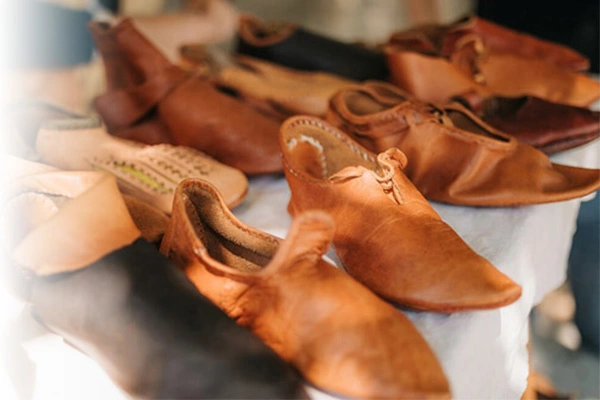
Legionaries wore the caliga – a nailed leather sandal with an open upper, designed for long marches. Civilians preferred the closed calceus. In the Roman shoes section, you’ll find authentically designed footwear to match your portrayal.
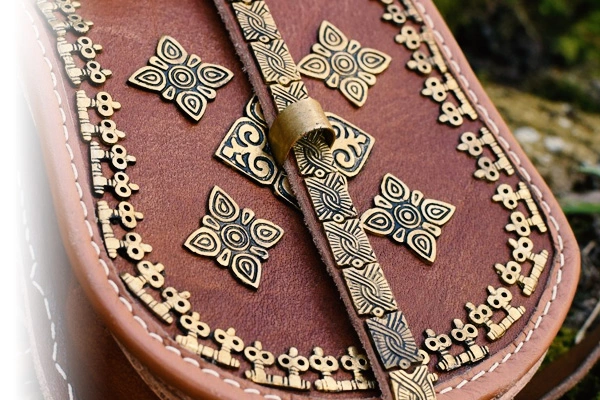
Optional accessories complete the outfit: a paenula cloak provides protection in cooler weather and is an instant eye-catcher at any market. A matching Roman bag or pouch on the belt is both practical and authentic. A fibula holds the cloak or robe together without detracting from the historical look. If you’re looking for a complete set, you can also browse directly in the Roman Shop.
Roman clothing for different occasions: re-enactment, LARP and events
For school fests, Roman days and one-off events: a short-sleeved cotton tunic in earth tones or natural colours. Lightweight, easy to care for and effortlessly combinable with a belt and sandals. An affordable introduction to Roman costume is also easily available for children.
For LARP events with an ancient theme or mock combat, we recommend a sturdy cotton tunic with a slightly looser fit and greater freedom of movement. The wider range of colours allows you to portray the rank and role of your character – from the plain tunic of a simple legionary to the embroidered robe of an officer.
Experienced re-enactors and legionary groups opt for a woollen tunic – historically the most accurate material. The Lodin woollen tunic in Bordeaux is an example of a garment that impresses both visually and in terms of comfort. Those aiming to portray civilians or senators can complement their outfit with a stola, palla or paenula made from natural fibres.
Pricing and brands: What do you get for your budget?

The range covers a price bracket from around €25 to over €250, with the majority of tunics falling between €33 and €55.
Entry level from approx. 25 euros: Short-sleeved tunics made from 100% cotton – a sturdy garment for first performances, school festivals or as a costume base. The quality is sufficient for occasional use.
Mid-range, €33–€50: Here you’ll find a wider choice of colours, some embroidered designs and a better fit. Models such as the Aegir Hemp short-sleeved tunic or the Erik short tunic in various colours fall into this category. Well-suited for markets and regular LARP events.
From 50 euros upwards: Wool tunics such as the Lodin Bordeaux offer a more authentic material and are suitable for experienced re-enactors who value historical accuracy. Wool regulates body temperature better than cotton and, according to historical sources, is closer to the actual wearing practices of the Romans.
Three brands are represented in the range: Battle Merchant and Burgschneider deliver proven quality from the re-enactment sector, whilst our own brand, Vehi Mercatus, relies exclusively on natural fibres. All garments are available in sizes S to XXXL.
Materials for Roman clothing: wool, linen and cotton
| Material | Historical suitability | Typical use |
|---|---|---|
| Sheep’s wool | Historically accurate | Tunics, togas, cloaks – the predominant material of the Roman period according to ancient sources |
| Linen | Historically documented | Undergarments, summer tunics, subligaculum – cool and skin-friendly |
| Cotton | LARP / Reenactment | An affordable and comfortable alternative for beginners and regular use |
| Synthetic | Not recommended | No historical basis, poorer moisture management, looks unnatural in the light |
Our own brand, Vehi Mercatus, uses only natural fibres – cotton, linen and wool. This is a conscious decision, not a matter of course: synthetic fabrics are cheaper to buy, but they regulate sweat less effectively, often appear unnaturally shiny in sunlight and have no place in historical re-enactment. Anyone wishing to make a credible impression at a Roman Day or re-enactment camp is generally better off with natural fibres.
From a simple cotton tunic for your first Roman re-enactment day to a woollen tunic for the authentic legionnaire – browse through 86 items and put together your Roman outfit to suit your needs. If you’re planning a full kit, you’ll find the perfect additions in our range of Roman swords and antique armour.
Frequently asked questions
The tunic was the everyday basic garment of all Romans – a belted garment made of wool or linen, worn by everyone from slaves to senators. The toga, on the other hand, was an elaborately draped, semi-circular woolen garment reserved exclusively for free Roman citizens. It was worn only on ceremonial occasions, not in everyday life. The name ‘toga’ is derived from the Latin verb ‘tegere’ (to cover, to protect).
The basis is a tunic made of wool or linen, reaching to the knee and gathered at the waist with a belt (cingulum). This is complemented by suitable sandals – for legionaries the nailed caliga, for citizens the closed calceus. Optionally, a cloak (paenula), a fibula and a belt pouch complete the outfit. For re-enactment, wool is recommended as the most historically accurate material.
According to ancient sources, sheep’s wool was the most commonly used material for tunics, togas and cloaks. Linen was used primarily for undergarments and summer clothing. Silk was a rare luxury item. For re-enactment and LARP, cotton is a comfortable and more affordable alternative to wool, but has no direct historical equivalent in ancient Rome.
A toga consists of a long, semi-circular piece of woolen cloth approximately 5–6 metres in length. One end is thrown over the left shoulder at the front, the remaining fabric is passed under the right arm and draped back over the left shoulder. The garment is artfully draped and gathered – without pins or fastenings. Putting it on correctly requires a bit of practice and, ideally, a second person to help.
Yes, the range also includes tunics and robes for children, so that even younger participants can appear authentically dressed for school projects, Roman days or family re-enactments. The children’s styles are available in several sizes and are made from durable, skin-friendly materials.