Medieval accessories
- Available
- Available
-
Delivery time: 2 - 3 working days* (US - int. shipments may differ)
- Available
- Available
-
Delivery time: 2 - 3 working days* (US - int. shipments may differ)
- Available
-
Delivery time: 2 - 3 working days* (US - int. shipments may differ)
- Available
-
Delivery time: 6 - 7 working days* (US - int. shipments may differ)
- Available
-
Delivery time: 2 - 3 working days* (US - int. shipments may differ)
Medieval accessories are far more than mere decorative additions – they truly complete an outfit and lend it authenticity. Whether at a medieval market, on a LARP adventure or at a re-enactment: a pilgrim’s bag, a woven fabric belt or a generous cotton scarf blend seamlessly into historical and fantasy-inspired outfits – and are affordable, easy to care for and versatile.
What counts as a medieval accessory?
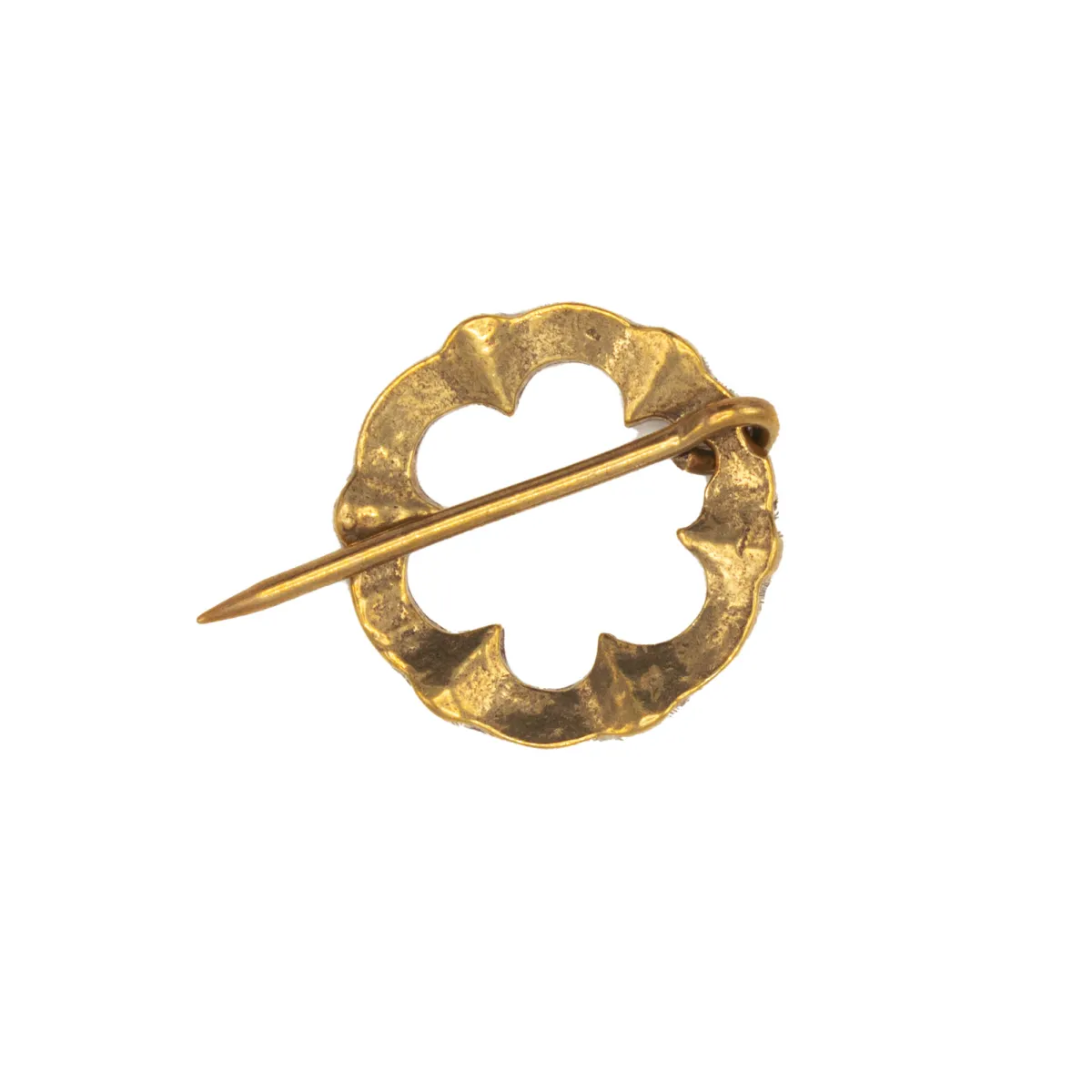
Essentially, medieval accessories are all those items that functionally complement or visually complete an outfit – without being garments or weapons themselves. Historically speaking, this encompasses a wide range: belt pouches and bags served as portable storage, as clothing in the Middle Ages had no pockets. Brooches and cloak fasteners held coats, cloaks and shawls together. Scarves and shawls protected against wind and weather whilst also signalling social status. Jewellery and badges – such as pilgrim badges made of pewter – served as identification marks, devotional objects and status symbols all in one.
In today’s context of LARP, re-enactment and medieval markets, the term refers to everything that completes an outfit: from practical everyday items such as bags and belts to atmospheric details such as pewter badges or garment fasteners. Weapons and armour parts are deliberately not included among the accessories – they are separate categories with specific requirements.
What accessories were worn in the Middle Ages?
Bags & pouches
As medieval clothing had no sewn-in pockets, belt pouches and hanging bags were indispensable. They were fastened to the belt and carried coins, knives, food or tools. Pilgrim’s bags – larger shoulder bags made of cloth or leather – accompanied travellers on long journeys.
Belts & Buckles
Belts were ubiquitous in the Middle Ages and had both practical and symbolic significance: they held clothing together, carried bags and weapons, and indicated social status through the quality of the material and buckles. Braided fabric belts were worn by the common people, whilst decorated leather belts were worn by the wealthy.
Scarves & shawls
Large woollen and linen shawls served as head coverings, shoulder wraps, improvised capes or privacy screens in camp. The colour and quality of the fabric signalled origin and wealth. Even today, a large cotton scarf remains one of the most versatile accessories for any outfit.
An overview of the most important accessories: bags, belts and scarves
| Product | Material | Special feature | Suitability |
|---|---|---|---|
| Pilgrim’s bag / shoulder bag | 100% cotton | Available in natural, black, red, brown; durable and washable | LARP Market |
| Braided fabric belt | 100% cotton | Crinkle effect, natural worn look, approx. 4 cm wide | LARP Reenactment |
| Medieval scarf | 100% cotton | Approx. 230 × 130 cm, crinkle effect, unisex, 6 colours | LARP Market |
All three product groups are made from pure cotton – a deliberate decision to avoid synthetic fibres, which significantly improves comfort and the historical look. The crinkle effect on the belt and scarf is created by a special weave and remains intact even after repeated washing.
What is typically medieval? Materials and appearance
The appearance of historically accurate clothing depends heavily on the choice of materials. In the Middle Ages, people wore clothing made from naturally grown fibres: linen for shirts and undergarments, wool for coats and outer garments, and cotton in warmer regions and during more prosperous times. Leather was indispensable for shoes, belts and bags. Synthetic fibres did not exist – and that is precisely what makes the choice of material the decisive criterion for authenticity.
Earth tones dominated the colour palette: natural, brown, beige, olive green and wine red. Vibrant colours such as scarlet or dark blue were costly to produce and therefore reserved for expensive fabrics. For LARP and medieval markets, a palette of natural colours and muted tones is the simplest way to achieve historical authenticity. The crinkle effect in cotton products – a slightly crinkled, ‘worn’ appearance – enhances this authentic look without any artificial treatment. Unisex cuts for scarves and belts make these accessories suitable for all target groups and costume contexts.
What can you wear to a medieval festival? Outfit ideas with accessories
If you’re visiting a medieval market for the first time, you don’t need an elaborate costume. A simple pilgrim’s bag slung over your shoulder and a woven fabric belt worn over everyday clothes or a plain tunic instantly transform your look. Both items are affordable, easy to care for and versatile – an ideal way to get started without a major investment.
For LARP adventures, a coordinated ensemble is worth the effort: a large cotton scarf (approx. 230 × 130 cm) can be worn as a cloak over a tunic or a medieval dress, the fabric belt holds it or the outer garment in place, and a leather bag carries the essentials. The choice of colours (natural, burgundy, black, olive green) should complement the overall look.
For historically accurate costumes, it is advisable to match accessories to the period. A Viking costume can be combined with brooches, a simple leather pouch and a woollen scarf. Early medieval outfits benefit from cloak fastenings and structured belt pouches. In the late Middle Ages, brooches and jewellery come into play more prominently.
Accessories for women, men and children
Most accessories in this category are deliberately designed to be unisex: scarves, fabric belts and pilgrim bags suit women’s, men’s and children’s outfits equally well. The scarves in particular, available in six colour variants – natural, black, grey, burgundy, green and others – can be adapted to individual colour schemes.
Those looking for more specialised accessories will find a wider range in the shop: medieval jewellery for women featuring pendants, rings and bracelets; medieval and Viking belts for men in leather; and children’s costume accessories for the youngest market visitors. The Battle Merchant and Vehi Mercatus brands are featured in the range – both with a focus on natural materials and tried-and-tested craftsmanship.
Care and use of cotton accessories
Cotton is an easy-care natural material that withstands machine washing without any problems. This is particularly convenient when it comes to the crinkle effect – the characteristic slight crinkling of the fabric surface – as it remains intact after washing, and ironing is not necessary. The scarves and fabric belts actually become even softer with frequent washing, without losing their shape.
A large-format scarf (230 × 130 cm) can be used in many ways at a medieval market or in a military camp: as a shawl, loosely draped as a cape, tied as a headscarf, or as a makeshift privacy screen in the camp. As with all natural fibres, the following applies to storage: keep in a dry, well-ventilated place so that the material can breathe and there is no risk of mildew.
Whether you’re finishing off your first outfit with a simple pilgrim’s bag or putting together a detailed re-enactment outfit based on historical models: the right accessories make all the difference. Browse through scarves, fabric belts and pilgrim’s bags – and discover just how much character lies in the details.
Frequently asked questions
In the Middle Ages, people wore belt pouches and hanging bags as their only form of storage, as clothing did not have sewn-in pockets. In addition, there were brooches and cloak fasteners to hold capes together, large cloths and scarves for protection against the weather, as well as pilgrim badges and simple jewellery as signs of identification and status.
Typical medieval accessories are made from natural materials such as linen, cotton, wool and leather – no synthetic fibres. Colours are earth tones: natural, brown, burgundy and olive green. Simple craftsmanship, functional shapes and a natural, lived-in look are further hallmarks of historically accurate pieces.
You can achieve a convincing look with just a few accessories: a pilgrim’s bag slung over the shoulder and a braided fabric belt instantly enhance even simple clothing. If you’d like to invest a bit more, combine a large cotton scarf worn as a cape with a belt bag and matching shoes. For re-enactment, it’s advisable to ensure all accessories are period-appropriate.
Yes, all cotton products in this category – scarves, fabric belts and pilgrim bags – are machine washable. The characteristic crinkle effect on scarves and belts remains after washing; ironing is not necessary. A dry, well-ventilated place is recommended for storage.
Yes, most items – particularly scarves and fabric belts – are designed to be unisex and are suitable for women, men and children. Pilgrim bags are available in four colours, so they can be matched to different costumes. For more specific requirements, the shop offers separate categories for women’s jewellery, men’s belts and children’s costumes.