


Medieval storage requirements


- Item out of stock


A well-equipped medieval camp is more than just a backdrop — it is the heart of the re-enactment experience, whether at a medieval market, in a military encampment or amongst friends. Here you’ll find everything you need, apart from the costume, to create a harmonious, functional camp: from hand-forged cookware and woodenware to ceramics, as well as furs, blankets and accessories for your workbench and dining table.
What belongs in a medieval camp? An overview

A medieval camp — also known as an army camp, supply train or market camp, depending on the event — is, for many, the heart of the hobby. You meet up with like-minded people in the countryside, pitch your tent and relive the life of centuries past. Historically, military camps were mobile supply centres that accompanied military campaigns and contained everything soldiers, craftsmen and traders needed for weeks in the wilderness. Pilgrim camps and market convoys followed similar principles: functionality and community took precedence over comfort.
The core areas of a camp can be divided into four zones: the sleeping quarters (historically the ‘Kemenate’ or simply the interior of the tent), the cooking area with an open fire, the dining area for communal meals, and the workbench for repairs and handicrafts. Anyone who thoughtfully equips these four areas creates a camp that is not only visually impressive but also functions effectively in everyday life.
The difference between a LARP camp and living history lies primarily in the level of detail: whilst atmosphere and playability are the main focus in LARP, re-enactment aims for historical accuracy — avoiding anachronistic materials, shapes and decorations wherever possible, and ensuring everything fits the chosen century. Both approaches are legitimate, and the boundaries between them are fluid. Our range caters to both requirements.
Materials compared: wood, ceramics, iron and horn
| Material | Suitability | Typical use |
|---|---|---|
| Beech wood (turned) | Historical LARP | Wooden plates and bowls, spoons, cups, cooking spoons — sturdy everyday items covering a broad period from the Early Middle Ages to the Late Middle Ages |
| Ceramics (hand-made) | Historical | Jugs, bowls, mugs — specific to each period depending on glaze and shape: Early Middle Ages (unglazed, rough), High Middle Ages (lead glaze), Late Middle Ages and Renaissance (salt glaze, Bartmann jug) |
| Wrought iron (hand-forged) | Historical | Cauldrons, pans, pots, S-hooks, cauldron saws, candlesticks — hand-forged pieces show hammer marks and fire marks, industrial pieces appear more uniform |
| Horn (natural material) | Historical LARP | Drinking cups, combs, handles — well-documented archaeologically, works in a similar way to wood and offers an authentic alternative to ceramics |
| Birch bark | Historical | Containers and tins — particularly well-documented in Nordic and Slavic regions, water-repellent and lightweight |
Hand-forged ironware is worth a closer look: machine-made pieces are uniform and cheaper, whilst hand-forged items bear the marks of work over the fire — irregular surfaces, slight twists, and individual dimensions. For living history re-enactments, this is the crucial difference.
The four areas of the camp and their equipment
🔥 Cooking area
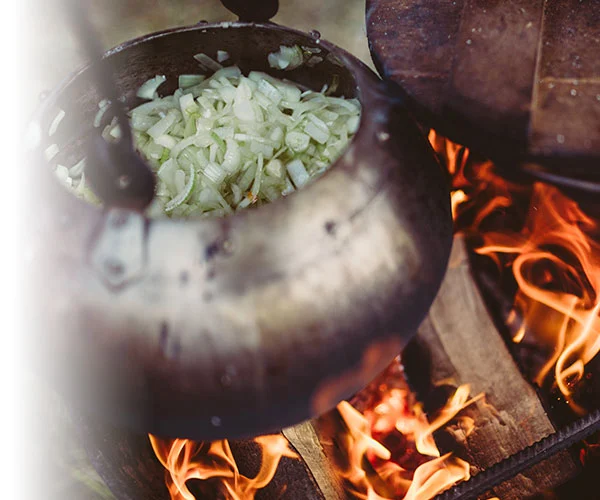
The heart of every camp: pot hooks and kettle hooks hang the pot over the flames, whilst hand-forged accessories such as S-hooks, tripods and pot stands regulate height and heat. Add to this pans, pots and ladles — from small frying pans to large cauldrons for the camp community.
🍽️ Dining area
A laid table requires wooden plates and bowls, medieval cutlery, knives and drinking horns or beer mugs. Ceramic mugs and bowls complete the picture, along with wooden mugs depending on the era. For a cohesive overall look, it is advisable to match materials and shapes to the specific era.
🏕️ Sleeping area & workbench
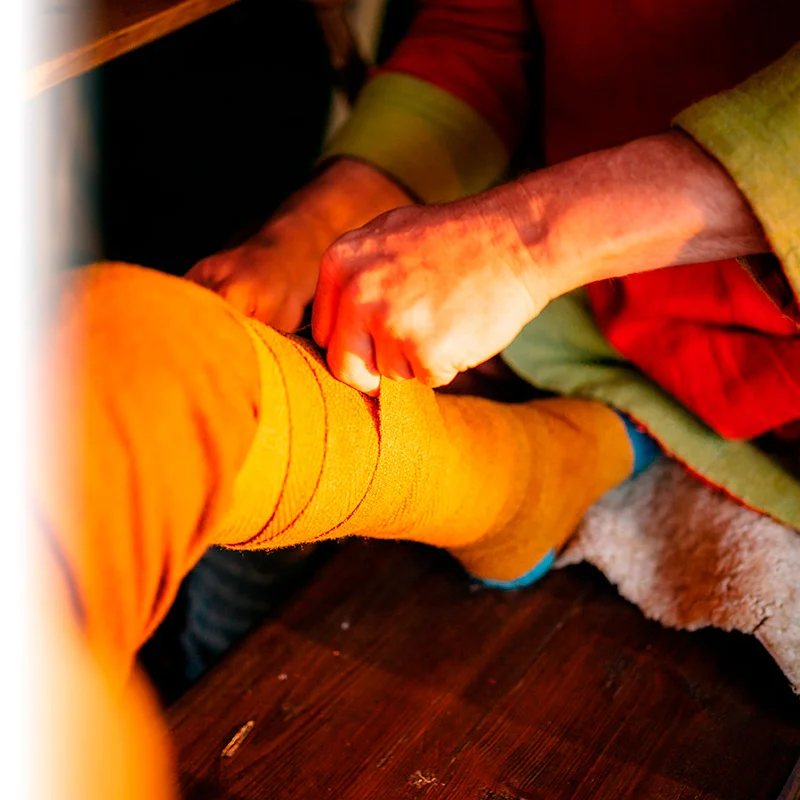
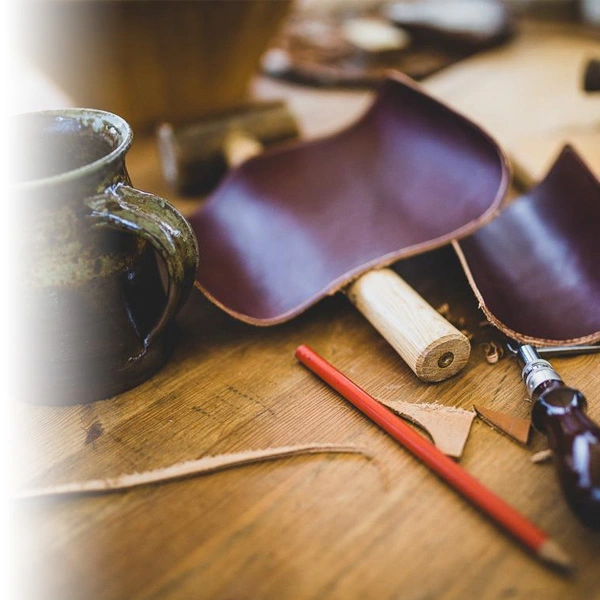
The sleeping area consists of medieval tents, sheepskins as bedding and woollen blankets or woollen sleeping bags. The workbench holds pliers, hooks, fittings and nails — for repairs, handicrafts and the small tasks that arise at every camp.
Camp equipment to suit your needs and budget
For your first visit to the market, a simple wooden plate (from ~€10), a spoon and a drinking horn or mug will suffice. Skins and blankets can initially be replaced by simple woollen blankets. The aim: a functional basic set that looks the part, without having to buy a full set straight away.
As your experience grows, hand-forged unique items become worthwhile: S-hook sets, a cauldron saw, a turned cutlery set made from natural materials. White-tanned sheepskins (from ~€37) replace synthetic underlays and noticeably improve both appearance and sleeping comfort.
A complete period kit: coordinated ceramics, hand-forged cookware, historically styled tents, hides and woollen sleeping bags. Here, it’s the level of detail that counts — from the glaze on the mug to the surface texture of the iron. No upper price limit; tents often cost in the three-figure range.
Furs and blankets: warmth and atmosphere in the camp

In the Middle Ages, furs were a natural part of everyday life — serving equally as bedding, seat cushions, insulation and decoration. Archaeological finds and written sources confirm that sheepskins, wolf skins and bear pelts were common in camps and living quarters across all social classes.
Our range includes Icelandic sheepskins with long and short pile, both white-tanned. White tanning (also known as alum tanning) is a traditional method that makes the skin supple and temperature-regulating — it insulates in winter and wicks away moisture. Long-pile Icelandic sheepskins are particularly suitable as seat cushions or decorative elements, whilst short-pile ones serve as robust sleeping mats. Spotted black-and-white variants are especially popular for the sleeping quarters.
English and Irish sheepskins differ in tanning and appearance: the English sheepskin in white-yellow with medical tanning is machine-washable — practical for regular use. Irish sheepskins in mottled brown offer a slightly more rustic look. Wool blankets and wool sleeping bags complete the sleeping kit — functional everyday items that are also well documented historically and prove ideal for nights under a tent.
Historical knowledge: Daily life and objects in a medieval camp
Archaeological finds from medieval settlements and military camp excavations reveal a surprisingly rich array of everyday items: turned wooden vessels, ceramic bowls and jugs in regionally typical shapes, iron knives and tools, bone and horn combs, and textile remnants. Cooking utensils made of iron and pottery dominated, supplemented by wooden cutlery and, occasionally, pewter tableware in wealthier households. Lighting was provided by tallow candles in simple candleholders or open bowls. Many of these forms remain virtually unchanged to this day — turned beechwood bowls, for example, correspond in form and function to their medieval counterparts.
Military camps were tightly organised supply structures: soldiers slept in tents or under the open sky on straw and animal skins, and cooking areas were shared. A retinue of traders, craftsmen and suppliers accompanied the armies, ensuring food, repairs and equipment. Pilgrim camps along the major pilgrimage routes (Santiago, Rome, Jerusalem) were more informal but similarly structured: community, communal fires, simple food preparation. Privacy was a luxury — sleeping, eating and working often took place in the same cramped space.
The cliché of the ‘smelly Middle Ages’ does not stand up to historical scrutiny. Personal hygiene was an integral part of daily life — bathing, combing one’s hair and washing one’s hands and face before meals were taken for granted. Archaeological finds reveal hygiene tools made of bone and horn: ear spoons, toothpicks and nail cleaners in combined cases. Combs made of bone or horn are found in almost every medieval excavation. The knife served as a universal everyday tool — for eating, carving, cutting and as a personal hygiene instrument. In a camp context, hygiene kits and combs are part of a complete living history kit.
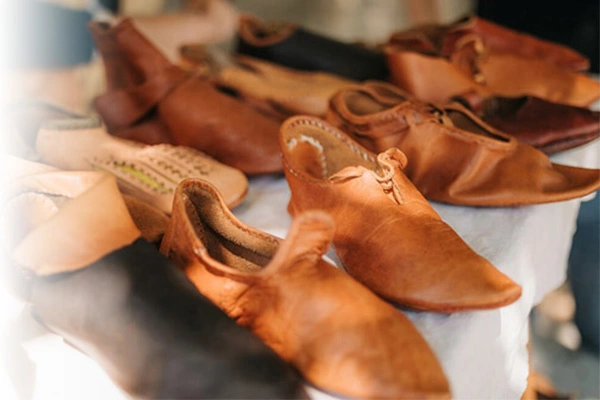
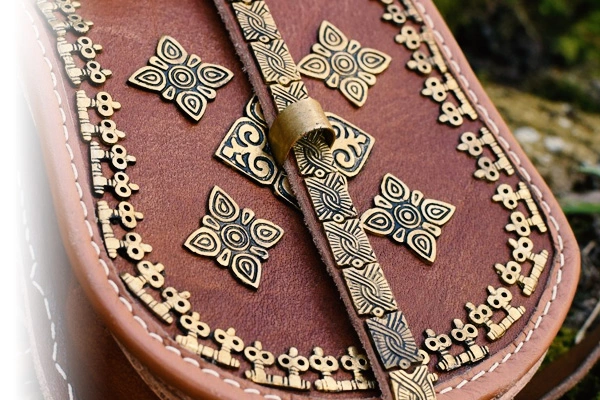
In the Middle Ages, everyday objects were usually carried on the person or stowed in small belt pouches and bags — there were no fixed fixtures in camp life. Typical items carried: a knife on the belt (for almost everyone, men and women alike), a pouch or bag containing personal belongings, coins, writing implements and religious objects such as pilgrim’s rosaries or saint’s medallions. Fire steel and tinder were essential and are frequently found in archaeological finds. Drinking vessels were carried individually — one’s own cup or drinking horn was personal property. These everyday accessories are what make a living history re-enactment complete and credible.
Whether you’re setting up camp for the first time or gradually completing your kit — browse through our range and discover what will make your camp even better this year. At our camp shop in Rinchnach or over the phone, we’ll help you find the right items for your needs and your historical period.
Frequently asked questions
For your first visit to the market, a simple basic set will suffice: a wooden plate or bowl, a spoon, a knife and a drinking horn or mug. We also recommend a woollen blanket or a sheepskin as a seat pad. With just these few items, your campsite will already look the part — and the budget remains manageable.
Hand-forged pieces bear the marks of work over the fire: irregular surfaces, slight twists and individual dimensions that correspond to the historical original. Industrially manufactured pieces are more uniform and often cheaper. For living history re-enactments with high standards of authenticity, hand-forged items are the better choice; for LARP and beginners, industrial pieces also serve well.
White tanning (also known as alum tanning) is a historical tanning method in which the hide is treated with alum and salt. The result is a soft, temperature-regulating hide that insulates in winter and wicks away moisture. Unlike chrome tanning, the natural structure of the hide is largely preserved. White tanning is the more authentic method and is archaeologically attested as having been used in the Middle Ages.
The cliché of a dirty Middle Ages does not stand up to historical sources. Personal hygiene and cleanliness were standard everyday practices — public baths were widespread in towns, and combing one’s hair and washing one’s hands before eating were part of the routine. Archaeological finds of hygiene tools, combs made of bone and horn, and evidence of soap production attest to a thoroughly well-groomed everyday life.
Early medieval pottery (6th–10th centuries) is often unglazed, hand-formed or turned on a slow wheel, and has a rough, sandy surface. In the High Middle Ages, lead glazes and more uniformly turned forms became widespread. The Late Middle Ages brought salt glazes and characteristic forms such as the Bartmann jug. Those seeking authenticity should match the pottery to the depicted era and region.