



Celtic belts


Celtic belts combine traditional craftsmanship with a distinctive sense of style – whether as a functional everyday accessory or as a striking focal point in a Celtic outfit. In this category, you’ll find leather belts featuring Celtic embossing, knot patterns and authentic brass or iron fittings, ranging from simple long belts to wide, embossed styles with a ring fastening.
What makes a belt Celtic? Ornaments, patterns and fittings

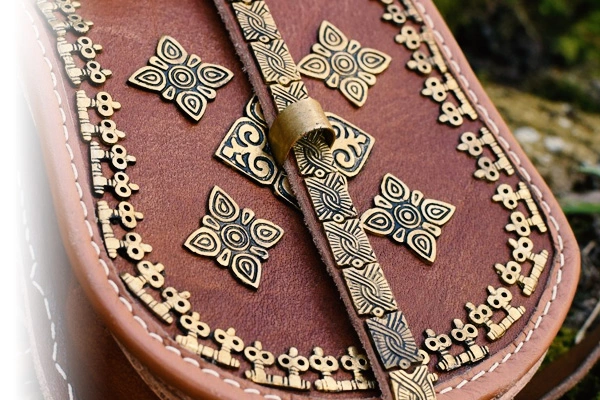
The most striking feature of Celtic belts is the ornamentation – more specifically, the endless interlacing of intertwining lines, known as the knot pattern. These interlaced ornaments have no ends; line upon line winds its way through the motif without interruption. When embossed onto leather, this creates a relief that appears different depending on the angle of the light, lending the belt a deep, almost sculptural quality.
Technically, there are two approaches: with embossed leather, the pattern is pressed directly into the leather surface – this is the most common method and produces a uniform, continuous design. Alternatively, separate metal fittings are riveted on: small plates or decorative rivets made of brass or bronze, arranged as intermediate and end fittings along the strap. This variant is more closely based on historical original finds.
Archaeological evidence for both styles is provided, amongst other things, by finds from Hallstatt (Upper Austria), from the Glauberg in Hesse, and from various Celtic oppida such as Manching or Stradonice. The belt buckles from these finds are often made of bronze or iron – brass, as a casting alloy, was also widespread in the Iron Age and remains the standard material for buckle replicas today.
An overview of belt types: ring belts, long belts and buckle belts
Ring belts
The strap is threaded through a metal or iron ring and secured with the protruding end. Typical lengths start at 160 cm – the long excess can hang down in front of the centre of the body or be tucked in at the side. Particularly practical for Celtic and early medieval garments, as no awl is required.
Long belts
Without a fixed buckle – the belt is looped round and knotted or fastened. Its considerable length allows it to be worn over tunics, dresses and garments of various fits. A timeless style that works equally well in both LARP and re-enactment.
Buckle belt
The classic solution: leather straps with a classic brass D-ring or frame buckle. Narrow versions (2 cm) look understated and go well with lighter clothing; wider versions (4 cm) make a striking statement and are ideal as a visible belt over a tabard or robe.
Caring for Celtic belts properly and ensuring they last
Leather is a natural product and is sensitive to moisture and drying out. After contact with rain or heavy perspiration, the belt should be left to dry at room temperature – never directly on a radiator, as this will cause the leather to become brittle. It is then advisable to treat it thoroughly with leather grease or leather care, which penetrates deep into the fibres and maintains flexibility.
Brass buckles oxidise over time and develop a darker, slightly greenish patina. Those who appreciate the authentic antique finish will allow this to happen. Those who prefer shiny brass should polish it occasionally with a dry cloth or a mild metal polish. Please do not use aggressive abrasive cleaners – the rivet joints could suffer, particularly on riveted fittings.
For storage: keep the belt flat or loosely rolled up, not tightly folded, and avoid damp rooms. A leather pouch or an open shelf is better than a sealed plastic box, as leather needs air circulation.
Celtic belt fittings: buy decorative rivets and fittings separately

Belt fittings are a subject in their own right, well worth exploring for anyone wishing to design a simple leather strap themselves. A basic distinction is made between intermediate fittings (along the strap), end fittings (at the end of the strap) and decorative rivets, which are set at regular intervals.
Historical examples from the Iron Age and the Early Middle Ages show that metal appliqués on belts served both decorative and status-symbol purposes. Finds from Celtic graves reveal bronze fittings featuring spiral motifs, depictions of animals and abstract knot patterns. To create your own design, you will need not only the fittings but also the appropriate riveting tools and suitable cowhide leather straps as a base.
In the Medieval Bag and Belt Fittings category, you’ll find a selection of fittings, rivets and buckles that can transform a simple strap into a unique Celtic belt. This DIY approach is particularly popular among re-enactors who strive for the most historically accurate details possible.
The right Celtic belt for your outfit and occasion
For a first Celtic outfit or a visit to a medieval market, a simple long leather belt with an iron ring will suffice. The affordable options from €16 offer decent workmanship and go with almost any tunic or dress. Brown and black are the simplest colour choices for beginners.
In LARP, comfort and durability are particularly important. Ring belts can be put on and taken off quickly without having to search for holes – a practical advantage between adventures. A belt with a Celtic design in the mid-price range meets aesthetic requirements without breaking the bank.
Those wishing to look historically accurate should opt for belts with brass buckles and Celtic knot patterns, or designs with riveted fittings based on archaeological models. Wide belts (4 cm) with full-surface embossing provide a striking accent to a Celtic garment made of wool or linen. Green and bolder colours complement outfits designed to stand out from the brown crowd.
Materials and workmanship: What goes into a Celtic leather belt?
| Material | Suitability | Characteristics |
|---|---|---|
| Full-grain cowhide | Reenactment | Dense and firm, takes on embossing sharply, very durable, softens with time |
| Smooth leather | LARP | Smooth, slightly glossy surface, robust, easy to care for |
| Brass buckle | Reenactment | Warm golden hue, oxidises over time to an antique look, medium weight |
| Bronze buckle | Reenactment | Most historically authentic, darker colour, develops a light patina |
| Aluminium buckle | LARP | Lightweight, rust-free, silver tone, no historical counterpart – practical for everyday use |
| Embossed surface | LARP | Pattern pressed directly into the leather, uniform appearance, robust overall impression |
| Riveted fittings | Reenactment | Separately manufactured metal parts, historically documented process, customisable |
If you want to customise your own belt, our cowhide leather straps provide a solid foundation for DIY projects. Buckles from the Medieval Belts and Straps category are a perfect match.
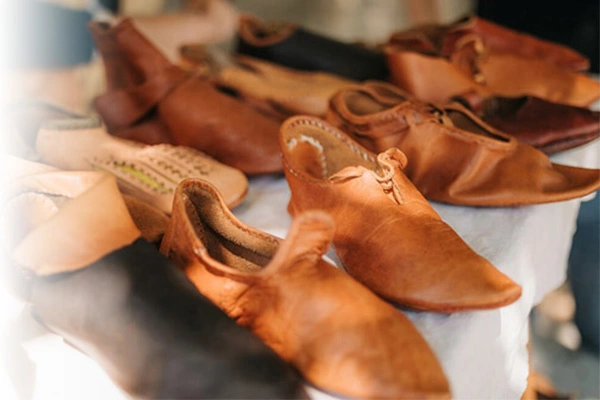
Whether you’re putting together a cohesive Celtic outfit, completing a re-enactment costume, or simply looking for a sturdy leather belt with a Celtic feel – in this category you’ll find the right option to suit your needs and budget. Complement your belt with matching Celtic shoes, Celtic bags or Celtic knives to create a complete outfit.
Frequently asked questions
A ring belt is threaded through a metal or iron ring and secured with the excess strap end – no holes are required, making the fit very flexible. A buckle belt, on the other hand, has a classic frame buckle and fixed holes in the strap. Both are historically documented for Celtic and early medieval attire; however, the ring belt is considered particularly easy to use.
That depends on the outfit and the desired look. Narrow belts, 2 cm wide, look understated and work well under a dress or with light summer clothing. Wide belts, 3–4 cm wide, make a striking statement, for example over a tabard or a woollen tunic. In re-enactment, wider versions with full-surface embossing are more visually effective.
After getting wet, allow the belt to dry at room temperature, then treat it with leather grease. Brass buckles may oxidise and develop a patina – this is normal and can be polished with a dry cloth. When storing, keep the belt flat or loosely rolled up; do not fold it tightly and do not store it in damp rooms.
Yes, this is a common approach in reenactment. You will need a cowhide leather strap as a base, as well as matching decorative rivets and brass or bronze intermediate and end fittings. The fittings are attached using small rivets. You can find the relevant materials in the Medieval Bag and Belt Fittings category.
For re-enactment, we recommend belts with historically inspired fittings or brass buckles based on archaeological models – such as finds from Hallstatt or Glauberg. Embossed full-grain cowhide belts with a Celtic knot pattern and a brass buckle are priced between €33 and €42 and offer a good balance of authenticity and durability. Those who pay close attention to detail can also fit separate fittings onto a plain strap.