


Landsknechts and the Renaissance


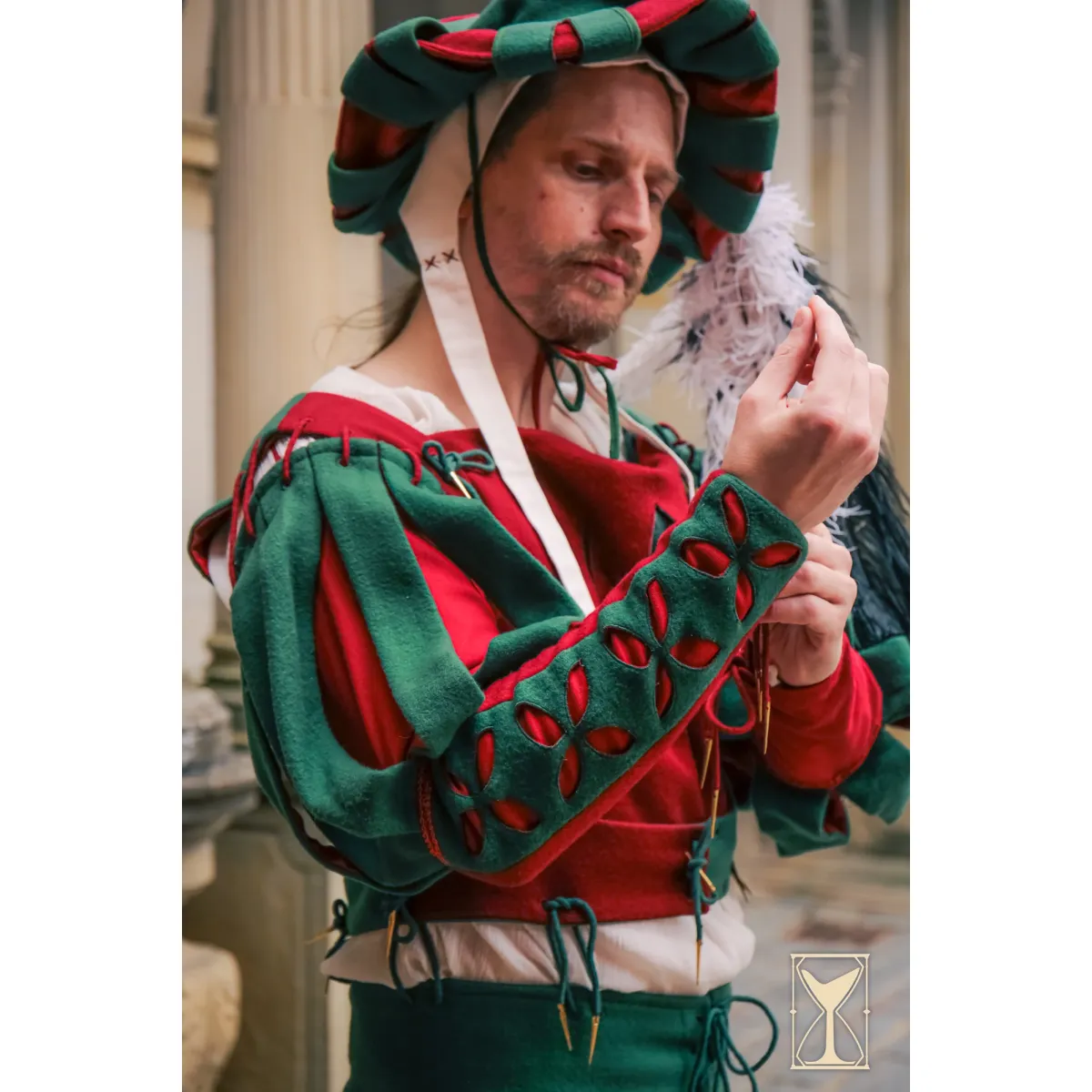


Landsknechts and the Renaissance represent one of the most colourful eras in European history – striking slit tunics, thunderous harem trousers and gleaming plate armour make this era a dream theme for re-enactment, LARP and medieval markets. With over 180 items from Epic Armoury, Freyhand and the Vehi-Mercatus own brand, you’ll find everything you need here for a convincing portrayal of the 15th and 16th centuries.
The Age of the Landsknechts: Fashion as a Demonstration of Power
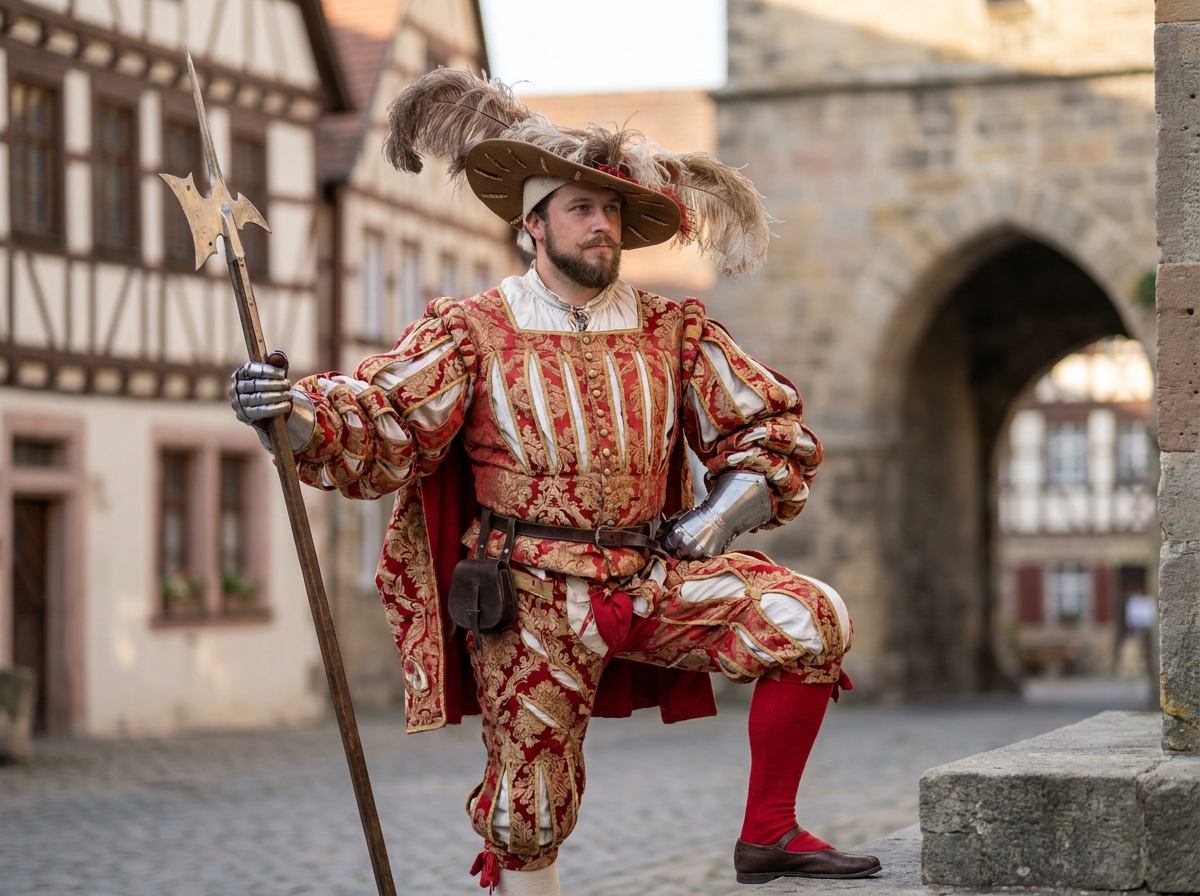
Emperor Maximilian I is regarded as the father of the Landsknechts: at the end of the 15th century, he specifically had German-speaking mercenaries trained into a formidable infantry force that, within a few decades, dominated the whole of Europe militarily. What fundamentally distinguished these warriors from earlier mercenary armies was not merely their combat discipline – it was the explicit freedom they were granted in matters of dress. No class-based regulations to restrict their fashion; no dress code to regulate their colours.
The consequences of this privilege can still be seen today in historical visual sources: deliberately provocative slits in sleeves and trouser legs, from which the bright undershirt spilled out, maximum colour contrasts in red, green, black and white, and the characteristic silhouette of a loose doublet and billowing harem trousers. This combination of the harsh realities of warfare and an aesthetic inspired by courtly Renaissance fashion makes the era particularly attractive for modern-day re-enactment and LARP: a Landsknecht outfit is instantly recognisable, can be put together in a modular fashion, and creates a striking impression with just a few key pieces.
The development of Landsknecht fashion: from the 15th to the 16th century
Early phase
The first generation of Landsknechts still wore comparatively close-fitting garments with subtle slits at the sleeves and knees. The first colour contrasts between upper and lower garments began to emerge, and the cow-mouth boot began its triumphant march as the characteristic footwear.
High period
The heyday of Landsknecht fashion: maximum splendour with flared harem trousers, elaborately slit doublets and voluminous feathered hats in historical colour combinations such as white/red or green/red. Slits became a status symbol; the more there were and the more colourful they were, the more respected the mercenary.
Late phase
Under growing Spanish influence on European court fashion, the extreme styles began to recede. Darker colours, more subdued cuts and the emerging Spanish doublet heralded the transition to Baroque fashion. At the same time, women’s fashion, with its emphasised waist, corset and full skirt, developed into a distinct Renaissance aesthetic.
The most important garments for men and women
Men’s attire
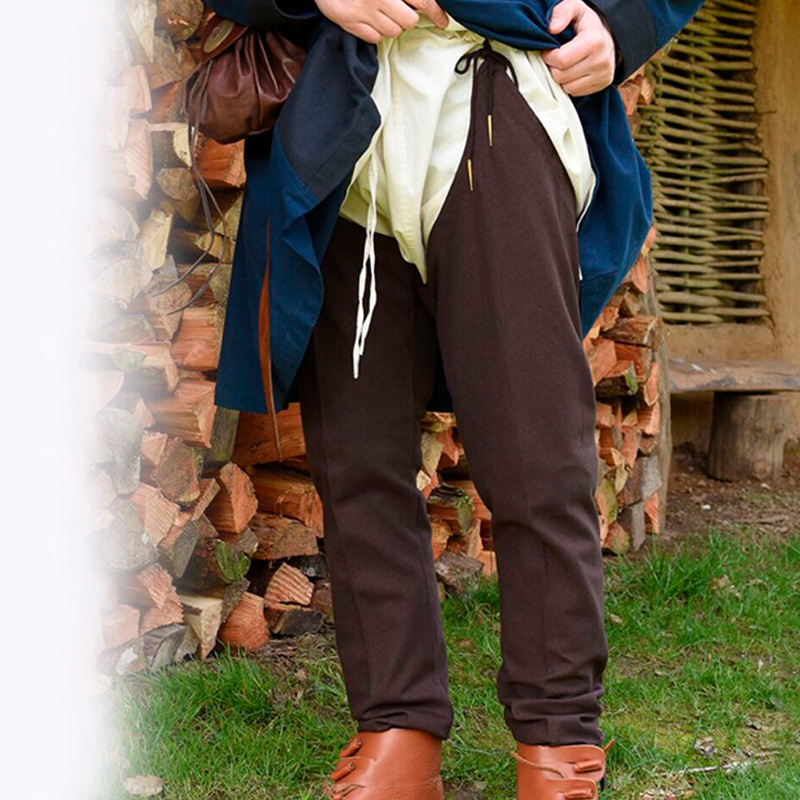
The doublet, a close-fitting top, the wide harem trousers with their characteristic slits, and the loosely draping linen shirt worn underneath form the centrepiece of every Landsknecht outfit. The Bruche serves as close-fitting underwear and is indispensable for a complete ensemble. Lacing cords connect the individual parts both functionally and decoratively.
Women's clothing
Renaissance ladies’ fashion in the Landsknecht style emphasises the waist and décolletage with a fitted bodice worn over a loose-fitting petticoat. Elaborate trimmings on the hem and sleeves, as well as artfully draped bonnets, complete the look. Cow-mouth shoes are also the typical footwear of the era for ladies.
Footwear & Accessories
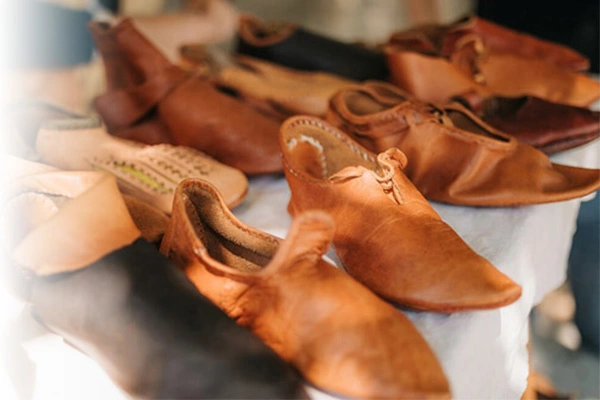
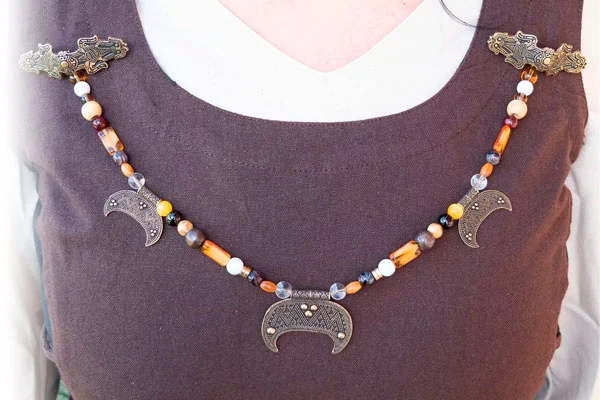
The wide-toed shoe is the unmistakable footwear of the 15th and 16th centuries – a true hallmark of any historical re-enactment. Landsknecht accessories such as belts, belt pouches, jewellery and lace trimmings complete every outfit and allow for a personalised look.
Comparison of materials: wool, cotton and wool blends
| Material | Suitability | Use |
|---|---|---|
| Wool | Historical | Wams, coats, hats, outerwear |
| Wool blend fabric | Historical | Harem trousers, jackets, complete costumes |
| Cotton-linen blend | Historical | Shirts, tunics, bonnets |
| 100% cotton | LARP | Headdresses, linings, lightweight accessories |
| Polyamide blend | LARP | Easy-care everyday clothing, outdoor events |
Wool is the most historically authentic material for 15th- and 16th-century outerwear and is used for high-quality doublets, coats and lansquenet headgear. For undergarments such as shirts and doublets, a breathable cotton-linen blend is recommended, which remains comfortable to wear even on long market days. Wool blends offer a good compromise between authenticity and ease of care for frequent LARP use, whilst polyamide content allows for robust and machine-washable options.
The right outfit for every occasion and every budget
Cotton-linen blend tunics and breeches provide an easy introduction to Landsknecht reenactment. These basic pieces already go well together at markets and festivals and can be gradually supplemented with further items – the modular approach across multiple events is particularly budget-friendly.
Complete outfits featuring a doublet, harem trousers and headgear create a cohesive overall look for medieval markets and LARP events. Historical colour combinations such as white/red or green/red ensure instant recognition. Drawstrings, serving as functional fastenings, are already included in this price range or can be added at a low cost.
High-quality woollen coats, complete outfits made from woollen blends and basic plate armour pieces enable a historically convincing portrayal. The price range extends up to ~€294 for complete re-enactment outfits, which are suitable for group formations, living history displays and challenging mock battles.
Headwear and accessories: the finishing touch to any re-enactment
The coif is the most versatile headwear of the era. Made from 100% cotton or a cotton-linen blend in natural, black and coloured tones, it goes well with a simple shirt and also serves as a base layer under a feathered hat. Models such as the ‘Bela’ (from ~€11) or the ‘Imperialis’ in colourways such as natural/black, red/black and brown offer excellent comfort even during long events and are available in a wide range of sizes from S to XXL.
The striking, multi-layered Landsknecht hats from Epic Armoury’s Yoremade line are made of wool and feature distinctive slits. Historical colour combinations such as white/red or green/red correspond to pictorial sources from the 16th century. The hats are available in sizes S-M, L-XL and XXL and are ideal for both LARP events and medieval fairs.
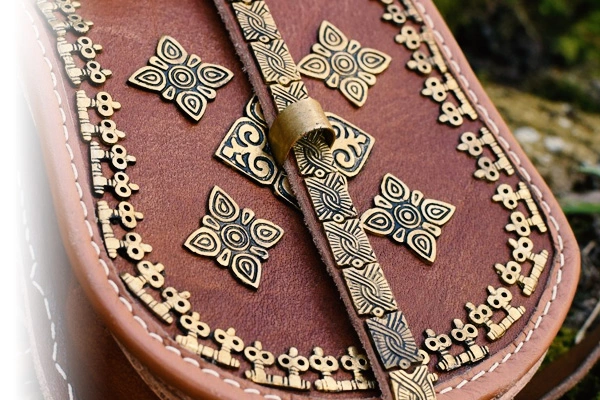
Lacing cords are both functional and decorative fastenings: they tie together trousers, sleeves and doublets and were a ubiquitous feature of clothing in the 15th and 16th centuries. The range includes single-colour and two-colour versions, as well as designs with brass cord ends for particularly high-quality period re-enactments. The range of accessories is complemented by belts, belt pouches and jewellery to create a complete ensemble.
Armour from the Landsknecht era: Gothic plate armour and Renaissance helmets
- Gothic plate armour with fluting in polished steel
- Breastplate and armour in historical design
- Bracers and greaves made of polished bright steel
- Morion and coif as typical Renaissance helmets
- Halberd and long sword as historical pole weapons
- Brands: Battle Merchant, Lord of Battles
- Lighter versions made from sheet steel with a matt finish
- Movement-friendly designs for dynamic combat
- LARP swords made of latex for full-contact events
- Replicas suitable for exhibition fighting, made from sturdy steel
- Shoulder pads for greater protection with less weight
- Brands: Epic Armoury, Vehi Mercatus
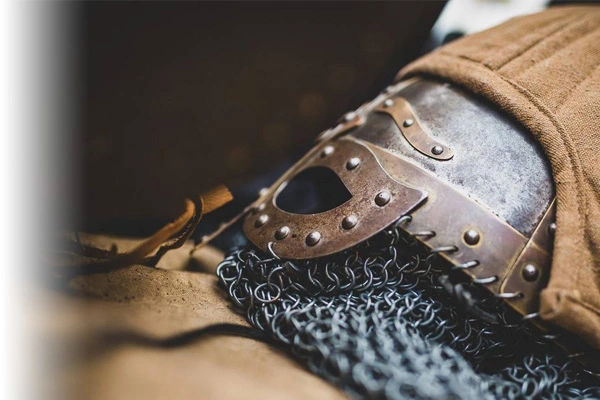
Gothic-style plate armour with its characteristic fluting is the typical armour of the Landsknecht era. Complemented by Renaissance helmets such as the morion or the balaclava, this creates a complete combat outfit that is equally impressive at stage combat and re-enactment events. For historically accurate gear, Battle Merchant and Lord of Battles offer particularly high-quality materials, whilst Epic Armoury provides greater freedom of movement with lighter variants.
Whether you’re planning your first visit to a medieval market, want to complete your LARP outfit with an authentic cow-mouth shoe, or are aiming for a historically convincing re-enactment – browse the subcategories for men, women, shoes, armour and accessories now and put together your own personal Landsknecht ensemble.
Frequently Asked Questions
A typical Landsknecht outfit consists of a shirt, doublet, harem trousers, a bruche, a hood or feathered hat, and cow-mouth shoes. Drawstrings for fastening the trousers, sleeves and doublet are a characteristic detail that completes the overall look. Depending on the occasion and budget, the ensemble can be expanded to include a belt, dagger and armour pieces. Building up your outfit gradually over several events is particularly recommended for beginners.
Historically accurate materials include, above all, wool for outerwear such as doublets and coats, as well as linen or a cotton-linen blend for shirts and undergarments. Wool-blend fabrics offer a good compromise between authenticity and ease of care for frequent LARP use. Pure polyamide is more suitable for beginners who require robust and machine-washable clothing.
The range includes both re-enactment armour in polished steel and variants for stage combat and LARP. For re-enactment groups, we recommend products from Battle Merchant or Lord of Battles with high material thickness, whilst Epic Armoury offers lighter variants for greater freedom of movement. When purchasing, the intended use should be a key consideration, as re-enactment and LARP versions differ significantly in weight and construction.
The Landsknecht hats in Epic Armoury’s Yoremade range are available in sizes S-M, L-XL and XXL. The coif helmets in the Bela and Imperialis series also cover a wide range of sizes from S to XXL. We recommend checking the product’s size chart, as the fit may vary depending on the model and manufacturer.
Absolutely – Landsknecht garments are ideal as authentic costumes for Fasching, Carnival and theatre productions. The striking colours and characteristic cuts are instantly recognisable and stand out at any event. As the garments are made from high-quality materials, they can easily be reused for LARP events and medieval markets after the festivities.