


Landsknecht headgear


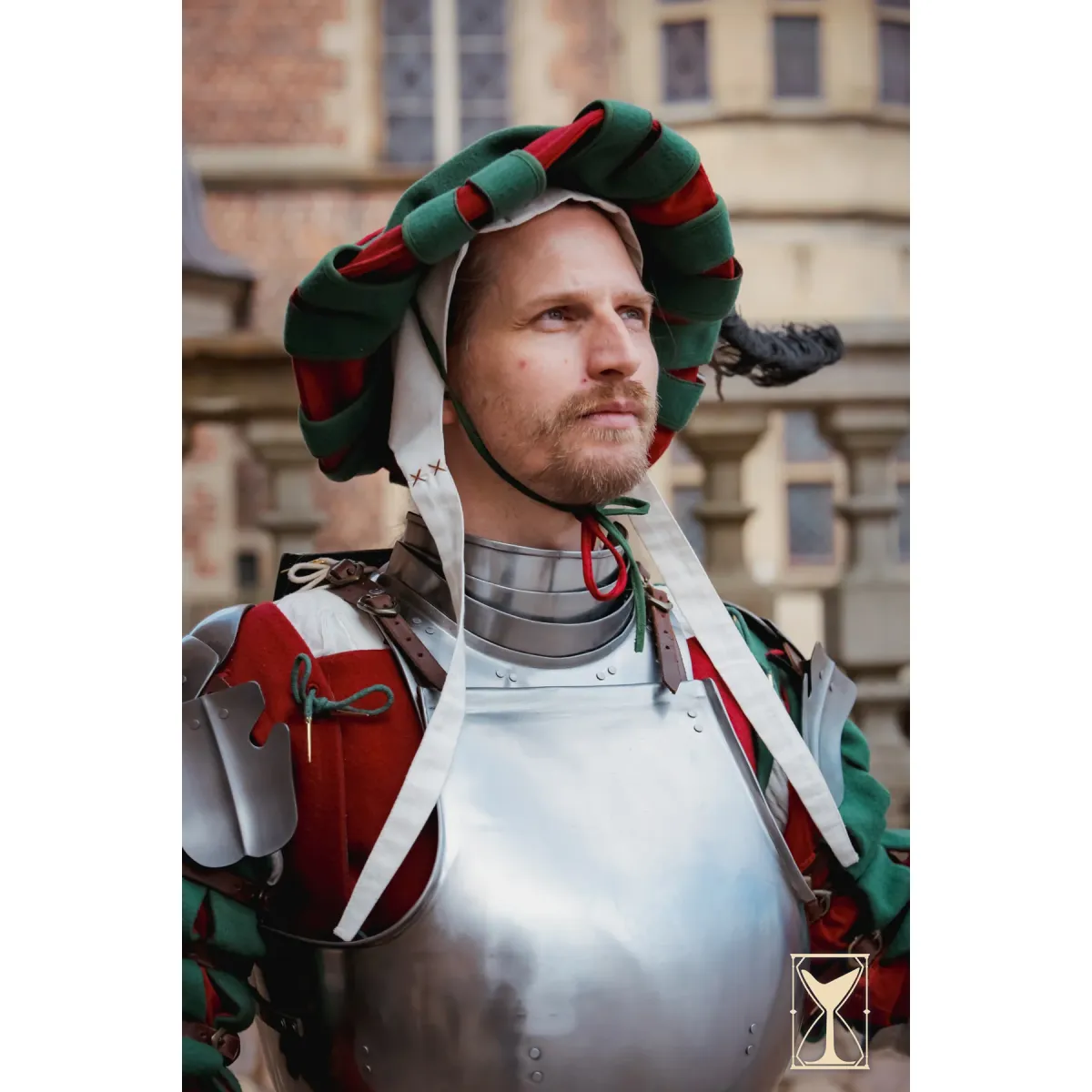

Landsknecht headgear is the unmistakable hallmark of the colourful mercenaries of the 16th century – from the simple banded cap as a classic under-cap to the magnificent multi-layered wool hat in Renaissance style, they complete any historical outfit authentically and stylishly.
Bundhaube and Landsknecht hat: an overview of the two main types
- Close-fitting with a tie under the chin or at the nape of the neck
- Worn under the helmet as padding and in everyday life
- Material: cotton or cotton-linen blend
- Versatile everyday headwear for mercenaries, craftsmen and townspeople
- Ideal for re-enactment, military camps and as an under-head covering
- Multi-layered woollen headgear with a striking silhouette
- Status symbol and ceremonial headgear of the Landsknechts
- Historical colour combinations such as white/red and green/red
- Yoremade design with a wide brim and distinctive shape
- Ideal for LARP events, medieval markets and costume parties
Historical background: Landsknecht headgear in the 16th century

The Landsknechts of the Holy Roman Empire were regarded as the most colourfully dressed mercenaries of their time. Their deliberately eye-catching attire was not merely a fashion statement, but an expression of a hard-won privilege: Landsknechts were the only social class permitted to wear the colourful fabrics otherwise restricted by dress codes – a visible sign of their freedom and courage in the face of the enemy.
The banded cap was the universal everyday headwear worn by almost all social classes – mercenaries, craftsmen and ordinary townspeople alike used it, usually made from plain natural colours. The Landsknecht hat, on the other hand, was both a status symbol and a ceremonial headdress: historically handed-down colour combinations such as white/red and green/red reflect the typical splendour of the Landsknechts, who deliberately distinguished themselves from other mercenary groups through their appearance. It is these colour traditions that make authentic men’s Landsknecht clothing so distinctive today.
Material comparison: wool, cotton and cotton-linen blend
| Material | Suitability | Properties & Recommendation |
|---|---|---|
| Wool | Reenactment | Retains its shape, warm, ideal for spring and autumn; care: max. 30°C gentle cycle, dry flat |
| 100% cotton | LARP | Lightweight, easy-care, robust for frequent use; machine washable at 40°C |
| 80% cotton / 20% linen | Historical | Historically inspired, good breathability; particularly recommended for summer events |
The choice of material should be based on the season and intended use: woollen hats offer real comfort in moderate temperatures and retain their shape even when worn for long periods. For hot summer days at medieval markets, the lighter bonnets made from a cotton-linen blend are the far more comfortable choice.
Quality levels and price ranges: From entry-level to premium woollen hats
The Bela bonnet, made from a cotton-linen blend, is the ideal starter kit for beginners. Available in sizes S, M and L, it offers solid comfort for your first visit to a medieval market or a trial re-enactment – and fits easily under standard helmets.
The Imperialis banded hood, made from robust 100% cotton fabric, comes in several colour options (natural/black, red/black, brown) and is the tried-and-tested choice for regular LARP players and market visitors who value durability and a wide range of colours.
The Landsknecht hats from Epic Armoury, made from high-quality wool in a Yoremade design, feature multi-layered construction, authentic colour combinations and sizes from S-M to XXL – the first choice for discerning re-enactors and LARP enthusiasts seeking maximum visual impact.
Sizes and care: measuring correctly and long-term maintenance

To find the right size, place a soft measuring tape horizontally around your head – about two fingers’ width above your ears and across your forehead. The measurement in centimetres is then compared with the manufacturer’s size chart. As a guide: S-sized hoods correspond to a head circumference of approx. 52–54 cm, M approx. 55–57 cm and L approx. 58–60 cm. Epic Armoury wool hats are available in sizes S-M, L-XL and XXL, covering almost every head circumference.
Care instructions: Wash woollen items gently by hand or on a delicate cycle at a maximum of 30°C; do not tumble dry; lay flat on a flat surface to dry and retain their shape. Cotton or cotton-linen blend coifs are more robust and can be machine washed at 40°C. Coloured models should be washed separately the first time. With the right care, both bonnets and woollen hats will retain their shape and colour intensity for many event seasons to come.
Which headwear is suitable for which occasion?
For men’s LARP events, we recommend colourful woollen hats in high-contrast combinations such as white/red or green/red. Epic Armoury’s multi-layered Yoremade design creates maximum visual impact and withstands even the most intense gameplay. Combined with matching Landsknecht accessories, this creates an unforgettable presence on the battlefield.
In military camps and at re-enactment events, historical authenticity is paramount. Cotton-linen blend or pure cotton coifes in natural tones such as ecru or brown are the first choice here. They fit under contemporary helmets and perfectly complement the overall historical impression of a 15th- or 16th-century re-enactment – just as coifes were historically worn as under-helmets beneath a wide variety of helmet shapes.
At medieval markets and costume parties, you can certainly be more eye-catching: colourful woollen hats and multi-layered designs with contrasting colour combinations attract attention and ensure unforgettable appearances. Combine the headwear with matching Landsknecht dresses for women or a complete Landsknecht Renaissance outfit for a perfectly harmonious overall look.
Whether it’s a simple bonnet for your first re-enactment camp or a colourful woollen hat for an unforgettable LARP performance – here you’ll find the perfect Landsknecht headgear for every occasion and every budget. Browse the range now and complete your outfit with matching Landsknecht shoes and a harmonious Landsknecht armour set.
Frequently asked questions
The banded cap is a close-fitting headpiece made of cotton or a cotton-linen blend with tie-back straps – it was worn in everyday life and as an undercap beneath the helmet. The Landsknecht hat is a multi-layered, eye-catching woollen headpiece with a wide brim and distinctive silhouette, which served as a status symbol and ceremonial headwear. The banded cap is recommended for re-enactment encampments, whilst the colourful woollen hat makes a stronger impression at LARP events and medieval markets.
Place a soft measuring tape horizontally around your head – about two fingers’ width above your ears and across your forehead. Note down the measurement in centimetres and compare it with the manufacturer’s size chart. Bundhauben in size S fit a head circumference of approx. 52–54 cm, M approx. 55–57 cm and L approx. 58–60 cm. Epic Armoury woolly hats are available in S-M, L-XL and XXL, covering almost all head sizes.
Yes, this is both historically accurate and practical. In the 15th and 16th centuries, coifes were routinely worn as an under-cap beneath all types of helmets – they cushioned the head, prevented pressure marks and improved the fit. The close-fitting styles made from cotton and a cotton-linen blend fit easily under standard re-enactment and LARP helmets.
Wool naturally regulates temperature and is pleasantly warm in moderate spring and autumn weather without causing overheating. On very hot summer days, a cotton-linen blend banded cap is the more comfortable choice, as the material is lighter and more breathable. We therefore recommend the cotton models for summer events – the wool caps are ideal for autumn and spring events.
Wash woollen items at a maximum of 30°C on a gentle cycle or by hand; do not tumble dry and allow to dry flat to retain their shape – woollen items shrink at high temperatures. Banded caps made of cotton or a cotton-linen blend can be machine-washed at 40°C and are significantly easier to care for. Coloured items should be washed separately the first time to prevent colour transfer onto other fabrics.