



Nesting cord two-coloured


- Available

- Available


Two-tone drawstrings combine historical function with creative expression: as far back as the Middle Ages, drawstrings were used not only to fasten clothing but also as a visible feature of the garment’s colour and style. In this category, you will find hand-knotted laces made from 100% cotton in numerous two-tone combinations – crafted according to historical models, suitable for re-enactment, LARP and medieval markets.
What is a two-tone cord?
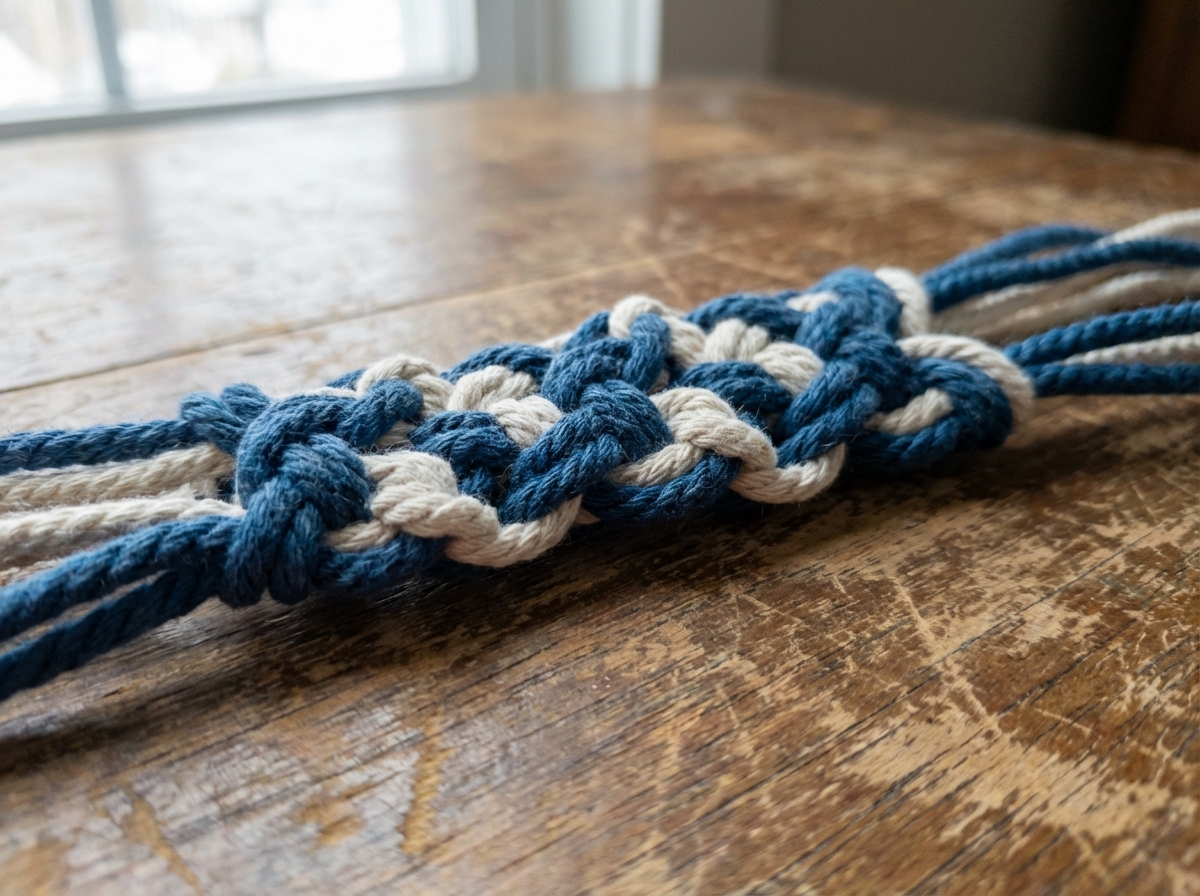
A drawstring – also known as a lacing cord or cord – is a braided or knotted cord that served as a fastening element in medieval and early modern clothing. It fastens bodices, trousers, sleeves and collars, wherever buttons or buckles were not used. The term is derived from the Middle High German word ‘nestel’ and referred generally to ribbons or straps used for fastening.
In the case of a two-coloured cord, two colours of yarn are worked together during knotting. The result is a marbled or interwoven appearance, in which both colours are visible alternately. This principle is not a modern invention: medieval pictorial sources and preserved textile finds show coloured cords as a deliberate fashion detail, not merely as a functional utility item. Colour combinations played a particularly important role in courtly attire of the late Middle Ages and amongst the Landsknechte of the early modern period – they signalled affiliation, rank and a sense of style.
Compared to the single-colour cord, the two-colour version offers a visible colour accent that is ideally suited to heraldic representations. Anyone designing their attire in the heraldic colours of a particular house or historical group can create a harmonious overall look with the matching two-colour cord – from shoe lacing to bodice lacing.
Hand-knotted according to historical models: manufacture and material
All cord laces in this category are from our own brand, Vehi Mercatus, and are made from 100% cotton. The decision to use natural fibres is not a given: many cheaper products on the market rely on polyester or synthetic blends, which are more cost-effective but historically inaccurate and less comfortable against the skin.
The lacing is done by hand. This results in a sturdy, tear-resistant cord with the characteristic, slightly irregular texture of handmade goods – in contrast to the uniformly smooth surface of industrially produced cords. This texture aids in knotting and ensures that the lacing tips hold better and the cord does not slip out of the eyelets so easily when lacing.
The lacing cords are sold in 10-cm lengths. You can therefore conveniently order the desired total length as a multiple of this: for 1 metre, select 10 pieces; for 2 metres, select 20 pieces. This makes calculation simple and also allows you to order even the smallest quantities – practical for individual fastenings as well as for equipping entire stock groups.
Cotton as a fibre material for cord elements is historically documented in Central Europe from the late Middle Ages onwards. For early medieval depictions, linen would be the more accurate choice – however, for the period from the 13th century onwards and for the early modern era, cotton is well documented and widely accepted.
Two-tone cord vs. single-colour cord: when to choose which?
- Understated, versatile look
- Ideal for simple or early medieval garments
- Blends discreetly into any outfit
- Suitable for Viking and Germanic reenactments
- Complements garments dominated by natural colours
- A visible design feature with a colour effect
- Historically documented for the late Middle Ages and Landsknechts
- Heraldic combinations (e.g. black/yellow, red/white)
- For LARP: faction and character colours can be represented
- Enhances the outfit without extra sewing effort
The choice between single-colour and two-colour therefore depends less on technical factors than on the historical period you are portraying and the desired stylistic effect. For a single-colour cord, you will also find a wide selection in the category of the same name. If you prefer brass tips, take a look at the ‘Two-colour cord with brass tips’ category as well.
Usage: Where and how are lacing cords used?
The classic uses for a drawstring are varied. The best-known is for lacing bodices and corsets – here, the string runs through pairs of eyelets at the front or along the side of the garment. Equally common is their use on trousers: in the Middle Ages, trouser waistbands and leggings were fastened to belts or waistcoats with lacing cords, as elastic bands and zips were not an option. Sleeves were also fastened to the outer garment or armour using lacing cords – an elegant solution, particularly for the cotte or cotehardie with side fastenings.
For easier threading, we recommend combining them with brass lacing tips. These are crimped onto the ends of the cord or bent into shape and function like the plastic tips on modern shoelaces: they prevent fraying and make it much easier to thread through tight eyelets. If you wish to attach the tips yourself, you can find them separately in the relevant category.
When calculating the length, the rule of thumb is: total length of the row of eyelets multiplied by two, plus sufficient excess for tying. As the cord is sold in 10-cm lengths, the conversion is straightforward. A single length of cord can also connect several pairs of eyelets when used as a continuous lacing – which saves material on long bodices.
Lacing cord for re-enactment, LARP and medieval markets: what goes with what?
In re-enactment, historical verifiability is paramount. Two-coloured cord laces are well documented for the Late Middle Ages (14th/15th century) and the Early Modern period – particularly the colourful combinations worn by the Landsknechte, who deliberately emphasised visual contrasts. Those aiming for a 12th- or 13th-century portrayal are historically on the safe side with more subdued colours or single-colour variants. For reenactment purposes, 100% cotton cord is the right choice – synthetic cords are out of the question for serious portrayals.
In LARP, the rules are much more relaxed: here, it is less about historical accuracy and more about the character’s overall coherence. Two-tone lacing cords are ideal for weaving faction colours or personal character traits into the costume. An elven warrior in silver and dark green, a city guard in the city’s colours, or a merchant character with eye-catching bodice lacing – the wide colour palette of over 39 combinations makes targeted character design possible. As LARP costumes are often subjected to more intense wear and tear, the durability of the hand-knotted cotton cord also plays a practical role.
For medieval market visitors and market traders, appearance and practical suitability for everyday use are paramount. A two-tone cord visibly enhances the outfit without the need for elaborate alterations to the garment. Anyone who already owns a bodice or a laced shirt can significantly alter the overall impression simply by changing the colour of the lacing. Vehi Mercatus lacing cords are supplied without lacing tips, allowing you to mix and match with separately available brass tips – ideal for anyone looking to gradually add to and customise their gear.
Calculating the right amount: How much lacing cord do you really need?
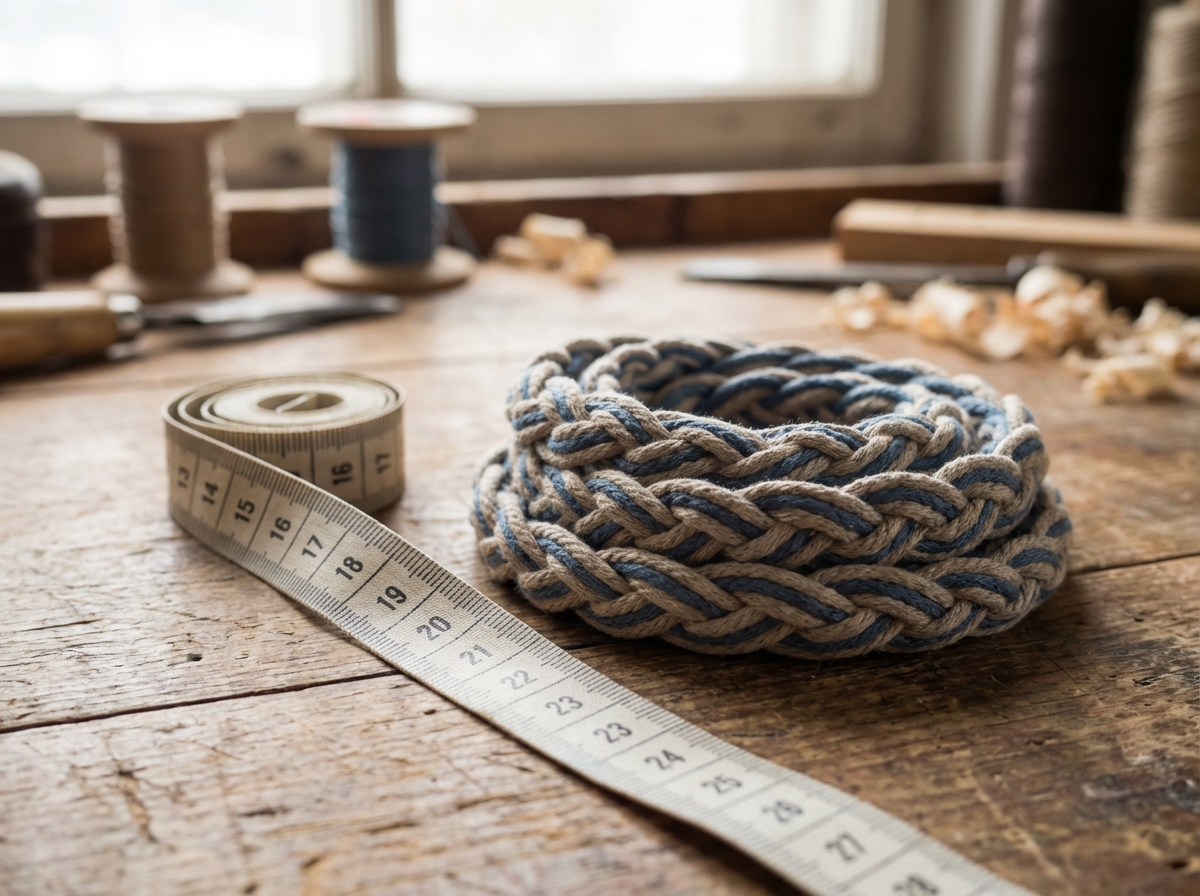
The most common question when buying lacing cords is: how much do I actually need? The answer depends on the lacing system and the length of the row of eyelets. As a rule of thumb: for classic cross-lacing, you need three times the length of the row of eyelets. A bodice with 14 pairs of eyelets, each 2 cm apart, has a row length of around 26 cm – the required cord length is then approx. 80–100 cm, including excess for tying.
As the laces are sold in 10-cm lengths, simply calculate: the desired length in cm divided by 10 gives you the number of laces required. For 1 metre, order 10 pieces; for 1.5 metres, order 15 pieces. It’s worth ordering a little extra, as lacing cords can snap, wear out or get lost – keeping a small reserve saves you from having to pay double the postage costs.
For stage, theatre and film productions where many similar costumes are required, we recommend purchasing larger quantities from the same colour batch. This helps avoid colour variations between different production batches. The medieval haberdashery in the shop offers a wide range for this purpose.
Colour combinations at a glance: from classic to heraldic
Heraldic combinations
Black/yellow, red/white, black/white, red/yellow and yellow/blue are among the classic heraldic colour pairs. They follow the rule that metal (gold/silver) meets colour – a fundamental rule of heraldry. These combinations are suitable for depictions with a specific heraldic reference and also create a strong visual contrast.
Subtle everyday shades
Light grey/light blue, blue/dusty pink, pink/white, light blue/off-white and grey/white have a more understated effect and blend in with natural-coloured garments. These combinations are suitable for everyday wear, feminine designs and outfits where the cord should complement rather than dominate.
Strong contrasts
Turquoise/black, light blue/black, red/black, blue/violet and black/blue offer a strong visual impact. These combinations are particularly popular in the LARP scene, where faction colours and character identity are conveyed through the outfit. In total, there are over 39 colour combinations to choose from.
Two-tone tassel cords are a small but effective detail that really completes an outfit. Browse through all the colour combinations, choose your shades to match your heraldry or outfit – and, if needed, combine them with matching tassel tips right here in the shop.
Frequently asked questions
With a two-tone cord, two colours of yarn are worked together during the knotting process. This creates a marbled or interwoven effect, where both colours are visible in turn. This technique has historical roots and was particularly common in courtly fashion of the late Middle Ages and amongst Landsknechts in the early modern period.
As a rule of thumb: for classic cross-lacing, you need three times the length of the row of eyelets. A bodice with 14 pairs of eyelets spaced 2 cm apart results in an eyelet row length of approx. 26 cm – so you’ll need around 80–100 cm of finished cord. As the lacing cords are sold in 10-cm lengths, simply divide the required length in cm by 10 to determine the quantity to order.
Yes. The cord laces are made from 100% cotton – a historically documented fibre for cord elements from the late Middle Ages onwards. They are hand-knotted according to historical models. They are well suited for re-enactments from the 13th/14th century onwards; for early medieval periods, linen would be the historically more accurate choice.
No, the cord ends are supplied without cord tips. This allows you to freely combine them with separately available brass tips, which you can find in their own category in the shop. Cord tips are crimped onto the ends and make threading through eyelets considerably easier.
The classic heraldic pairs such as black/yellow, red/white, black/white and yellow/blue are particularly suitable, as they follow the principle of heraldry of placing metal (gold/white) on colour. If you are planning a design with a specific coat of arms reference, choose colours that match your coat of arms or banner.