

How were fabrics made in the Middle Ages? Wool and linen were the main materials used for clothing in the Middle Ages. In this article, you will learn everything about the production, processing and significance of medieval fabrics from this period.

What you can expect in this article
- Everything you need to know at a glance
- Materials for fabrics in the Middle Ages
- Obtaining the materials
- The production of fabrics
- The most common types of fabric in the Middle Ages
- The importance of fabric selection
- The role of dyeing
- Social aspects of clothing materials in the Middle Ages
- Care and durability of medieval clothing
- Development of textile production in the Middle Ages

- Reading time approx. 15 min.
Everything you need to know at a glance

- Medieval fabrics were mainly made from natural materials such as wool, linen and silk, with wool being the most commonly used fibre.
- Fabric production was labour-intensive work, involving many steps from spinning to weaving, and took place in small workshops or at home.
- The choice of fabrics said something about the social hierarchy, with materials such as silk and velvet serving as status symbols for the upper classes.
Materials for fabrics in the Middle Ages
The fabrics used in the Middle Ages were diverse and imaginative, made from natural materials such as plants, animals and sometimes minerals.
Sheep's wool was the most common material used in fabric production and had excellent insulating and water-repellent properties, making it ideal for cooler regions and seasons. The quality varied – finer wool was considered a luxury, while coarser wool was used for simple clothing. The most luxurious animal fibre material was silk, which came to Europe mainly from the East via the Silk Road.
Linen was obtained from the fibres of the flax plant and was particularly common in southern Europe. Linen was used for lighter fabrics such as shirts, underwear and bed linen. Hemp and flax were also often used for sturdy fabrics such as canvas or work clothes. Hemp had a very coarse texture and was mainly used for making sacks, sails and ropes. Due to its wonderful properties of being dirt-repellent and antibacterial, linen was historically very useful to people in the Middle Ages.
In addition to animal and plant fibres, animal skins and leather were used for clothing, protective materials for equipment and furniture, especially in colder regions.

Obtaining the materials
Obtaining the raw materials for fabric production was labour-intensive and often left to craftsmen.
Wool was obtained by shearing sheep annually in the summer. The wool then had to be washed and cleaned to remove dirt and grease. Next, the wool was spun – a process that required skill and patience.
Flax fibres were used to make linen. The complex process, known as "scutching", involved breaking and debarking the plant stems. Scutching exposed the long fibres, which were then spun and woven. Hemp was grown in special fields. After cutting, the fibres were separated from the plant parts before being spun into yarn and further processed.
For the complex process of silk production, silkworms first had to be bred. The silkworm cocoons were boiled, and the long silk threads were collected and untangled.
The production of fabrics
Medieval textile production was predominantly manual work, carried out in small workshops or at home. The entire process – from spinning to weaving – was laborious and time-consuming. The fibres were spun into long threads by hand or with a spinning wheel, where uniform thickness and strength were crucial for the subsequent stability of the fabric.
After spinning the yarn, it was woven, usually on hand looms. To produce fabric, the fibres were woven into warps and wefts (longitudinal and transverse threads). Depending on the technique and type of thread, simple fabrics such as linen, but also more complex textiles such as silk or wool could be produced. Depending on the pattern, the weaving could take weeks or even months.
The most common types of fabric in the Middle Ages
Production Linen
Cultivation and harvesting of flax
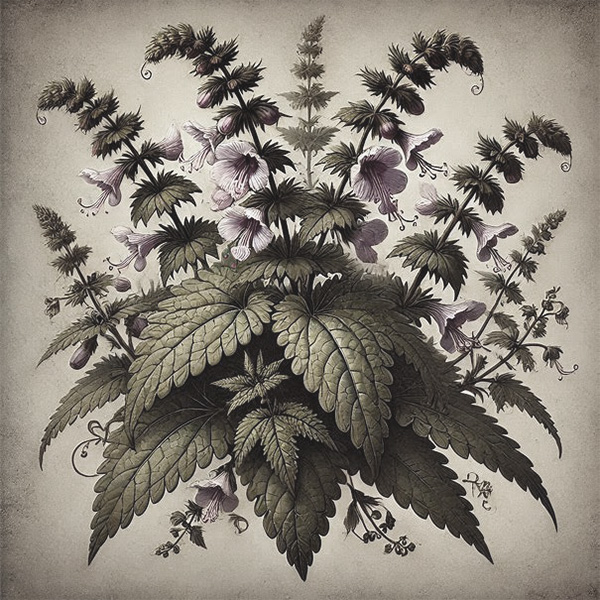
Flax was cultivated in many parts of Europe, especially in the northern and western regions. Flax was usually sown in spring, where the plants grew until harvest in summer.
Once the plants were in full bloom and the seed capsules were ripe, the flax was harvested. In order to harvest the fibres as gently as possible, the plants were not pulled out of the ground by their roots, but cut by hand. The better the harvest, the higher the quality of the fibres for the subsequent spinning and weaving of the textiles.
Scutching the flax
After harvesting, the flax first had to be "retted" to separate the fibres from the remaining parts of the plant. In the Middle Ages, retting outdoors with the help of water and bacteria was the most common method.
In "water retting", the flax stalks were soaked in ponds or streams for several weeks. This softened the outer layer of the flax and broke down the cellulose. This made it easier to separate the fibres from the woody stalks later on.
Alternatively, the flax could also be "dry retted" by placing it in hay or straw and exposing it to rain and moisture for several weeks. This accelerated the natural decomposition of the plant.
Breaking the flax
Retting softened the flax and allowed it to be "broken" to separate the outer husks from the fibres. When breaking the flax, the plant stems were processed with a special device called a "breaking tool". These breaking tools were usually made of wood and had sharp blades or rollers that broke the flax into smaller pieces.
In order not to damage the long fibres, the fibres had to be processed very carefully. After breaking the flax, the fibres were sorted from the remains of the plant that were not suitable for further processing.
Swinging the flax
After breaking the flax, the next step was "swinging" (also known as "hackling" or "combing"). The individual fibres were further separated and smaller impurities were removed. For this purpose, the flax fibres were processed with the "swinging" and "combing" tools. These consisted of a series of rusty, needle-like iron pins that were built into a wooden board.
The flax was pulled through the hackling, whereby the coarse and inferior fibres were sorted out. The finer, better fibres were used for further spinning. The swing process smoothed the fibres and prepared them for spinning. The coarser flax could be used for less valuable products such as mats or coarse fabrics.
Spinning the flax fibres
Spinning was a laborious process that was carried out with a spindle or a spinning wheel. The flax fibres were twisted by hand into a long thread and then spun into yarn.
Spinning flax was more difficult because its fibres are harder and less elastic than wool or cotton, for example. The yarn had to be spun evenly and tightly. As a rule, the flax was first spun in a coarse form and then further processed to make the yarn finer and more stable.
Weaving linen fabric
Weaving was done in workshops or at home using a hand loom. The medieval loom made it possible to weave the warp and weft threads together to produce sturdy fabrics.
Linen fabric was usually fine and durable, very well suited for clothing, bed linen and other everyday items.
Processing the finished linen fabric, especially for summer clothing
After the linen fabric had been woven, it had to be further processed. The fabric was washed to remove excess starch. To enhance the white colour of the linen fabric, it was then often "smoothed" or "bleached".
In the Middle Ages, bleaching linen was often a very laborious and time-consuming task. Sunlight and natural bleaching agents such as lye or lime were used for bleaching. In some cases, the linen fabric was also dyed with vegetable or animal dyes.
Cotton production
Cotton harvest
Cotton was obtained in the form of "cotton capsules" (known as "boll"). Cotton plants were cultivated and harvested in regions such as the Middle East and India. It was a labour-intensive activity, as the capsules had to be harvested by hand. The capsules were then carefully broken open and the fibres removed.
Opening and cleaning for clean cotton fibres
Once the cotton fibres had been removed, they were separated from the seeds by a process known as "ginning".
Machines that were later used to ginned cotton, such as the famous "cotton gin", were not invented until the 18th century. In some regions, simple devices were used to facilitate the separation process.
Spinning the cotton

Spinning cotton was a laborious and time-consuming process. Women and men sat at home or in workshops at their spinning wheels to spin the cotton fibres into long, thin threads.
The spinning wheel was one of the most important inventions in medieval textile production. The spinning wheel spun the fibres faster and more efficiently than the traditional hand spindle. Spinning twisted the cotton fibres together, creating a strong thread that could be woven.
Dyeing the cotton
In order to be able to process coloured fabrics for later use, the cotton had to be dyed after spinning. Dyeing was a craft in its own right, using mainly plant dyes extracted from roots, leaves or berries.
The best-known natural dyes used in the Middle Ages were:
- madder (for red tones)
- Indigo root (for blue)
- Yellow and green tones from plants such as reseda or oak
During dyeing, the yarn was immersed in dye baths and often dyed several times until the desired colour intensity was achieved.
Weaving the cotton fabric
After the cotton yarn had been spun and, if necessary, dyed, it was woven into fabric on a loom. Weaving was a separate craft that was carried out in urban workshops. In the Middle Ages, the loom was usually a simple hand loom that wove the cotton threads into fabric.
Weaving was carried out in two main directions: the warp thread (lengthwise) was attached to the loom, while the weft thread (crosswise) was passed through the warp threads to form textiles. The fabric could be coarse or fine, depending on its intended use.
Use of cotton in clothing
Cotton was valued for its breathability and was used to make various layers of clothing, such as outerwear.
From the 12th century onwards, cotton became popular in Europe and was often used in a blended fabric with linen, known as fustian.
Silk: the luxury fabric
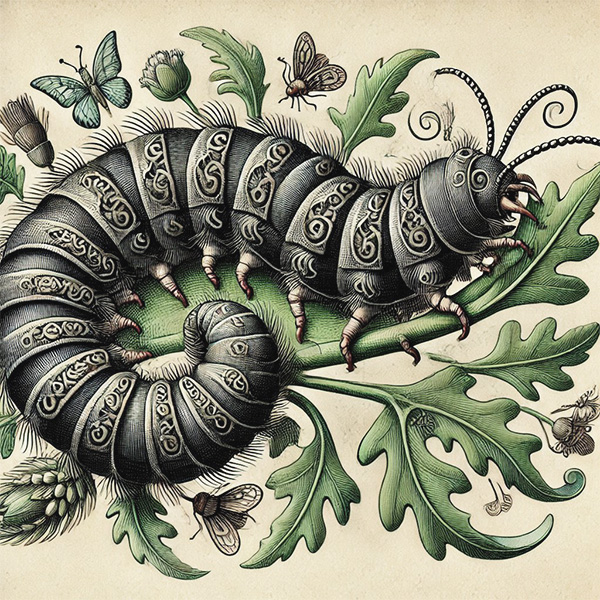
Medieval silk production was an intensive process closely linked to trade along the Silk Road. Silk could not be produced in Europe, but came mainly from China, Persia or Byzantium. Silk production began with the breeding of silkworms (Bombyx mori), whose cocoons provided the material from which the silk fibres were obtained.
The silkworms were kept in special breeding facilities, where they fed on mulberry leaves and spun their cocoons. Once the caterpillars had spun their cocoons, they were harvested. The cocoons consisted of a single long silk thread.
The caterpillar cocoons were boiled in hot water and the silk fibres were loosened. The silk fibres were unwound from the cocoons, spun into yarn and then woven into fabrics. The finished silk was then dyed, decorated and used for clothing or other luxury products.
Velvet
In the late Middle Ages, velvet was mainly used for magnificent robes and decorations, especially by the upper classes. Velvet was soft and shiny and highly sought after.
When working with velvet, special attention must be paid to the direction of the pile, as this affects the look and feel of the fabric.
Brocade
Brocade was a very lavishly designed, colourful fabric. It was often used in medieval fashion for magnificent garments, especially for the clothing of the nobility and for festive occasions.
The weaving technique used to produce brocade is complex and requires a precise selection of materials.

The importance of fabric choice
In the Middle Ages, the choice of fabric indicated the social status of the wearer. It was not only a means of clothing oneself, but also served as an overview of identity, social status and wealth. Certain fabrics, such as silk, were reserved for certain classes. Alternative fabrics such as cotton, velvet and brocade also had different meanings.
The availability of materials depended heavily on regional trade relations; certain fabrics were more valuable or affordable depending on their accessibility.
Practical aspects of clothing, such as comfort and protection from the weather, determined the choice of fabric.
The role of dyeing
Colours, dyeing fabrics and their significance
In the Middle Ages, natural dyes were used to colour clothing; these dyes were extracted from plants, animals and minerals.
The colour red, for example, was obtained from the kermes moth, whose larvae lived on oak trees. These larvae were collected, dried and processed into a red dye.
Blue was obtained from the woad leaf, a plant that was mainly cultivated in Northern Europe. The leaves were fermented and dried to extract the blue dye.
Yellow was often obtained from plants such as woad or reseda.
Black was produced by combining different dyes or by using iron and gallnuts.
In the Middle Ages, colours played an important role in clothing and were much more than just decorative elements. They also provided information about the social status, occupational group or religious affiliation of the wearer. For example, the colour purple was a sign of power and wealth.
Brown, on the other hand, symbolised modesty and humility and was often seen on monks and nuns who lived a life of poverty and simplicity. The colour green was often associated with fertility and life and was popular with farmers and agricultural workers. Blue, obtained from the woad leaf, was a colour of loyalty and was often worn by knights and nobles.
Social aspects of clothing materials in the Middle Ages
Differences between social classes
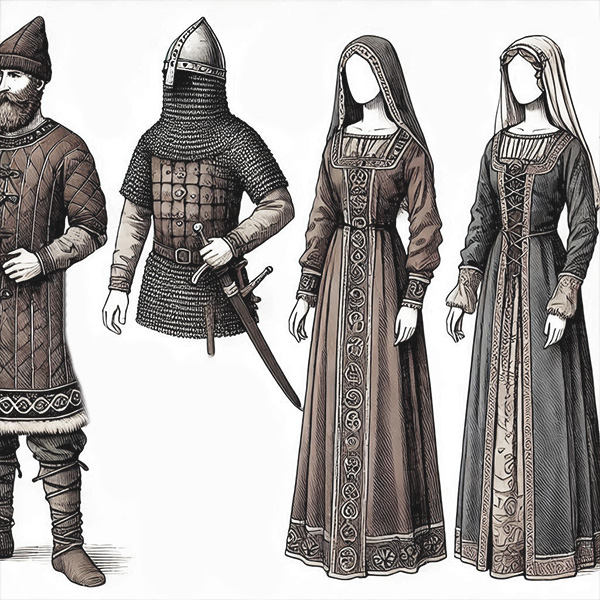
The upper classes dressed in expensive and exclusive, elaborately decorated fabrics such as silk and brocade. Ordinary people wore practical clothing made of linen or wool in natural, light colours such as beige and brown. These fabrics were robust and functional, ideal for the hard work and daily life of the lower classes. The cut of the clothing also differed: while the upper classes preferred elaborate and fashionable cuts, the clothing of the common people was simple and functional.
Dress codes and laws
In order to maintain social order, there were strict dress codes and laws in the Middle Ages that prescribed exactly who was allowed to wear which fabrics and colours. For example, only nobles and clergy were allowed to wear certain colours such as purple, while ordinary people were restricted to simple, practical clothing. These dress codes were strictly enforced and violations could result in severe penalties.
Care and durability of medieval clothing
Traditional cleaning methods
Cleaning clothes in the Middle Ages was a laborious and time-consuming task. Garments were cleaned with natural cleaning agents such as soap, vinegar and water. Soap was often made from animal fats and ash. The cleaning itself was usually carried out at rivers or in wash tubs, and the clothes were then hung up to dry on meadows or on a roof. Due to the limited cleaning options and the high cost of soap and other cleaning agents, it was common practice to wear clothes for as long as possible. People's clothes were often heavily worn and had to be repaired regularly.
Development of textile production in the Middle Ages
In the early Middle Ages, textile production was primarily a local and artisanal activity. Over time, especially from the 12th century onwards, the textile industry in Europe continued to develop. Specialised craftsmen in regions such as Flanders and Italy began to produce large quantities of fabrics, which were distributed throughout Europe via trade.
The High Middle Ages saw significant developments in technology and the variety of fabrics. The use of looms with improved mechanisms, such as the "foot loom", enabled faster and more precise production. These developments led to the emergence of larger workshops as craftsmen and merchants gathered in the cities to produce their goods.
From sturdy wool to cooling linen to luxurious silk, each fibre had its own significance and reflected the social structures and economic conditions of the time.
You may also be interested in these articles: Colours in the Middle Ages
Letters from the trading house
New arrivals, market dates and offers, straight from Rinchnach. Unsubscribe any time with one click.
Subscribe to the newsletter

