Consumables
Anyone wishing to make their own historical garments, bags or pieces of armour needs more than just craftsmanship – they need the right raw materials and accessories. In the ‘Consumables’ category, you’ll find fittings, bag straps, gusset plates and other small parts that turn a blank piece of material into a finished, authentic item. Whether it’s your first pouch or an elaborately fitted sword scabbard: this is where every handmade object begins.



What constitutes consumables for the Middle Ages and re-enactment?

In the context of the Middle Ages and re-enactment, ‘consumables’ is a collective term for all those fittings, decorative parts and semi-finished items that are not worn ready-made, but serve as the starting point for your own craftsmanship. Unlike a ready-made medieval pouch or a ready-to-use medieval belt, consumables are the first step – the raw material from which you develop your own piece.
The range is divided into several subcategories:
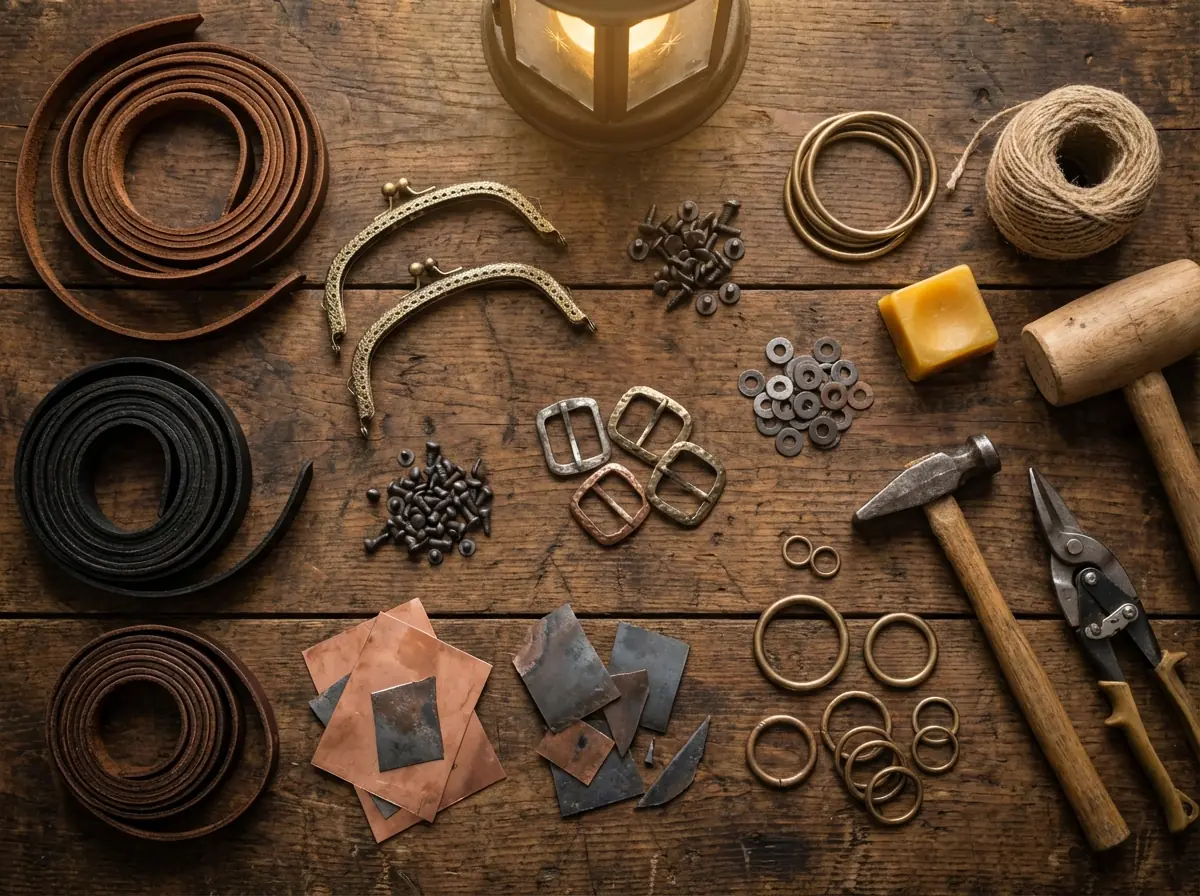
- Sheet metal – semi-finished metal components for scabbard blanks and armour parts
- Rivets, rings and splices – fasteners for leatherwork and straps
- Cowhide leather straps – raw material for belts and straps
- Bag frames – structural elements for historical bag constructions
- End plates – finishing fittings for sword scabbards
- Leather and raw hide – versatile base material for scabbards, bags and bindings
- Leather dye and leather grease – care and finishing products for leatherwork
- Care products – for the longevity of your finished pieces
Typical areas of application include bag-making, crafting sword scabbards, beltwork and the repair of armour parts. This category is part of the ‘Do It Yourself’ section, which brings together all the shop’s DIY materials.
Sword scabbard end plates and other metal fittings
The end plate is the fitting at the lower end of a sword scabbard – it protects the scabbard from wear and tear and, in the Middle Ages, also served as a visual emblem. The decoration of the end plate is historically documented, particularly in the case of Nordic scabbards: silver inlays and embossed surfaces can be found in numerous archaeological finds from Scandinavian graves dating from the 9th and 10th centuries.
The silver-plated Viking end plate in our range draws on this tradition – richly decorated and suitable for crafting your own Viking sword scabbards. Anyone wishing to make their own scabbard blanks or armour parts will find suitable semi-finished metal products as raw materials in the Sheet Metal subcategory. In addition, fittings and lock components can be found in the Hooks, Nails, Fittings, Locks category.
What materials were used in the Middle Ages? – Historical background

Medieval craftsmen worked with a manageable yet extremely versatile range of materials: leather, iron, brass, non-ferrous metals, wood, bone and horn formed the basis of virtually all everyday objects, weapons and pieces of equipment. Each of these materials had its specific area of application – and its own craftsmanship logic.
Brass and bronze were preferred for fittings and buckles because they are more corrosion-resistant than iron and can be shaped using simpler tools. Archaeological finds from urban excavations show that brass buckles and rivets were widespread from the Early Middle Ages onwards – among peasants as well as craftsmen.
Leather was the universal building material of the Middle Ages: vegetable-tanned, natural brown, and, depending on its thickness, suitable for bags, sheaths, straps and shoes. Vegetable tanning – using tree bark and plant-based tanning agents – was the only known method until the late Middle Ages and produces a material that is particularly easy to shape, dye and finish. Raw hide (untanned leather) was used in bow-making and for bindings – it shrinks as it dries, thereby achieving enormous tensile strength.
For authentic re-enactment and LARP, this knowledge of materials is not an academic curiosity, but the practical basis for every purchasing decision: anyone who knows why brass is historically correct for buckles will not opt for a zinc alloy. Anyone familiar with vegetable-tanned leather understands why it behaves differently from modern chrome-tanned leather goods.
Overview of subcategories: From rivets to leather straps
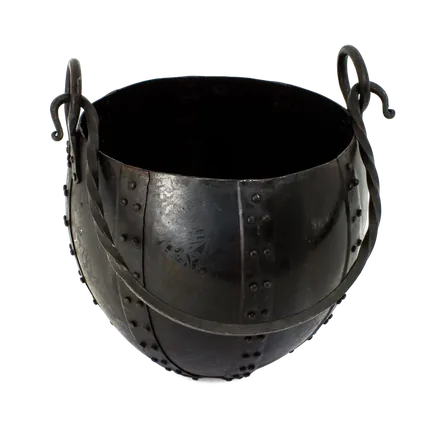
Sheet metal forms the blank for scabbard parts, armour reinforcements and decorative appliqués. It can be cut, bent and riveted – making it the most versatile semi-finished product in the range. Anyone who doesn’t want to buy a ready-made scabbard but would rather construct their own should start here.
Hand-forged nails differ visually and structurally from industrially manufactured fasteners. For visible joints on historical objects – chests, fittings, woodwork – they are the more authentic choice.
Vegetable-tanned leather and raw hide are the raw materials for bags, sheaths, bindings and straps. Raw hide is particularly suitable for applications where tensile strength is required after drying – traditionally in bow-making and for lashing.
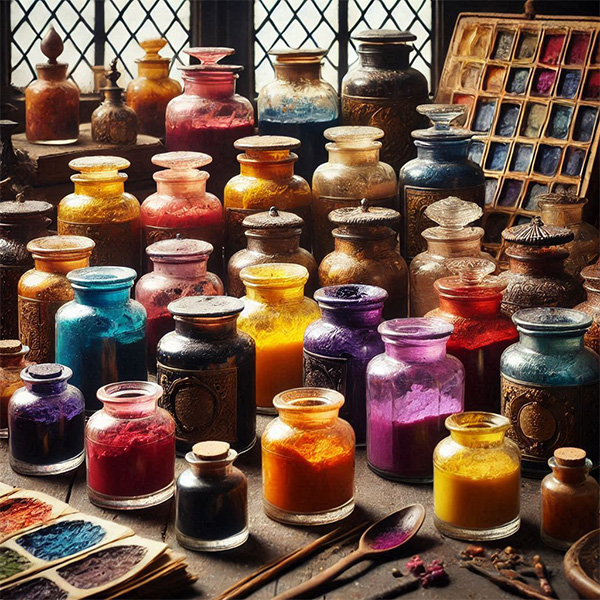
Untreated leather changes without care: it dries out, becomes brittle and loses its flexibility. Leather dye allows for custom colouring and antique effects, whilst leather grease protects against weathering and cracking. Both products are essential for finishing any leatherworking project.
Cowhide leather straps are vegetable-tanned and available in 2-metre lengths – ideal as raw material for homemade belts, straps on armour or carrying straps for bags. The strap width determines the suitable buckle.
Rivets permanently join layers of leather and add visual interest. Rings and spreader bars are essential for straps on armour and carrying straps. Together with buckles, they form the basic framework of any leatherwork and strapping. In addition, the shop offers rivets, rings and spreader bars in various designs.
Care products complete the manufacturing process and extend the lifespan of items. In addition to leather dye and leather grease, this includes products for metal parts and fittings. Anyone who has invested time and materials in a self-made item should also want to preserve it for the long term.
DIY in medieval hobbies: What can you make yourself with consumables?
Classic DIY projects in the medieval hobby range from simple leather pouches to elaborately studded sword scabbards. Those working with consumables are part of a craft tradition that remains alive today in markets and workshops – studding belts, cutting straps and sewing bags are not theoretical exercises, but living practice.
Starter projects for beginners: A pouch made from individual components is an ideal first step. A pouch frame, a short leather strap and a rivet set are all you need for your first functional pouch. Combining these with sewing supplies and trimmings quickly opens up further design possibilities.
More challenging projects for experienced crafters: Sheet metal and semi-finished metal parts allow you to build your own sword scabbards with customised metalwork. Leather belts with self-set rivets and medieval buckles for belts and bags also fall into this category. Straps for armour – shoulder straps, fastening straps, leg armour holders – require a little more experience in working with leather, but are easily achievable with the right materials.
All DIY materials in the shop are grouped under the main ‘Make it yourself’ section – braids, sewing supplies, tassels and buckles complement the consumables as sister categories.
For beginners and experienced crafters: How to find the right materials
Bag handles with eyelets (13.5 cm, brass) combined with a short leather strap and a simple rivet set – that’s all you need for your first functional medieval pouch. A manageable investment, immediate sense of achievement, and the ideal introduction to leatherwork.
Wider bag frames (17.5 cm) in brass or silver-plated for larger bag designs, combined with ready-made straps made from cowhide leather. For projects where both appearance and stability are equally important.
Silver-plated Viking rivet plates for making your own sword scabbards, sheet metal blanks for armour applications – for re-enactors who want to construct a finished, historically accurate object from scratch themselves. If you have any questions about choosing materials, the team will be happy to help over the phone.
Leather care and finishing: using leather dye and leather grease correctly
Natural brown, undyed leather is a living material – it reacts to moisture, heat and mechanical stress. Without treatment, it dries out, becomes brittle and loses its malleability. That is why leather care is not an optional step, but an integral part of every leatherworking project.
Leather dye and leather grease fulfil two different functions: leather dye alters the appearance and – when applied by hand – creates authentic antique effects through uneven absorption. Historically, dyeing leather with vegetable and mineral dyes was widespread; the individually dyed antique look that you create today through manual treatment corresponds, in its irregularity, to what can be seen on medieval originals.
Leather grease, on the other hand, protects the leather’s structure: it penetrates the fibres, prevents drying out and makes the material more resistant to weathering. For handmade items worn at markets or outdoor re-enactment events, regular re-treatment with leather grease is not a luxury but a necessary maintenance measure.
A practical tip: industrially pre-treated leather and natural brown raw leather differ significantly in their ability to absorb dye and grease. Natural brown leather absorbs more during the first treatment – this is intentional and not a fault.
Bag frame: The centrepiece of every historical pouch

The bag frame is the structural element of a historical pouch bag. It keeps the bag opening open, accommodates the strap and defines the shape of the entire construction. Without a suitable frame, it is impossible to construct a functionally coherent pouch.
The range includes bag frames in two widths – 13.5 cm and 17.5 cm – and in two finishes: natural brass and silver-plated. The eyelet versions allow leather straps to be attached particularly easily without time-consuming sewing. The silver-plated versions are suitable for bags aiming for a higher-quality, more delicate look.
Historically, belt pouches are primarily documented in the late Middle Ages – among townspeople, craftsmen and merchants who required a practical container worn on the belt for coins and small items. The shape varied regionally, but the basic structure of a bracket, leather flap and strap remained largely consistent.
Brass is not only a historically accurate choice of material, but also a practical one: it hardly corrodes, is easy to solder and work with, and develops a characteristic patina over time, lending the finished item additional authenticity. Anyone looking for ready-made pouches and bags as a reference or to complement their own work will find them in the Medieval Pouches category.
Whether it’s your first self-sewn pouch or an elaborately studded sword belt – with the right consumables from the Vehi Mercatus range, you’ll have everything you need for authentic DIY projects. Browse through the subcategories or simply give us a call if you’re unsure about which materials to choose.
Frequently asked questions
Brass and bronze were the preferred materials for fittings, buckles and rivets – due to their corrosion resistance and the fact that they were easier to work with compared to iron. Archaeological finds confirm their widespread use from the early Middle Ages onwards, among peasants and craftsmen as well as the more affluent classes. For authentic re-enactment, brass is therefore the first choice.
A tip plate is the fitting at the lower end of a sword scabbard. It protects the scabbard from wear and tear and also served a decorative function in the Middle Ages – particularly in the case of Nordic swords, richly decorated, silver-plated tip plates have been found in archaeological excavations. Anyone wishing to make their own sword scabbard will need a suitable tip plate to finish it off.
For scabbard rings with eyelets, the leather strap is threaded through the side eyelets and then sewn or secured with a rivet – this is the simplest and most popular method. For rings without eyelets, the leather is folded around the ring frame and sewn. Standard linen thread or saddler’s thread is suitable for both methods.
Wool and linen dominated clothing – both made from natural raw materials, in varying qualities depending on the region and social class. Silk was a luxury item and was reserved for the wealthier classes. For equipment such as bags, scabbards and belts, leather was the universal material, vegetable-tanned and often fitted with brass or bronze fittings.
To get started, a manageable basic kit is sufficient: a bag frame in the desired width (13.5 or 17.5 cm), a short leather strap, a few rivets and a piece of vegetable-tanned leather for the bag body. Optionally, you can create an antique effect using leather dye. The total material costs for a first bag remain well within the double-digit euro range.