


Medieval Christmas gift ideas




Finding the right Christmas gift for a medieval enthusiast or Viking fan is easier than it first seems – if you know what really matters in that world. This guide takes you through the best gift ideas from the medieval and Viking worlds, sorted by budget and occasion, with the historical background knowledge that distinguishes good gifts from mere decoration.
Gift-giving in the Middle Ages and at Yule – what was customary back then

Christmas as a festival of gift-giving, as we know it today, is a relatively recent tradition. During the medieval Advent season, religious devotional items took centre stage: rosaries, devotional images, Agnus Dei medallions. For children, there were solid toys – rattles, simple dolls, dice games – and for adults, everyday items such as knives, combs or writing implements. It was not until the late Middle Ages that the picture in the burgeoning towns shifted noticeably from religious to more secular gifts.
The Vikings in the north celebrated the Yule festival (Old Norse: jól) at the winter solstice – a winter festival lasting several days, centred on community, fire, mead and the exchange of gifts. As historical sources from the Scandinavian region show, these gifts were rarely purely symbolic. They were intended to be used and to last a long time. Knives, clothing, jewellery, tools – practical, handmade and built to last. This attitude is just as alive today in the re-enactment and medieval scene.
Viking Christmas: The Yule Festival and its traditions
Depending on the tradition, the Yule festival lasted between 12 days and several weeks and was the most significant winter festival of the North Germanic peoples. At its heart lay the worship of Odin and Freyr, communal meals, mead and the fire as a symbol of warmth and community during the darkest time of the year. Historians regard the Norse Yule as a key precursor to Christian Christmas customs in Scandinavia – many elements we associate with Christmas today can be traced back to this pagan winter festival.
Gifts at the Yule festival had both practical and symbolic value: they honoured the recipient, strengthened social bonds and were intended to be long-lasting. Many modern Viking enthusiasts and pagans now consciously celebrate the Yule festival as a separate celebration, often alongside or instead of Christmas. Further background on Viking history and culture, as well as on the customs of Christmas in the Middle Ages, can be found in relevant posts on the Vehi-Mercatus blog.
Gift ideas by budget: From a small token to a special item
Fire steel from approx. €10, cloak fasteners from approx. €11, Viking pendants and brooch chains in bronze or silver-plated, beard beads, simple earrings and corded necklaces. No need to know the recipient’s size – ideal as a small gift or to complement another present.
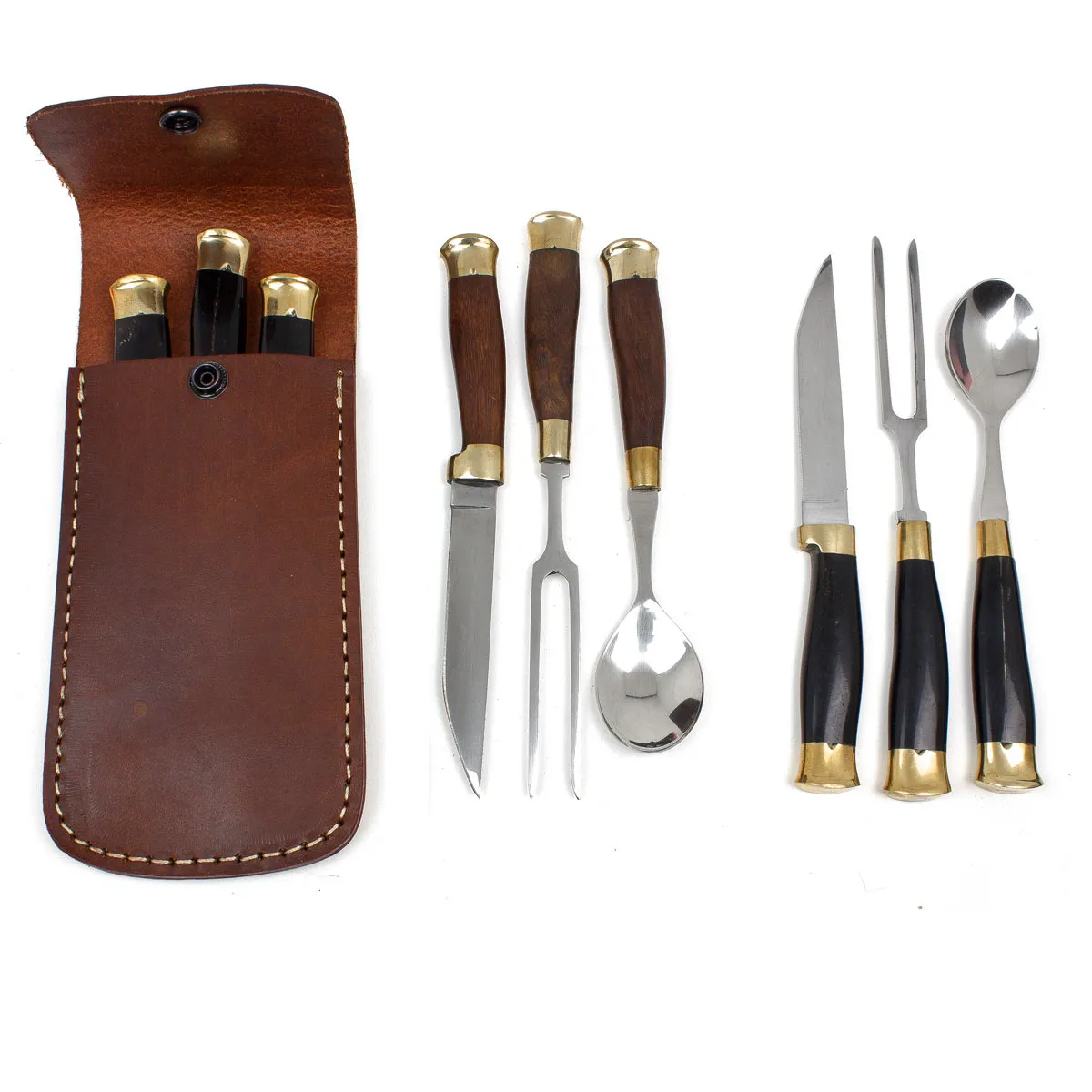
Pocket knives with leather cases in horn, bone or wood handles (approx. €22), Gotland Viking knives including leather sheaths (approx. €38), medieval cutlery sets with double leather sheaths (approx. €25). A good selection for classic Christmas gift budgets.
Hand-woven wool blankets made from 100% virgin wool (from approx. €125), hand-forged campfire accessories such as a tripod or grill grate (from approx. €50), round wooden shield with steel fittings (approx. €76). As a straightforward alternative: vouchers with free choice of product.
Knives, fire steel and cutlery: gifts with real practical value
The knife as a gift has a long tradition – and in the medieval and Viking world, it remains one of the most fitting presents. A pocket knife with a horn, bone or wooden handle and matching leather sheath is practical, suitable for everyday use and has a clear historical connection. Robust enough for a snack at the medieval market, it also looks authentic.
For Viking enthusiasts, the Gotland Viking knife is well worth a look, featuring a multi-layered bone and leather handle and a perfectly fitting leather sheath – a solid piece with a recognisable archaeological model. Medieval cutlery sets with a double leather sheath are a practical everyday gift for market traders who carry their cutlery on their belt.
The fire steel is a classic among small gifts for connoisseurs of the scene: a forged replica of a medieval fire iron made of high-carbon steel, which strikes real sparks when used with a flint. Starting at around 10 euros, it is the most affordable gift with genuine practical value – equally suitable for use at markets, when camping and in military camps.
If you want to give a gift to someone who seems to have everything: consumables are the clever answer. A fire steel will eventually become blunt, beeswax for leather care runs out, and lacing cords snap. Such additions do not compete with what they already have – they are simply useful.
Jewellery by era: Viking, High Middle Ages and Celtic-Germanic
Viking style
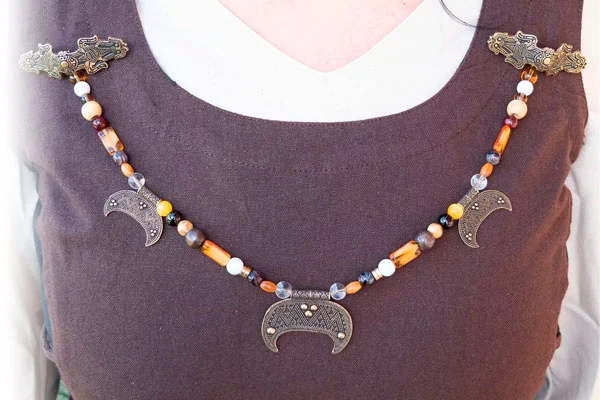
Jewellery based on Haithabu finds and in the Urnes style: flowing animal motifs, interlaced ornamentation. Brooch chains as shoulder-gown fastenings for women, Viking rings and pendants in bronze or silver-plated. Recognisably Nordic even without prior knowledge – well-suited for beginners.
High Middle Ages
Gown clasps with Romanesque motifs, simple rings and cross pendants. Brass and bronze dominate; silver-plated variants for a more refined appearance. Suitable for the classic knight and lord of the castle aesthetic.
Celtic-Germanic
Brooch designs featuring spiral motifs, animal heads and geometric patterns. Brooches used as garment fastenings, bangles and simple pendants. Bronze is the preferred material – affordable and historically accurate for this period.
A practical tip for gift-givers without in-depth historical knowledge: bronze jewellery is the most affordable and, at the same time, the most historically authentic option for most early and high medieval periods. Silver-plated jewellery looks more elegant and is suitable as a sophisticated gift. Brass lies somewhere in between – warm in tone, durable and plausible for almost all periods. Rings are the only exception where you need to know the ring size – pendants, brooches and beard beads, on the other hand, always fit.
Viking and Medieval Jewellery: Small Gifts with a Big Impact
| Article | Material | Suitability |
|---|---|---|
| Viking rings | Bronze, silver-plated | Historical |
| Viking pendants | Bronze, brass | Historical |
| Brooch chains | Bronze, silver-plated | Historical |
| Gown clasps | Bronze, brass | LARP Historical |
| Beard beads & hair accessories | Bronze, metal | LARP |
| Viking earrings | Bronze, silver-plated | Historical |
| Medieval rings | Brass, bronze | LARP Historical |
| Viking bangles | Bronze, brass | Historical |
Viking and medieval jewellery is particularly suitable as a small Christmas gift because it is available across a wide price range and does not require specific knowledge of sizes – with the exception of rings. Garment fasteners are a doubly useful gift: they fulfil a practical function when fastening cloaks and coats, whilst being decorative enough to serve as a proper present.
Wool blankets, lambskin and warm gifts for the dark season

For gift-givers who aren’t deeply familiar with the scene, hand-woven wool blankets made from 100% virgin wool are one of the strongest options in the higher price bracket. These blankets are hand-spun and hand-sewn – available in sizes from 140 × 220 cm to 210 × 220 cm, in various colours and striped patterns. They are modelled on medieval designs and are equally suitable for use in the camp as at home. No synthetics, no man-made fibres.
Lambskin items are another category for winter gifts: lambskin gloves, insoles or pads for camp beds and field beds are functional and speak a language that market traders and re-enactors understand. Wool socks made from sheep’s wool, as a more affordable supplementary gift, round off this category – practical, warm and with no sizing issues thanks to standard sizes. Anyone interested in medieval textile craftsmanship will find interesting background information on materials and weaving traditions in the blog post on fabrics in the Middle Ages.
Whether it’s a fire steel for under €15, a Viking knife with a leather sheath or a hand-woven woollen blanket as a special piece – here you’ll find gift ideas for medieval fans and Viking enthusiasts in every price range. Browse through the selection and find the gift that really suits the person you’re buying for.
Frequently asked questions
The 5-gift rule is a guide to gift-giving: something they want – something they need – something to read – something to wear – and something to experience. Applied to medieval enthusiasts: a coveted item of costume (want), a useful everyday object such as a fire steel or cutlery (need), a non-fiction book on their favourite era (read), a new item of clothing such as a tunic or belt (wear) and a joint visit to a medieval market (experience). This structure is particularly helpful when you’re not sure what someone wants.
The Vikings celebrated the Yule festival (Old Norse: jól) at the winter solstice – a winter festival lasting several days, which, depending on the tradition, lasted between 12 days and several weeks. The focus was on fires, community, drinking binges and the worship of Norse gods such as Odin and Freyr. Yule is regarded as the direct Norse equivalent of Christmas and has had a lasting influence on Christian festive culture in Scandinavia. Many modern Viking enthusiasts and Heathen communities now consciously celebrate Yule once again as a distinct winter festival.
At Yule, Vikings mainly gave practical, handmade items: knives, clothing, jewellery and tools. As well as having material value, gifts also had a strong symbolic character – they honoured the recipient and strengthened the community. Durability and the quality of craftsmanship were more important than purely decorative value. This attitude is still reflected today in the reenactment and Viking scene.
Consumables are a clever answer: a fire steel will eventually become blunt, beeswax for leather care runs out, and lacing cords snap. Additions to an existing outfit – a matching garment clasp, a belt pendant or a beard bead in a different style – are also gifts that do not compete with what the recipient already owns. If you’re looking for something truly special, opt for unique handcrafted pieces such as a hand-forged knife or a hand-woven wool blanket made from 100% virgin wool.
In the Middle Ages, Christmas was primarily a religious festival: church services, breaking the fast and communal meals characterised the season. Gift-giving played a secondary role to the liturgical events; customary gifts were religious objects such as rosaries, and for children, toys. It was not until the late Middle Ages that secular elements – festivities, dancing, feasts and gifts – began to take on greater prominence. In Nordic regions, Christian customs overlapped and blended with the older Yule festival, a tradition that continues to shape Christmas culture in Scandinavia to this day.