
Last updated: March 2026

What you can expect in this article
- Key points at a glance
- Introduction: Looking forward to the 2026 camp season & markets
- 1. The heart of the camp: Medieval tent & weather protection
- 2. Sleeping comfort just like at camp – but without freezing
- 3. Fire pit: The centrepiece of every camp
- 4. Cooking equipment: sizzling, simmering & cosy get-togethers
- 5. The laid table: mugs, bowls & cutlery
- 6. Light sources: Atmosphere late into the night
- 7. Seating and lounge area: The living room of the army camp
- 8. Storage & organisation: chests, sacks & hiding ‘modern sins’
- 9. Personal camp gear: clothing, hygiene & handy little items
- 10. Safety & rules at markets in 2026
- Bonus: Community & planning – to make the 2026 season a real success
- The 2026 camping season is calling
- FAQ on the 2026 camp season
 Reading time approx. 15 mins.
The first rays of sunshine in spring 2026 will soon be sweeping across German meadows – and with them, camp life will awaken. Whether it’s re-enactment, LARP or a classic medieval market: the season is just around the corner, and now is the perfect time to check your kit. This checklist gives you a clear overview of the 10 must-haves that no 2026 camp should be without.
At Vehi Mercatus, we’ve been active in the medieval scene for over 20 years. During this time, our market traders have collectively attended well over 500 markets – from small castle festivals to large Whitsun camps with several thousand participants. What we’ve learnt there is all in this checklist.
Key points at a glance
|
Rank |
Must-have |
Why is it essential? |
|---|---|---|
|
1 |
Medieval tent |
Shelter & authentic atmosphere |
|
2 |
Sleeping arrangements |
Warm nights despite the April chill |
|
3 |
Fire pit |
The centrepiece of every camp |
|
4 |
Cooking equipment |
Cooking together over the fire |
|
5 |
Tableware |
Stylish tableware made of clay and horn |
|
6 |
Lighting |
Ambience until midnight |
|
7 |
Seating area |
Living room of the army camp |
|
8 |
Storage space |
Tidiness & hiding modern items |
|
9 |
Personal belongings |
Clothing & hygiene |
|
10 |
Safety equipment |
Fire safety & rules |
What makes this list special:
-
Specifically tailored to the 2026 season – from Easter markets to the major Whitsun camps
-
Suitable for both beginners (first camp) and experienced campers alike
-
Deliberately limited to the “Top 10” to keep planning straightforward
-
Practical tips combined with the anticipation of the smell of wood burning, the sound of guitars and the clinking of mugs
Introduction: Anticipation for the 2026 camping season & markets
Imagine this: it is a mild evening in May 2026. The smoke from your fire pit curls up towards the sky, whilst a lute plays somewhere in the distance. The scent of braised meat mingles with the spicy aroma of mead, and all around sit costumed people raising their mugs. That is the magic of the camp season.
The 2026 events traditionally begin with the Easter markets in April, reach their first peak at Whitsun and stretch into golden September. Events such as the Kaltenberg Jousts, Conquest of Mythodea, MPS or the Burghausen Castle Festival attract thousands of visitors and performers.
This article serves as a handy checklist to ensure you have everything ready by the start of the 2026 season at the latest.
1. The heart of the camp: medieval tent & weather protection
No tent, no camp – it’s as simple as that, and in 2026 this applies more than ever. It is precisely the unpredictable spring weather (rain, sudden cold spells, then sunshine again) that makes a solid roof over your head indispensable.
We still remember an Easter market where, within an hour, bright sunshine turned into a hailstorm. The neighbouring camps with their flimsy tarpaulins had real problems – those with a proper cotton tent stayed dry and were able to sit out the shower with a mug of mead.
Recommendation: Check your tent for watertightness, intact seams and a complete frame by spring 2026 at the latest.
Tent types and eras
|
Tent type |
Era |
Special features |
|---|---|---|
|
Saxon tent |
Early Middle Ages / Viking Age |
A-shaped, space-saving, quick to assemble |
|
Knight’s tent |
High Middle Ages |
Rectangular, spacious, imposing |
|
Cone tent |
Nomadic style |
Central pole, circular base |
Important: The tent shape should suit your re-enactment and the historical period. Modern igloo or pop-up tents are strictly forbidden within sight – they ruin the atmosphere for everyone.
Practical considerations for 2026
-
Transport: Pack size ideally under 2 metres, weight between 20–50 kg depending on size. For large tents, it’s worth splitting the poles and flysheet between several cars.
-
Space requirements: Allow at least 4x4 metres per person – sleeping area, chests and a small seating area inside for rainy days.
-
Extras: Sun sails or awnings are not a luxury item in 2026, but practical accessories for shade in July (temperatures may exceed 30 °C) and rain protection in April.
Tip for beginners: If you’re unsure, hire a tent for your first few events. That way, you can find out which type suits you before you invest.
2. Sleeping comfort like in a camp – but without freezing
What many people underestimate: even in July, nights on the ground can be quite cold and damp. It’s not uncommon to camp in April with temperatures around 0–5 °C. From our experience at spring markets, we know that newcomers in particular tend to pack too lightly when it comes to sleeping gear – and regret it by the first night at the latest. But even in the height of summer, it can catch you out: at the Drachenfest once, it was so cold in the middle of summer that not a single fur was left to buy across the entire market. We should know – because we were the ones selling them.
The layers of sleeping comfort
|
Layer |
Products |
Function |
|---|---|---|
|
Ground |
Sleeping mat (R-value >4) or camp bed |
Insulation against ground cold |
|
Padding |
Wool blankets, furs (3–5 layers) |
Warmth & authenticity |
|
Cover |
Sleeping bag (comfort rating 0 °C) |
Temperature protection |
|
Extras |
Wool socks, hat, gloves |
Warmth in key areas |
We’ve all been there: after a long day at the market, when your feet are tired and your head is full of impressions, crawling into a warm camp bed lined with soft furs. You shouldn’t let the cold spoil this moment.
Authenticity meets comfort
The layering principle works: hide a modern sleeping mat under the woollen blanket, camouflage the camp bed with furs. Wool breathes and keeps you warm even when damp; synthetic materials serve as a backup. A woollen sleeping bag adds extra flair, whilst a modern sleeping bag underneath ensures functionality.
A trick our market traders used to employ: fill a hot water bottle with hot water from the campfire, wrap it in a woollen blanket and place it in bed – warm until morning, without any electricity.
Storage space: Make room for a chest or large bags in the sleeping area. That way, nothing gets lost in the chaos of the tent, and you’ll find your clothes quickly in the morning.

3. Fire pit: The heart of every camp
Without a fire, the camp lacks a soul – that’s how most campers see it. The fire pit is far more than a source of warmth: it is the social hub around which everyone gathers in the evening.
During our active days as market travellers, the fire pit was always the first thing we set up after pitching our tent. Once the fire was burning, the rest fell into place – neighbouring camps would join in, we’d cook together, and strangers became camp friends. That hasn’t changed to this day.
Fire pits in accordance with regulations
In 2026, organisers will be paying closer attention to fire safety. The most important rules:
-
Fire bowl or fire basket (no open fires on grass)
-
Fire extinguisher weighing at least 6 kg with a valid inspection sticker (inspected every 2 years)
-
Minimum distance of 3 metres from the tent
-
Water, sand or an additional fire extinguisher must be kept to hand
-
Never leave a burning fire unattended
-
Keep escape routes clear
We have noticed for years that fire safety checks at markets are becoming stricter – and that’s a good thing. At a market in southern Germany, we once witnessed how an overturned fire basket on dry grass almost spread to a neighbouring tent. Since then, we’ve been preaching: always place fire bowls on a stable surface.
Wood supply: Many organisers provide wood free of charge in ‘standard quantities’ – sawn timber for cooking. Ask in advance and, if necessary, bring a small chopping block and hatchet.
You can find fire bowls and fire baskets in our Vehi Mercatus shop – suitable for various camp sizes and historical periods.
4. Cooking equipment: Sizzling, simmering & cosy gatherings

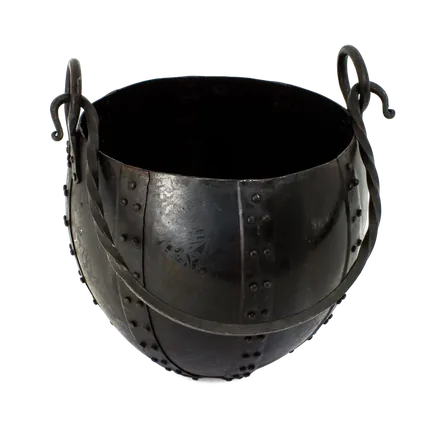
Cooking together over the fire is simply part of the experience. The smell of stew slowly simmering in the cauldron whilst the group shares stories – that’s camp life at its best.
A classic scenario we’ve seen time and again at markets: groups turning up with a pot that’s too small, only to realise that the stew for six people won’t fit in the 3-litre pot. Better to buy one size too big than to cook too little every time.
Essential kit for the kitchen
Essential:
-
Iron tripod or cooking stand
-
1–2 pots/casseroles (3–10 L capacity)
-
Forged iron pans
-
S-hooks at various height settings
-
Ladles and scoops
For groups of 4–6 people: One large pot (10 L) for main courses plus a frying pan for flatbread and breakfast.
Authenticity vs. practicality
Forged hooks and iron pans should be on display – at Vehi Mercatus you’ll find a wide selection of camp kitchen equipment. Gas stoves, on the other hand, are only acceptable as a hidden backup.
Camp hygiene:
-
A sturdy fabric bucket for drinking water (water must remain clean)
-
Separate container for washing-up water
-
Natural soap for cleaning earthenware and ceramics
Recommendation: Plan one or two trial weekends in the garden before Easter 2026 to test your camp setup. That way, you’ll know what works and what’s still missing.

5. The laid table: mugs, bowls & cutlery
A beautifully laid camp table instantly creates a medieval atmosphere – even for day visitors who wander past the camp out of curiosity. The tableware is more than just a practical item: it’s part of the atmosphere.
Cutlery must-haves
|
Item |
Material options |
Notes |
|---|---|---|
|
Cup |
Clay, horn (horn cup), wood |
0.5 L capacity ideal |
|
Plate/bowl |
Clay, wood |
Prefer natural grain |
|
Spoon |
Wood, horn |
Sturdy and authentic |
|
Knife |
Dining knife with wooden handle |
Not too sharp, but sharp |
|
Optional |
Two-pronged fork, dinner fork |
Depends on the era |
Style tips for 2026
A variety of drinking vessels, jugs and bowls in natural colours (brown, red, green) create a harmonious atmosphere. When it comes to pottery and ceramics, it’s worth investing in handcrafted pieces rather than mass-produced items – their durability and appearance justify the higher price. We can say this from our own experience after 20 years in the medieval tableware trade: cheap earthenware mugs rarely survive their third season, whilst well-crafted handmade pieces last for years.
For newcomers: it’s better to buy a small, high-quality set than lots of cheap decorative items. At Vehi Mercatus you’ll find a good selection, sorted and filtered by era. Also keep an eye on delivery times – there can be shortages before the season starts.
Practical tip: A cloth bag or linen roll for cutlery and mugs prevents them getting lost in the camp. Setting the table can become a ritual: preparing together before dinner, lighting candles, filling jugs. This creates a special atmosphere.
6. Light sources: atmosphere late into the night

A flickering fire alone isn’t enough – especially if the fire pit is a bit out of the way, the camp needs additional light sources. The right lighting sets the mood well past midnight.
When we think back to our own days as market traders: that moment when the lanterns were lit in the evening and the camp was bathed in warm light – that’s what turned a campsite into a home. Visitors would often stop and simply watch. Lighting is one of the most underestimated factors for the camp atmosphere.
Light sources for an authentic ambience
-
Candle holders in various heights
-
Oil lamps for even lighting
-
Lanterns for paths and entrances
-
Torches for a special atmosphere (choose period-appropriate ones)
Lanterns, oil lamps and candlesticks are available from Vehi Mercatus in various designs – from simple iron candlesticks to ornate models.
Hidden emergency aid: A small LED torch or headlamp for night-time trips to the toilet is permitted – but keep it hidden in the tent; never carry it openly.
7. Seating and lounge area: The living room of the army camp
The communal area is the place for shared meals, handicrafts and socialising with visitors. This is where the social life of the camp takes place – plan accordingly to ensure plenty of space.
Key elements
Furniture:
-
A roughly-made wooden table or a folding wooden table
-
Benches, stools or crates for seating
-
Fur rugs and blankets for comfort
Style tip: Modern folding chairs can be covered with blankets, linen covers or animal skins. This saves money and transport space without spoiling the atmosphere. We used this trick ourselves at our market stall when space in the van was running short.
A roof over your head
Plan a canopy for the seating area:
-
Sun sails in muted colours
-
Tent awning or separate tarp
-
Rain protection in April/May, shade in midsummer
Create a cosy atmosphere: carpet remnants with an authentic look, a few selected decorative items (chest, candlesticks), perhaps a banner with your group’s coat of arms.
Practical: Set aside a small area at the edge for modern items (cool box, rucksack). Covered with a cloth, box or fur, they won’t bother anyone.
8. Storage & tidiness: hiding chests, bags & ‘modern sins’
Keeping the campsite tidy in 2026 isn’t just practical, it’s essential for the historical atmosphere. Nothing spoils the atmosphere faster than plastic bottles lying about or visible mobile phones.
As market traders, we had the same problem: price lists, cash books, packaging materials – everything had to be hidden away before the crowds arrived. Our tried-and-tested system was a large chest with compartments, where everything had its own designated place. This saves time in the morning and spares your nerves.
Storage ideas
|
Solution |
Contents |
Camouflage |
|---|---|---|
|
Wooden chests (50–100 L) |
Clothes, valuables |
Naturally authentic |
|
Jute sacks |
Food, accessories |
Tie with string |
|
Linen bags |
Small items, hygiene |
Store in a chest |
Hide modern items
PET bottles, plastic boxes, mobile phones and power banks disappear into chests or under furs. You should allow for at least one box or chest per person, plus an additional storage box for shared items.
Tip for 2026: In winter 2025/26, pack a ‘storage box’ with standard equipment: string, wooden wedges, spare pegs, tools, a supply of candles. This box will then be immediately to hand at every event – you just need to remember to load it.
9. Personal camp equipment: clothing, hygiene & handy bits
The 2026 camp season involves more than just a tent and crockery. Your personal kit determines whether you enjoy or suffer through the three days.
Clothing list
Basic clothing:
-
Undergarments (at least 2)
-
Outer garment/surcoat
-
Coat or cloak
-
Headwear (bonnet, headscarf)
-
Spare garment for rainy spells
-
Weatherproof footwear (no trainers!)
You can find costumes, cloaks and matching accessories at Vehi Mercatus – with filters for period and style.
Hygiene essentials
-
Soap (plain packaging, no modern logos)
-
Towel
-
Toothbrush (hide in a bag)
-
Wooden or bone comb
-
Small sewing kit
-
Plasters and first-aid kit
Useful small items
-
Pocket knife
-
Belt pouch
-
Fire striker or lighter
-
Hydration pack or canteen with an authentic look
Weather precautions 2026: Temperatures can range from −5 °C in April to +35 °C in August. Pack a rain cape, an extra layer of woollen clothing, but also a sun hat or headscarf for hot summer days. We’ve experienced markets where it was freezing in the morning and 25 °C in the shade by the afternoon – all on the same day. If you only have one layer of clothing with you, you’ll be in trouble.
Recommendation: Create a personal checklist before the first market in 2026. After each camp, add what was missing. This way, you’ll build up your packing list over the years.
10. Safety & Rules at Markets in 2026

In 2026, organisers are paying closer attention to safety and fire safety regulations. This isn’t harassment, but protects all participants and makes the events possible in the first place.
In our more than 20 years at medieval events, we have noticed how safety requirements have steadily increased. In the past, a fire extinguisher was rarely asked for – today, a valid inspection sticker is mandatory for most organisers, and for good reason. I myself have so far been involved in extinguishing fires at two catering stalls and a cauldron.
Fire and cooking regulations
-
Maintain minimum distances (3 m from the tent)
-
Be aware of flying sparks, especially in dry grass
-
Open fires are often only permitted in fire pits
-
Fire extinguishers with a valid inspection sticker (sealed and accessible)
Weapons & exhibition fights
-
Observe local rules on site
-
Safety inspection of all weapons is standard
-
Only blunt blades permitted in exhibition fights
-
Fixed times and areas for practice
Further rules
-
Quiet hours: Usually from 10 or 11 pm, depending on the organiser
-
Dogs: Often allowed, but must be kept on a lead
-
Waste separation: Take your rubbish with you – keeping the area clean is mandatory
-
Deposit: Common at some events.
Important: Safety rules vary depending on the organiser and federal state. Always check the specific requirements for the event in question beforehand.
Recommendation: Before every event in 2026, read the relevant camp rules thoroughly and discuss the key points with your whole group.
Bonus: Community & planning – to make the 2026 season a real success
The best camp in 2026 thrives on people, not just equipment. A box full of perfect gear is no substitute for a good camp community.
Many of the friendships formed on our market trips have lasted to this day. Camp life brings people together – often faster and more deeply than you might think. Anyone camping at a market for the first time will be surprised at how open and helpful most camp groups are.
Networking for 2026
-
Get in touch with a camp group in good time
-
Join an existing group if you’re new
-
Clubs offer opportunities to get started
-
Online platforms and forums provide information on dates and contacts, such as the Vehi Mercatus market calendar
Planning points
|
What |
When |
Who |
|---|---|---|
|
Create a list of dates for 2026 |
Well in advance of the start of the season |
All together |
|
Check equipment |
January–March 2026 |
On your own |
|
Preparation meeting |
Winter 2025/26 / Spring 2026 |
Camp group |
|
Discuss roles & story |
Before the start of the season |
Group |
|
Allocation: Who brings what |
Per event |
Coordinator |
Staying motivated through the winter
-
Look through photos from past camps
-
Try out recipes together
-
Start craft projects (new benches, banner shields, lanterns)
-
Maintain the group’s wiki page with results and insights
The anticipation is part of the adventure. Use the winter of 2025/26 to prepare something special with your group.
The 2026 camp season is calling
With this checklist, you’ll have everything you need for a successful 2026 camp. From basic equipment to community spirit – every aspect of the planning helps to make the coming season unforgettable.
Your next step: Start by taking stock of your existing equipment. Make a list of what’s missing and share this checklist with your camp group. Preparing together is more fun – and the first fire in April 2026 will be all the more wonderful.
Browse Vehi Mercatus for camp equipment, tableware, clothing and everything you need for the 2026 season. See you at the market!
FAQs for the 2026 camp season
When should I start planning for the 2026 camp season?
It’s best to start as early as December 2025. Collect dates, check your equipment and plan for any additions for January/February 2026. The reason: popular events such as large Whitsun camps or well-known town festivals are often booked up early. Some campsite pitches are already allocated by the end of 2025, and delivery times from Vehi Mercatus can also be a bit longer before the season – so it’s worth ordering in good time.
I’ve never been to camp before – what are the three most important things?
If you can prioritise just three things, make them these: 1) A suitable, waterproof tent or a safe place to sleep within a group. 2) A warm place to sleep with a sleeping mat or camp bed plus a sleeping bag for temperatures around 0–5 °C. 3) Your own eating and drinking kit (cup, bowl, spoon, knife). Almost everything else – cooking facilities, fire, seating – can often be shared with the group if you agree on it beforehand.
How much authenticity will be expected at markets in 2026?
That depends heavily on the type of event. Pure re-enactment events with historical depictions (e.g. Stettenfels with 12th–13th century themes) have strict requirements – period-specific attire, no modern elements in plain sight, photos upon registration. Mixed medieval markets with LARP and fantasy elements are more flexible. Base your approach on your group and the organiser’s requirements. As a general rule: it never hurts to hide modern items well, at least visually.
What should I do in bad weather during the 2026 camping season?
Bad weather is part and parcel of camp life. Prepare yourself with: an extra sun canopy or awning, plenty of dry blankets, rainwear in muted colours, good tent pegs and sturdy guy ropes for your tent. The surprising thing is that a cosy, covered communal area with good lighting from lanterns and oil lamps often turns bad weather into a particularly atmospheric camping experience. Some of the best camp evenings happen when the rain is pounding on the roof and everyone huddles closer together.
Can I take part in Camp 2026 with children or a dog?
That depends on the organiser. Many markets allow children and dogs – at events such as Neunburg vorm Wald 2026, children even get reduced or free entry. Dogs are usually required to be kept on a lead. Always check explicitly with the organiser and make sure to plan for sufficient safe space, shade, water and places to retreat in the camp. With the right preparation, the camp becomes an adventure even for the little ones (whether two- or four-legged).


Letters from the trading house
New arrivals, market dates and offers, straight from Rinchnach. Unsubscribe any time with one click.
Subscribe to the newsletter