



Anyone interested in medieval clothing – whether for re-enactment, living history or simply out of historical curiosity – will sooner or later come across a term that is hardly familiar to anyone today: lacing. Yet for centuries, it was the most important technique for fastening clothing. Indispensable, ubiquitous and, from a craftsmanship perspective, astonishingly demanding. Between 1200 and 1600, lacing dominated everyday life, before buttons and hooks gradually replaced it. This article explores its history, materials, function and practical application – and shows why lacing is far more than just a forgotten technique.

What to expect in this article
- Key points at a glance
- What did ‘lacing’ mean in the Middle Ages?
- The historical development of lacing cords in the Middle Ages
- Materials and manufacture: from simple ribbon to ornate lacing cord
- Function and uses: How nestling held medieval clothing together
- Social significance and superstitions surrounding nestling
- Practical applications for re-enactment and living history
- Comparison: Lacing and buttons in the late Middle Ages
- Frequently asked questions about lacing in the Middle Ages
 Reading time approx. 8 mins.
Key points at a glance
- Historical context: Tassel cords emerged from the 12th century onwards and were indispensable in the 14th and 15th centuries for fastening trousers, doublets and leggings.
- Variety of materials: Tapes made of leather, linen, wool or silk, finished with metal nestle tips made of brass or bronze, measuring 25–40 mm in length.
- Practical function: Nestles served as a fastening for clothing, replacing the modern trouser waistband and enabling the connection of modular garments.
- Linguistic legacy: The idiom ‘to fiddle about with something’ (an-etwas-herumnesteln), describing clumsy, fumbling handling, has survived in German to this day – and reveals just how commonplace this technique once was.
What did ‘nesteln’ mean in the Middle Ages?
The term ‘nesteln’ describes the lacing of clothing with special ribbons – an activity that was as commonplace in the Middle Ages as fastening a zip is today. Unlike modern fastenings, this historical lacing offered maximum flexibility: it could be individually adjusted to changing body shapes, was repairable and required no special tools. The technique evolved from older methods of fastening clothing and gained particular significance in the High Middle Ages, when figure-hugging fashion virtually demanded tight lacing.
| Term | Meaning |
|---|---|
| Lacing cord / lacing string | The braided cord itself |
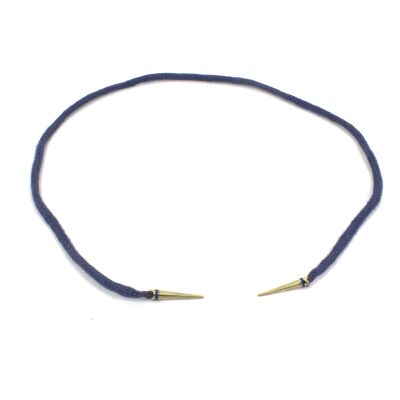
| Lace tip | Metal ferrule at the ends of the cord |
| Lacing | The entire lacing fastening |
| Lace button | Additional button near the lacing |
The historical development of cord fastenings in the Middle Ages
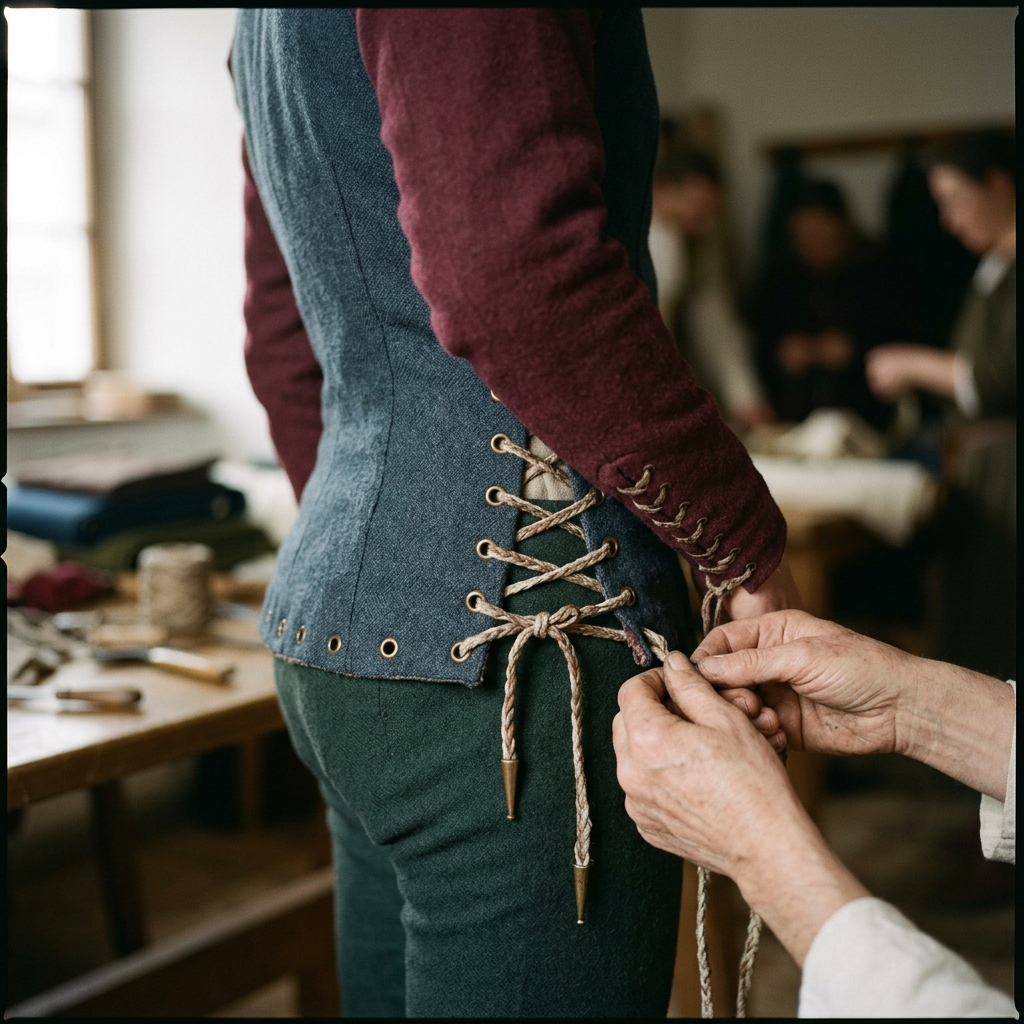
The history of cord fastenings reflects a fundamental shift in medieval clothing culture. In the 11th and 12th centuries, loose-fitting garments dominated, requiring hardly any tight fastenings. From the late 12th century onwards, fashion in France, the Holy Roman Empire and northern Italy shifted noticeably towards more form-fitting styles. The need to keep fabric close to the body led to the rapid spread of the cord fastener.
The 14th century (c. 1350–1400) marks the true heyday: tight sleeves, close-fitting surcots and leggings were joined together by rows of pairs of nestels. Visual sources such as the Maciejowski Bible (c. 1250) and the House Book of the Mendel Twelve Brothers Foundation (from 1388) impressively document this fastening technique in numerous illustrations. During the Renaissance of the 15th and 16th centuries, lacing remained important, but was increasingly combined with buttons or supplemented by hooks.
Materials and manufacture: From simple ribbon to ornate lacing cord
Materials according to status and purpose
The choice of material in the Middle Ages was no coincidence – it signalled social status and social affiliation at a glance:
- Linen: The everyday material for peasants and craftsmen – inexpensive, robust and widely available throughout Central Europe.
- Wool: Preferred in northern European regions, primarily due to its weather resistance and warmth.
- Silk: The luxury material of the upper classes, often crafted in a colour to match the rest of the clothing – a subtle sign of wealth.
- Leather: Sturdy lacing straps for armour and other heavy-duty applications that had to withstand high mechanical stress.
Manufacturing techniques
The finger-loop braiding technique – in German: Fingerschlaufenflechten – is well documented from the late 13th century onwards through written sources and archaeological finds. Specialised cord makers produced complex, multi-coloured cords of impressive quality using dozens of loops. Other techniques include twisted cords for simple fastenings and woven ribbons for wider surfaces. This diversity shows that lacing was not a simple craft, but a true art form.
Lace tips as a technical and artistic masterpiece
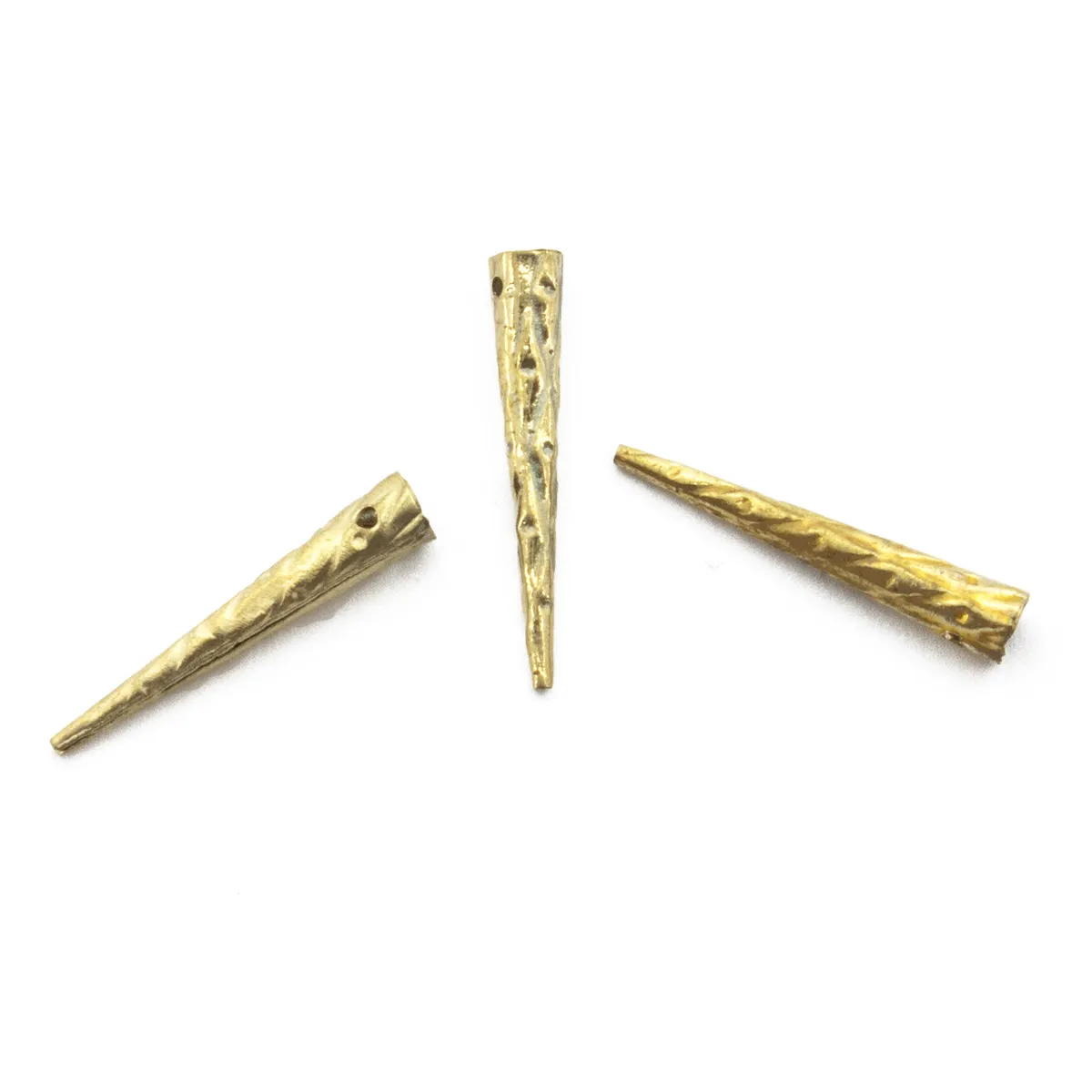
Nestle tips were made of thin-walled brass or bronze sheet, shaped into cones, acorns or crowns, with a length of approximately 25 to 40 mm. Holes on the sides allowed them to be securely sewn onto the ribbon. Luxury versions featured embellishments of gold, silver, pewter or even gemstones and glass – a clear status symbol that was recognisable at first glance. Archaeological finds from London, Lübeck, Cologne and Dordrecht attest to the widespread distribution of these products across the whole of Central Europe.
Function and uses: How fasteners held medieval clothing together

Leggings and trousers
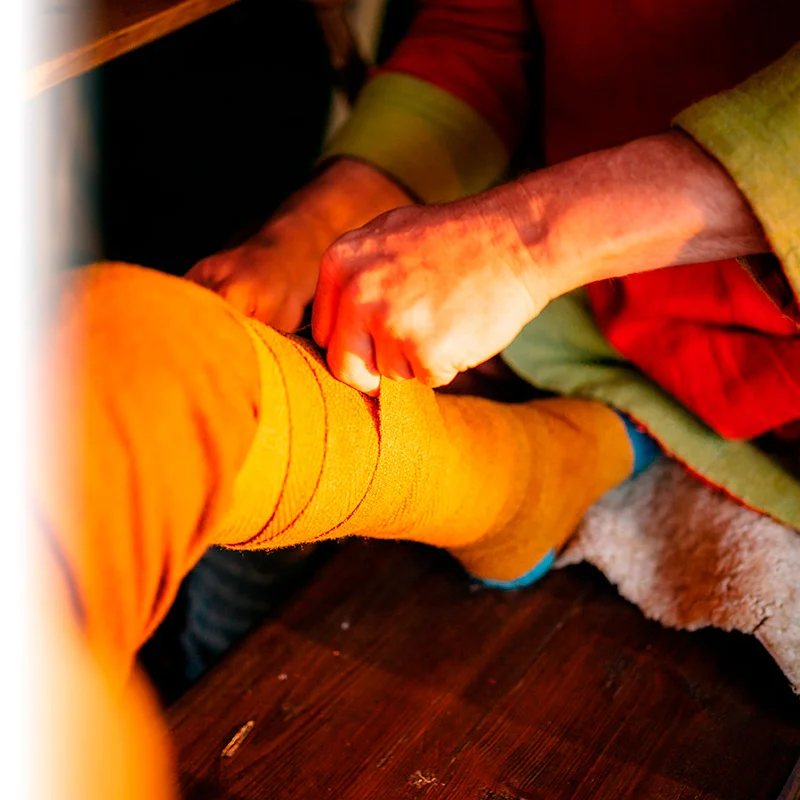
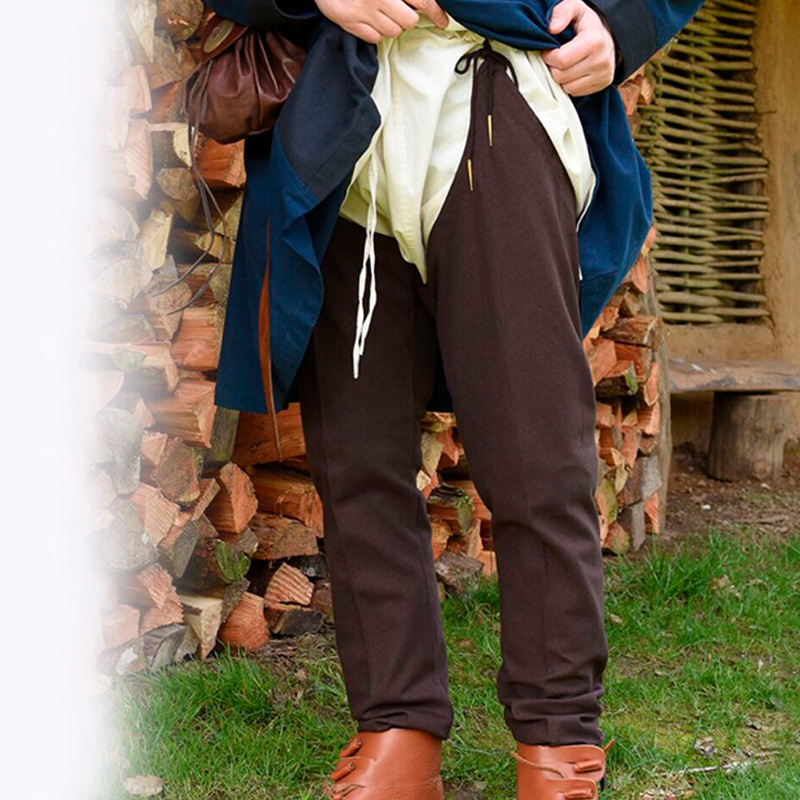
The most important use was for lacing leggings to doublets or doublets. As there was no modern waistband, 4 to 8 pairs of laces per leg usually held the garment securely in place – an unfamiliar concept to us today, but entirely natural in the Middle Ages.
Connecting modular garments
Doublets and trousers, bodices and skirts – all these combinations were held together by rows of pairs of lacing. The holes in the fabric were reinforced with eyelets or buttonhole stitching to prevent tearing. The result was a surprisingly sturdy fastening that could nevertheless be undone quickly.
Close-fitting garments
In figure-hugging garments, fastenings were found on the side, back or neckline. This type of fastening allowed for individual adjustment to the wearer’s figure – an advantage that no button of the time could offer.
Removable and interchangeable parts
A particular advantage of lacing was the ability to change individual garment parts as required: sleeves, goller, hoods or leg pockets could be varied depending on the weather and occasion. Pockets, alms bags and purse bags also used lacing as a practical fastening.
Social significance and superstitions surrounding lacing
In the Middle Ages, lacing carried clear markers of social status. Simple, undyed ribbons made of linen or wool were characteristic of peasants and craftsmen, whilst the nobility and wealthy burghers preferred coloured silk laces with decorated metal lace tips. Those who were well-dressed made this evident through their laces.
In the late Middle Ages, the term ‘nestel-knotting’ referred to a feared curse that was said to render a man infertile. Ecclesiastical and moral sources also record that the act of undoing nestels had erotic connotations – for instance, on the wedding night. This dual nature – an everyday fastening and a magical object – makes the nestle a fascinating window into medieval life. In Modern High German, the memory of this lives on in the idiom ‘to fiddle about with something’.
Practical tips for re-enactment and living history
Anyone wishing to authentically reconstruct medieval clothing cannot do without nestle cords. The following recommendations are drawn from living history practice and help to achieve historically accurate results suitable for everyday wear.
Lengths and materials by century
- Leggings: Lacing cords 40–70 cm in length
- Side lacing: Up to 80 cm in length
- 13th century: Plain linen or wool in natural colours
- 14th–15th centuries: Silk with decorated tassels for formal occasions
Technique and workmanship
Use the historical finger-loop braiding technique instead of simple cords from the DIY store – the difference in appearance and feel is clearly noticeable and makes all the difference in a re-enactment. Tassel tips should be sewn through side holes with at least 1 to 2 cm of the ribbon overlapping inside the sleeve to ensure they last.
Fabric preparation
Create loop holes with reinforced edges, maintain a spacing of 1 to 2 cm and arrange them in symmetrical rows – this ensures an even distribution of tension and prevents the fabric from fraying. The balance between historical authenticity and comfort during multi-day events is achieved through slight overlaps and well-fitted ribbons.
Comparison: Tassels and buttons in the late Middle Ages

Buttons became more common in Central Europe from the 13th century onwards. In the 14th century, long rows of buttons made of pewter, brass, bronze or silver characterised the doublets of the wealthy classes. Both types of fastening existed in parallel for centuries – and complemented each other in a practical way.
| Criterion | Tasselling | Button fastening |
|---|---|---|
| Flexibility | High, customisable | Low, fixed size |
| Speed | Slower to fasten | Closes more quickly |
| Repairability | Easy by hand | More labour-intensive |
| Materials required | More tape required | Less material |
| Status signal | About the colour and material of the cord | On the number and material of the buttons |
Button-making developed into a craft in its own right with its own guilds, whilst lacing cords were often produced as a by-product of domestic textile production. A contrast that illustrates just how broad the spectrum of medieval craft traditions was.
Frequently asked questions about lacing in the Middle Ages
How long were medieval drawstrings typically?
Lengths varied between 30 and 80 cm depending on their intended use. Shorter cords of around 40 cm were sufficient for leggings, whilst longer ones of up to 80 cm were used for side lacing on dresses. The exact length was determined by the wearer’s build and height – there was no standard size.
Were there any colour rules or fashions for lacing ribbons?
There were no strict colour rules. The poorer classes mostly used undyed ribbons in natural shades, whilst wealthy individuals used coloured silk ribbons that matched the rest of their clothing – so even in small details, fashion reflected social status.
How many fastening points were needed to secure leggings securely?
Typically 4 to 8 pairs of lacing points per leg on a doublet or doublet-style jacket. The exact number varied by region and period – tighter fits required more fastening points.
Are there any archaeological finds of actual lacing cords?
Organic fabric ties are rarely preserved, as the material rots in the ground. However, metal tie tips and textile impressions have been found in cities such as London, Lübeck, Cologne and Dordrecht, enabling the technique to be reconstructed with a high degree of accuracy.
Can modern shoelaces be used as a substitute for nestels?
Only to a limited extent. Their synthetic appearance and the lack of metal tips look anachronistic and stand out immediately in a re-enactment context. More suitable are natural-coloured linen cords or hand-braided ribbons with authentic brass or bronze nestle tips.
What is fingerloop braiding and how does it differ from modern braiding techniques?
Fingerloop braiding (historical finger-loop braiding) is a medieval hand technique in which threads are placed in loops around the fingers and interwoven through specific movements. Unlike modern braiding tools or machine processes, this creates characteristic, often multicoloured patterns typical of historical nestle cords. The technique is well documented – several medieval manuscripts provide detailed instructions – and is being actively revived in the living history community today.
What role did lacing cords play in medieval armour?
Lace cords were also indispensable in armour technology. Leather straps and sturdy lacing cords made of braided wool or leather connected chainmail, gambesons and plate elements. They secured greaves, vambraces and other removable armour parts to the body. As these elements had to be quickly changed or repaired in the field, the lacing fastening had a clear advantage over other fastenings.


