


Samhain, a festival with ancient Celtic roots, has come a long way and is still alive today in various forms. Read more here...

What you can expect in this article
- Samhain – origins and development
- Influence of Christianity
- Spread and modernisation of the festival: Halloween
- The story of Stingy Jack
- The Wild Hunt
- The Legend of Púca
- The god of death Cromm Cruach
- Rituals and customs of the original Samhain festival
- Fire Ceremonies
- Ancestor Worship
- Masks and Costumes
- Protective rituals
- The "Dumb Supper"
- Rituals and customs of modern Samhain
- Fire ceremonies
- Ancestral altar
- Incense burning + divination
- Closeness to nature
- Concluding words of this article on Samhain
 Reading time approx. 9 min.
Samhain – Origin and development
The Celtic festival of Samhain was one of the four major events in the annual cycle of this nature-loving people. After the Celts had celebrated the beginning of summer in May with Beltane and the festival of light in August with Lughnasad, Samhain marked the beginning of the dark season. For the Celts, the night of 1st November signified the boundary to winter and thus to the dark season. The boundary to the otherworld, to the world of the dead and spirits, was also particularly permeable on that night. They believed that the hills of the fairies would open and that the fairies themselves could appear to humans. The Celts understood the "fairies" to be representatives of ancient times who lived in the ancient burial mounds. The souls of the dead were connected to them. So on Samhain, the door to the afterlife opened and its inhabitants appeared to the living to connect with them. This is precisely the meaning of the word "Samhain" or "Samuin": union. Incidentally, the correct pronunciation of Samhain is "sauwen" with a breathy "w".
For the agricultural Celtic society, Samhain was also the time of harvest and preparation for winter. It was a time to stock up on supplies for the cold winter months and bring the cattle from the summer pastures to their winter quarters. The end of autumn and the harvest season had been reached, and winter was approaching.
In neo-paganism, Samhain is considered a spiritual New Year, offering an opportunity to reflect on the past year and prepare for the coming year. It is a holiday for the dead, similar to the "Dia de los Muertos" in Mexico, where the deceased are honoured and celebrated.
The historical significance of Samhain is fascinating and multi-layered. It was not only an agricultural milestone, but also an important spiritual event. The ancient Celts believed that Samhain was a time when the gods became visible and interacted with humans. It was a time treated with reverence and respect, as it was associated with many traditions and myths.
One Samhain custom dating back to 700 BC is the significant "Feast of Tara". This ancient Irish gathering was one of the most important of its kind, involving the lighting of a large fire. A large fire was also lit on Tlachtga Hill (Hill of Ward), about twelve miles from Tara. These fires were intended to dispel the darkness, protect against the icy winter cold and keep evil spirits from the underworld at bay.

Influence of Christianity
The Christianisation of Europe in the eighth century marked a turning point in the cultural development of the continent. Pope Gregory III designated 1 November as All Saints' Day, a day dedicated to the saints and commemorating the dead. The eve of this day, 31 October, became known as All Hallows' Eve, which over time was shortened to Halloween. The blending of Celtic traditions with Christian beliefs led to the further spread of these customs throughout Europe.
Spread and modernisation of the celebrations: Halloween
With the migration of European immigrants, especially the Irish, in the nineteenth century, Halloween found its way to the United States and enjoyed great popularity. In America, Halloween transformed into a festive occasion characterised by children's "trick-or-treat" candy raids, pumpkin carving and wearing a variety of costumes. Many of the original customs and traditions of Samhain have survived and been incorporated into modern Halloween, which is now celebrated worldwide.
It is an opportunity to connect with the past while honouring the cyclical changes of nature. Samhain reminds us that the end of one cycle is also the beginning of a new one, and that death is a natural part of life.
Other ancient peoples, such as the Romans and Greeks, also celebrated days dedicated to the souls of the dead. These holidays were about appeasing the inhabitants of the underworld or winning their favour by offering them sacrifices and granting them their share of the present life.
In recent decades, interest in ancient Celtic traditions and pagan customs has grown. Many people celebrate Samhain in its original sense as part of a neo-pagan spirituality. These modern celebrations often include rituals of remembrance of ancestors, one's roots, and celebration between the living and the dead.
The story of Stingy Jack
One legend that later became part of modern Halloween is the story of Stingy Jack. Jack was a cunning man who outwitted the devil several times. When he died, he was denied entry to both heaven and hell. Instead, he had to wander through the darkness with a hollowed-out turnip serving as a lantern. This tale is the basis for today's Jack-o'-lanterns.
The Wild Hunt
Another legend associated with Samhain is that of the Wild Hunt. It is said that on the night of Samhain, an army of ghosts roams the skies, led by a powerful hunter or god. These ghosts are said to collect the souls of the dead and take them to the otherworld.
The Legend of Púca
Púca is a mischievous figure from Celtic mythology who is particularly active during Samhain. He can appear in various forms, often as a black horse or a dog, and plays tricks on people. In some stories, however, Púca also brings good harvests and blessings.

The god of death, Cromm Cruach
The Celts sacrificed their firstborn children to Cromm Cruach, the god of death, at Samhain. For the Celts, it was the gods of the underworld who gave the world fertility, and therefore they had to be honoured with the best fruits. The Celts not only presented their god with the fruits of the fields and livestock, but also with human sacrifices, especially the firstborn. Today, it is hard to imagine the dramatic consequences these sacrifices once had.
Rituals and customs of the original Samhain festival
Fire ceremonies
A central element of Samhain was the lighting of large fires. These fires were intended to dispel the darkness and offer protection from evil spirits. People gathered around these fires to drive away the darkness and celebrate the fertility of the land. They jumped over the fires to purify themselves and bless the coming year.
Ancestor worship
It was believed that on the night of Samhain, the souls of the dead could return to the world of the living. To honour their ancestors and show them the way, people placed candles in their windows, set up ancestral altars and prepared offerings. These could take the form of food or small personal items to establish a spiritual connection with their ancestors.

Masks and costumes
To protect themselves from wandering spirits, the Celts wore masks and costumes. These disguises were intended to scare off or confuse the evil beings so that they could not recognise people.
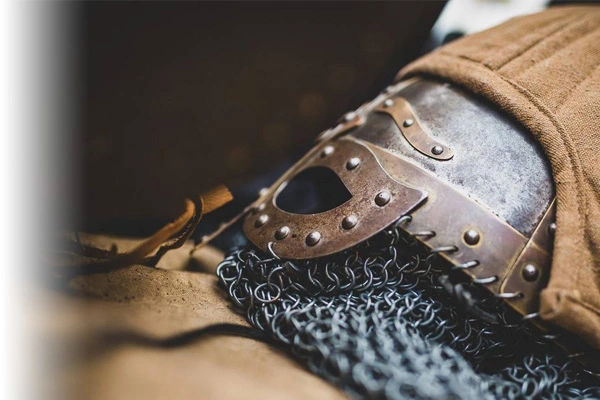
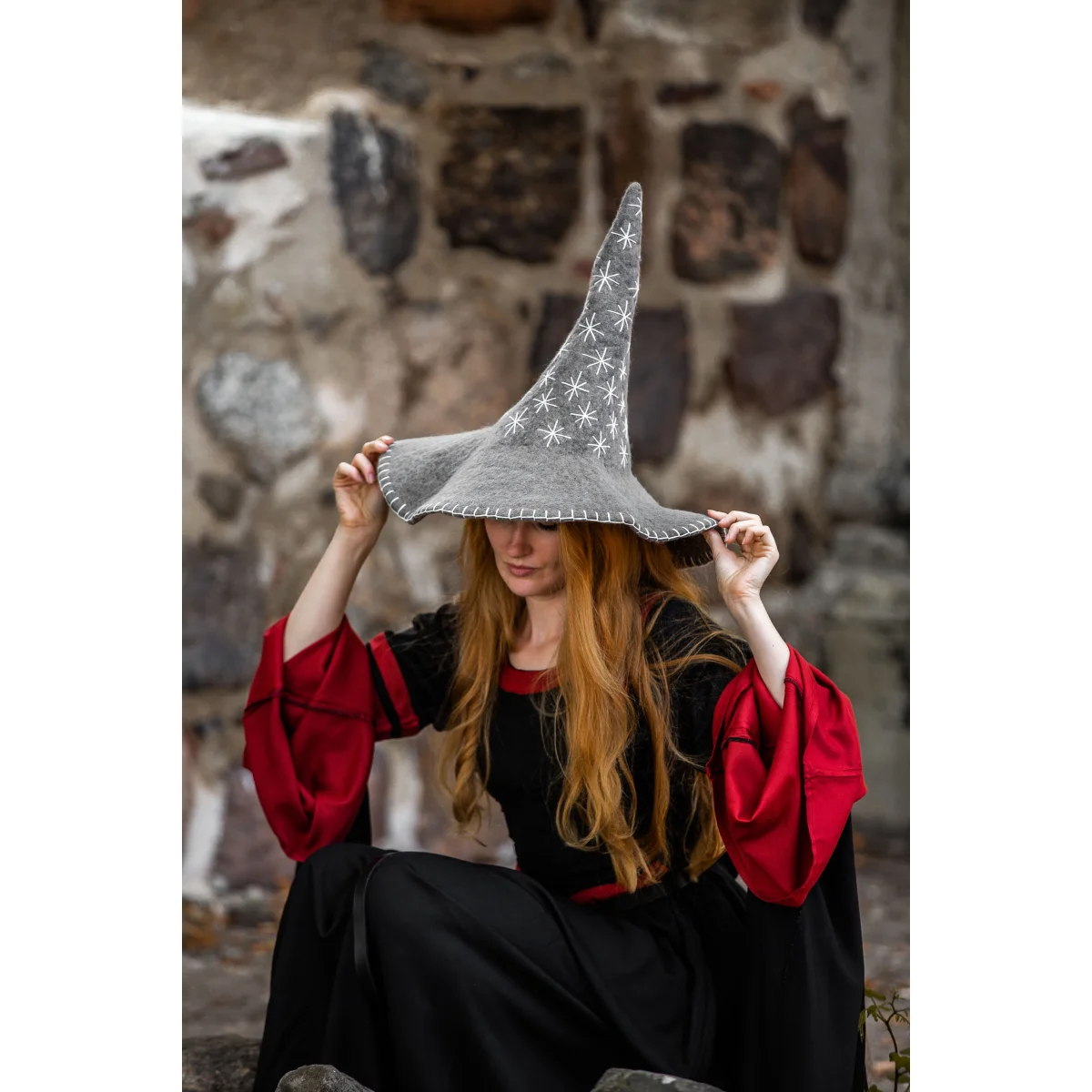
Headwear was an important part of clothing in the Middle Ages. It not only served to protect the head and hair from the weather, but also as a sign of social status and power. Nobles and kings wore headwear made of exclusive materials such as silk or velvet, while ordinary citizens had to make do with headscarves such as linen bonnets. Headwear could also have religious significance.
The Celts performed special rituals to protect themselves from evil spirits and negative energies. These included burning incense, scattering salt and drawing symbols and runes. These rituals were intended to protect the house and the family from harm.
The "Dumb Supper"
Another custom was the so-called "Dumb Supper", a silent dinner at which a place was kept free for the deceased ancestors. No one spoke during the meal in order to show respect to the spirits, honour their spiritual presence and give them the opportunity to participate in the feast in peace.
Rituals and customs of modern Samhain
Fire ceremonies
A central element of Samhain was the lighting of large fires. These fires were intended to dispel the darkness and offer protection from evil spirits. People gathered around these fires to drive away the darkness and celebrate the fertility of the land. They jumped over the fires to purify themselves and bless the coming year.
Ancestor worship
It was believed that on the night of Samhain, the souls of the dead could return to the world of the living. To honour their ancestors and show them the way, people placed candles in their windows, set up ancestral altars and prepared offerings. These could take the form of food or small personal items to establish a spiritual connection with the ancestors.
Masks and costumes
To protect themselves from wandering spirits, the Celts wore masks and costumes. These disguises were intended to scare off or confuse evil beings so that they could not recognise people.
Protective rituals
The Celts performed special rituals to protect themselves from evil spirits and negative energies. These included burning incense, scattering salt and drawing symbols and runes. These rituals were intended to protect the home and family from harm.

Concluding words on Samhain
Samhain, a festival often associated with Halloween, is a time for reflection and meditation. It is a moment when many pause to reflect on the past year, say goodbye to what is no longer useful, and prepare for the months ahead. This period of inner reflection is crucial for personal development and spiritual purification.
These modern rituals of the holiday are more than just customs; they are an expression of our deepest values and beliefs. They allow us to commemorate our ancestral history as we boldly step into the future. They are testimonies to the human ability to find and create meaning and beauty in the world.


