




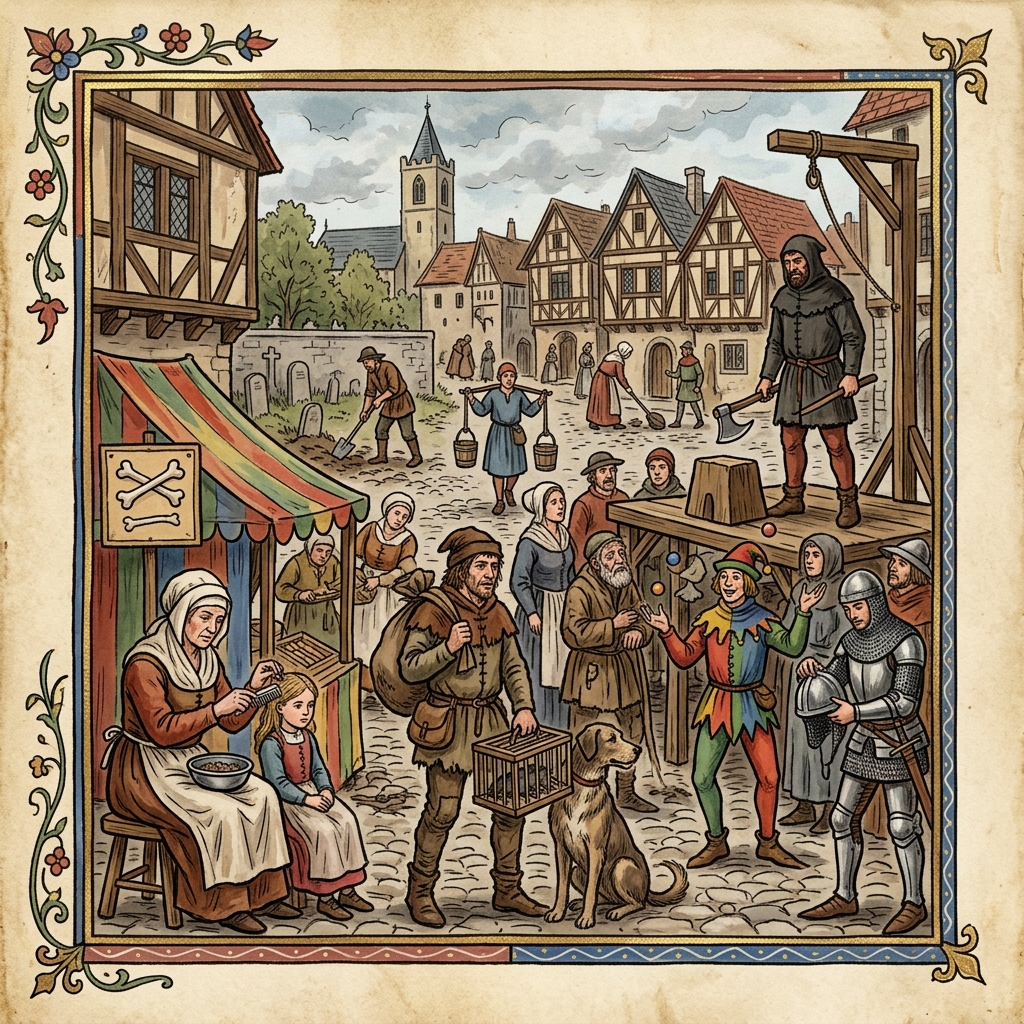
From the lice-remover to the man on the gallows – the world of work in the Middle Ages was full of occupations that seem bizarre today, but which kept the daily life of an entire society running back then. This article explores who these people were, how they lived, and why their work was both indispensable and despised.
What to expect in this article
- Key insights
- Context: What makes a profession in the Middle Ages ‘bizarre’?
- Lice-pickers, flea-catchers & co. – personal hygiene as a profession
- The barber-surgeon – between the bath, bloodletting and abscesses
- Carcass collectors, sewage masters & skinning workers – dealing with dead animals
- Gravediggers and mortuary services – work on the edge of the cemetery
- Executioners and executioners’ assistants – ostracised, feared, yet indispensable
- The executioner as healer – a paradoxical dual role
- How much did an executioner earn in the Middle Ages?
- Frantz Schmidt (1554–1634) – an executioner caught between the sword and the art of healing
- Master Hans and other famous executioners
- Musicians, jugglers and jesters – entertainment on the fringes of society
- An overview of other bizarre professions of the Middle Ages
- Dishonest professions: legal status and social consequences
- Between superstition and everyday life – magical and semi-magical activities
- Day-to-day work, tools and dangers
- From the Middle Ages to the present day: what has remained?
- Conclusion: Unusual professions as a reflection of medieval society
- Frequently Asked Questions (FAQ) about bizarre professions of the Middle Ages
 Reading time approx. 14 mins.
Key insights
- In the Middle Ages, there were numerous professions centred on death, filth and personal hygiene that seem bizarre today – including lice-pluckers, bath attendants, skinning masters and executioners.
- These occupations were legally necessary and contractually bound to towns or lords, but were socially despised and classified as ‘dishonourable’.
- Specific examples from Nuremberg and Bavaria (16th and 17th centuries) illustrate how such professions were organised – including income, tools and their impact on family life.
- Figures such as Frantz Schmidt or the collective term ‘Meister Hans’ illustrate the paradoxical dual role of being both an enforcer of the law and a social outcast.
- Many of these professions live on today in museums, re-enactment groups and historical novels.
Context: What makes a profession in the Middle Ages ‘bizarre’?
‘Bizarre’ is a modern judgement. From today’s perspective, professions associated with bodily fluids, death, sexuality or superstition stand out in particular. In the Middle Ages themselves, these activities were simply necessary – but by no means honourable.
The majority of people worked in agriculture; most lived as farmers in the countryside. In the High Middle Ages, many specialised craft trades then emerged in the growing towns. Within the social hierarchy – clergy, nobility, honourable craftsmen – there was a clear dividing line between them and the so-called dishonourable people. Professions involving death, blood or human excrement were often marginalised. Alongside executioners and tanners, the dishonourable professions also included street sweepers, bailiffs and charcoal burners. Utility simply did not equate to prestige.
Yet these occupations were strictly regulated: contracts, wages and duties laid down exactly what a skinner, gravedigger or executioner was required to do – and what they were not.
Lice-pickers, flea-catchers & co. – personal hygiene as a profession
Lice, fleas and other vermin were ubiquitous in the Middle Ages – amongst peasants as well as the nobility and the clergy. Hygiene, as we know it, simply did not exist.
The term ‘lice-picker’ refers to women who, in wealthy households, monasteries or at royal courts, removed lice from hair and clothing in return for payment. In historical sources, this activity tends to appear as an informal service: household accounts occasionally mention payments for vermin removal, but no formal guild registers for ‘lice pickers’ have yet been found. The work was therefore real, whilst the occupational title was more of a later attribution.
The setting was intimate yet mundane: hair was combed through on benches in courtyards or in women’s chambers, with children and adults treated alike. Flea skins – small pieces of fur intended to attract fleas – and special lice combs were commonly used tools. These service providers often combined their work with washing, combing or shaving, similar to the tasks of barbers and bath attendants.
The barber-surgeon – between the bath, bloodletting and abscesses
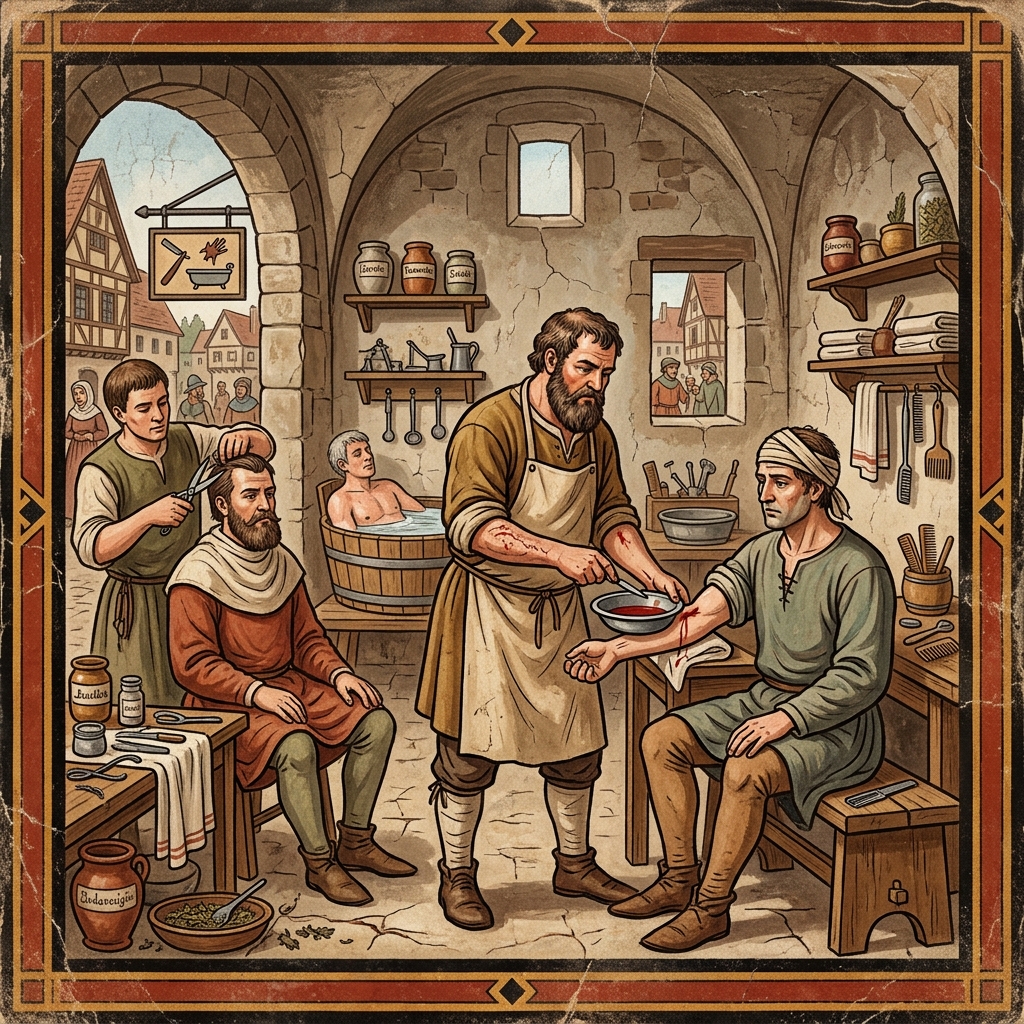
The barber-surgeon was a cross between a bath attendant, hairdresser, surgeon and barber – and, particularly between the 13th and 15th centuries, an integral part of the professional landscape in the cities of the Holy Roman Empire.
From today’s perspective, the combination of wellness and surgery seems downright grotesque: in the very same room where fragrant herbs were scattered into the bathwater, the barber-surgeon would pull teeth, cut open ulcers and practise bloodletting. Typical activities included:
- bloodletting and cupping with cupping glasses
- Shaving and haircuts
- Tooth extraction using simple forceps
- Removal of lice and vermin
- Minor surgical procedures on wounds and abscesses
In the late Middle Ages, bathhouses had a dubious reputation: their proximity to brothels and the presence of naked bodies made them places of dubious morality. Nevertheless, bathhouse attendants had their own guilds in many towns – yet their social standing remained ambivalent due to their dealings with blood and nudity.
Renderers, waste masters & skinning masters – dealing with dead animals
Dead animals and animal waste posed an enormous risk of epidemics in the densely built-up medieval urban environment. The skinner – also known as a ‘Schinder’ or ‘Wasenmeister’ – was the person who collected, skinned and disposed of animal carcasses.
Professions such as executioners and tanners were necessary but shunned. The tanner recycled bones, fat, hides and hooves to produce glue, leather and soap. This trade was certainly lucrative. Nevertheless, skinning men were regarded as thoroughly dishonest. They often lived in their own houses outside the city gates, as documented, for example, in southern German towns from the 14th to the 16th centuries.
A typical working day: collecting a dead horse at the city gate, transporting it to the wasenplatz, skinning it in the open air – accompanied by stench, crows and stray dogs. No wonder that respectable tradespeople avoided contact with tanners, as if the ‘dishonour’ could be transmitted like a disease.
Gravediggers and mortuary services – work on the edge of the cemetery
The gravedigger was indispensable in every parish – and during the plague outbreaks of 1348–49 and throughout the 15th century, his role was virtually essential for survival.
His duties: digging graves, laying the dead to rest, creating mass graves during epidemics, and maintaining the cemetery. Corpse washers prepared the deceased for burial and were socially marginalised – just like the gravediggers themselves. Exposure to decomposition, superstitions surrounding ghosts and revenants, and religious notions of purity made this profession the very epitome of dishonour.
Sometimes gravediggers took on additional duties: keeping night watch in the cemetery, ringing the death bell, and guarding fresh graves against grave robbers. During a plague outbreak in an imperial city, a gravedigger might have to bury numerous bodies in a single day – under constant threat of falling ill themselves. Quite a few of these people died in the very graves they had previously dug for others.
Executioners and executioners – ostracised, feared, yet indispensable
The terms ‘executioner’ and ‘executioner’ refer to the person who carried out secular punishments in the legal system of the High and Late Middle Ages. Other terms existed regionally, such as ‘Nachrichter’ in Franconia. In southern German towns, ‘Meister Hans’ was a common collective term for the executioner – an anonymising designation that deliberately created a sense of distance.
Executioners were civil servants, yet socially ostracised. They were employees of the city or the sovereign with a permanent contract – and at the same time the very epitome of a dishonourable profession. The population wavered between fear and fascination: people feared the executioner’s sword, yet at the same time trusted in a ‘clean’ cut.
How did one become an executioner?
Hardly anyone chose this profession voluntarily. One’s life path was often predetermined by one’s background and social constraints.
- Heredity: The profession of executioner was often passed down through the family. In families of executioners, sons would take over their father’s work because other guilds simply would not accept them. As a result, an executioner’s family was often socially stigmatised for generations.
- Coercion by the authorities: There were actual cases in which men were forced into the role against their will. For instance, in the 16th century, the Margrave of Brandenburg-Kulmbach singled out a simple forest worker named Heinrich Schmidt from a crowd and forced him to hang three men sentenced to death. From that moment on, Heinrich Schmidt – the father of the later famous Frantz Schmidt – had no choice but to take on the role of executioner permanently.
- Rare exceptions: In isolated cases, men deliberately chose the profession – lured by the fixed salary offered by an imperial city. In Nuremberg, for example, the post provided a secure livelihood, albeit at the cost of complete social isolation.
The executioner’s duties: more than just hanging
An executioner’s daily routine extended far beyond executions and was strictly regulated by municipal or provincial law.
| Type of punishment | Description |
|---|---|
| Beheading by the sword | Considered a ‘more honourable’ form of capital punishment |
| Hanging on the gallows | The most common method of execution, particularly for theft |
| Wheeling | For particularly serious crimes such as murder |
| Burning | Mainly for heresy and alleged witchcraft |
| Mutilation (hand, ear) | For lesser offences |
Executioners also carried out torture to extract confessions, for example on the rack or using thumb screws – always under the supervision of the judges. Furthermore, the executioner cleaned the execution sites and disposed of the bodies of those executed, sometimes in collaboration with the skinning trade.
The executioner as healer – a paradoxical dual role
Many executioners possessed extensive knowledge of anatomy – gained through daily contact with wounds, bones and corpses. In many towns, executioners also worked as surgeons, bone-setters and healers, particularly for poorer sections of the population who could not afford an official doctor.
Typical services included:
- Setting broken bones
- Lancing ulcers
- Performing bloodletting
- Removing arrowheads or splinters
The ambivalence was palpable: people avoided the executioner in everyday life, but sought him out specifically when official doctors were too expensive or unsuccessful. A patient who knocked on the door of the executioner’s house at night did so in the hope of being cured – and at the same time in fear of being seen.
How much did an executioner earn in the Middle Ages?
Despite being ostracised by society, executioners were able to earn a considerable income. A skilled executioner could sometimes achieve the standard of living of a master craftsman – and on occasion even exceed it.
| Source of income | Description |
|---|---|
| Fixed salary | Regular payment from the town or feudal lord |
| Fees per execution | Additional remuneration depending on the type of punishment |
| Payments in kind | Wood, grain, right of residence |
| The condemned person’s possessions | Clothing and personal effects of those executed, depending on municipal law |
| Medical treatment | Payment for medical treatment |
| Secondary trades | Sale of animal hides from the skinning trade |
Occasionally, executioners also earned money from ‘medical’ products – such as ointments made from animal fat, which were popularly believed to have healing properties.
Frantz Schmidt (1554–1634) – an executioner caught between the sword and the art of healing
Although Frantz Schmidt lived in the Early Modern period, his career was deeply rooted in the late medieval tradition of the executioner’s office. Born around 1554 in Hof (Franconia), his life’s path was predetermined by the involuntary career of his father, Heinrich Schmidt.
From 1573 to 1578, Schmidt initially served as executioner in Hof, then from 1578 to 1617 – for almost four decades – as executioner of the Imperial City of Nuremberg; in total, he spent some 45 years in this office. His handwritten diary documents 361 executions he carried out, as well as 345 further corporal punishments such as floggings and mutilations. By his own estimate, he also treated around 15,000 patients as a healer – a figure confirmed by the historian Joel Harrington in his analysis of Schmidt’s diary.
His journal is now regarded as one of the most important sources on the legal reality of that era. Towards the end of his life, Schmidt received an imperial restoration of honour for himself and his children – a rare example of belated recognition for a ‘dishonourable’ profession.
Master Hans and other famous executioners
The term ‘Meister Hans’ was a collective term for the executioner in many southern German towns. The name anonymised the office-holder whilst at the same time personifying the town’s punitive authority. When someone said ‘Meister Hans’, they were not referring to a specific man, but to the role itself.
One of the best-known families of executioners was the Kuisl dynasty in Schongau, Bavaria, who passed the profession down through several generations from the 16th to the 19th century. The writer Oliver Pötzsch, himself a descendant of the Kuisls, brought his ancestor Jakob Kuisl (1612–1695) to the attention of a wide audience with his series of novels *Die Henkerstochter* (*The Executioner’s Daughter*). Today, such figures are also reappearing in historical TV series and among re-enactment groups.
Minstrels, jugglers and jesters – entertainment on the fringes of society
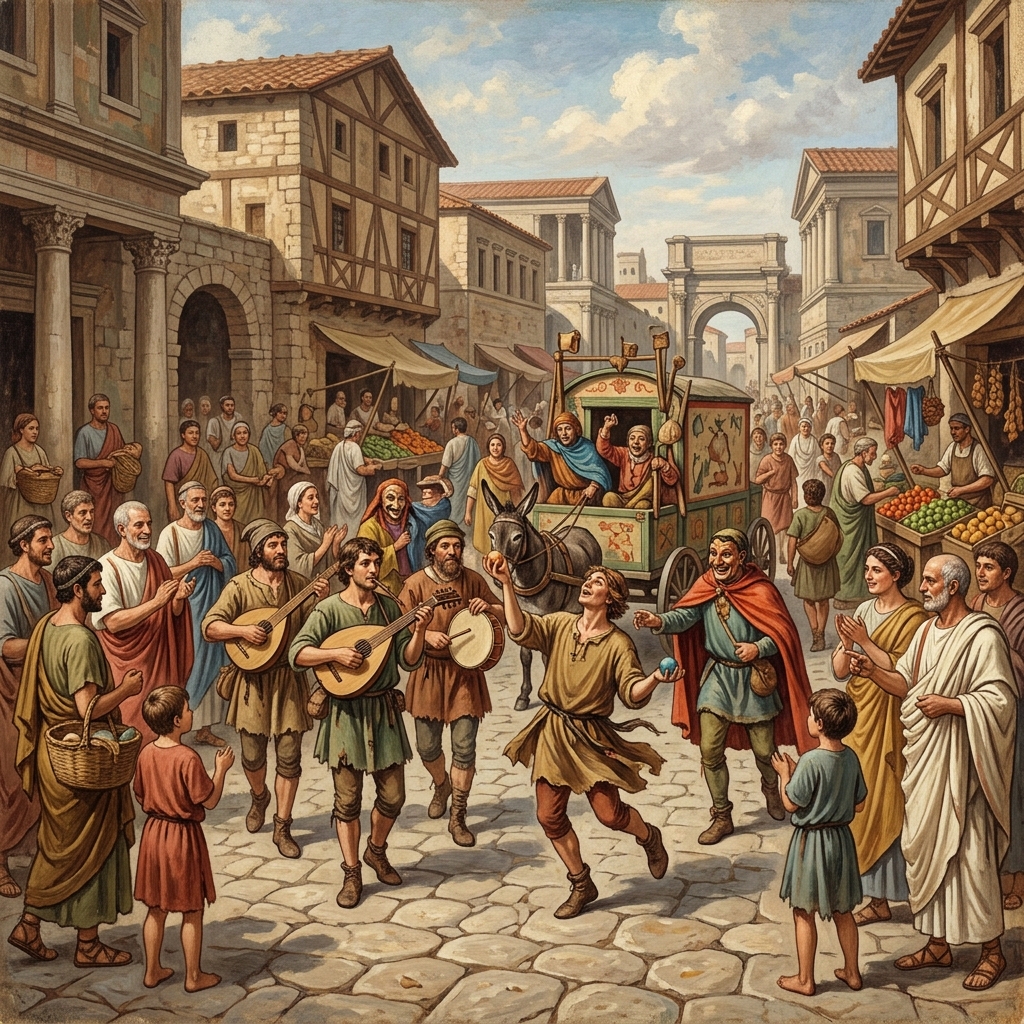
Entertainment in the Middle Ages was closely linked to travelling troupes. Minstrels, jugglers and showmen travelled from place to place, performing at markets and town festivals. Their professions were viewed with suspicion: their nomadic lifestyle, lack of affiliation with a guild, and association with gambling and fraud meant they were regarded with ambivalence.
Their roles ranged from music and singing, through acrobatics and animal training, to conveying messages between towns. Court jesters and town jesters were a special case: employed directly by the court or town hall, they were permitted to speak the truth in a jocular manner – a freedom not available to anyone else.
An overview of other quirky professions of the Middle Ages
Alongside the well-known outsiders, there was a wealth of curious occupations:
- Night watchman: night patrols through dark alleys, calling out the hours, warning of fires – a lonely duty.
- Sewer cleaners: Cleaning latrines and cesspits, one of the most despised professions.
- Professional mourner: Professional mourners who, for a fee, wept and wailed at funerals.
- Leech collectors: Often waded barefoot through muddy marshes to catch leeches – indispensable for the bloodletting practised by barbers.
- Zeidler: A kind of forest beekeeper who harvested honey from wild bee colonies in hollow trees. To do so, Zeidlers often climbed to heights of 5 to 25 metres and marked ‘their’ trees with a family crest. In 1350, Emperor Charles IV even granted the German ‘Zeidler’ their own legal privileges – a sign of the economic importance of this profession.
- Schinderknecht: An assistant to the skinner, occupying an even lower social position than the skinner himself.
Bakers, millers and butchers, on the other hand, were vital for the daily supply of food and generally enjoyed a respectable status. Similarly, tradespeople, blacksmiths, stonemasons and carpenters played a central role in the urban economy, organised into their own guilds. Scribes, monks, farmhands and maidservants also shaped daily life – not eccentric, but indispensable, just like the farmers tilling the fields.
Dishonourable professions: legal status and social consequences
The medieval concept of ‘dishonour’ was not a moral judgement in the modern sense, but a legal status. Membership of a guild was generally not possible for those in dishonourable trades, and guilds organised craftspeople whilst regulating training and quality – anyone considered dishonourable was excluded.
Typical dishonourable professions included executioners, tanners, gravediggers, street sweepers, bailiffs, charcoal burners and, in some regions, millers or shepherds. The consequences were severe:
- Separate residential quarters (such as executioners’ houses outside the city gates)
- Separate pews in church or complete exclusion from worship
- Restricted marriage rights – usually only within one’s own social class
- Children from these families often had no chance of entering respectable professions
Dishonourable professions were associated with death, blood and filth – and this stigma was passed down through the generations. The town authorities regulated this through town charters and guild regulations, not through personal whim.

Between superstition and everyday life – magical and semi-magical activities
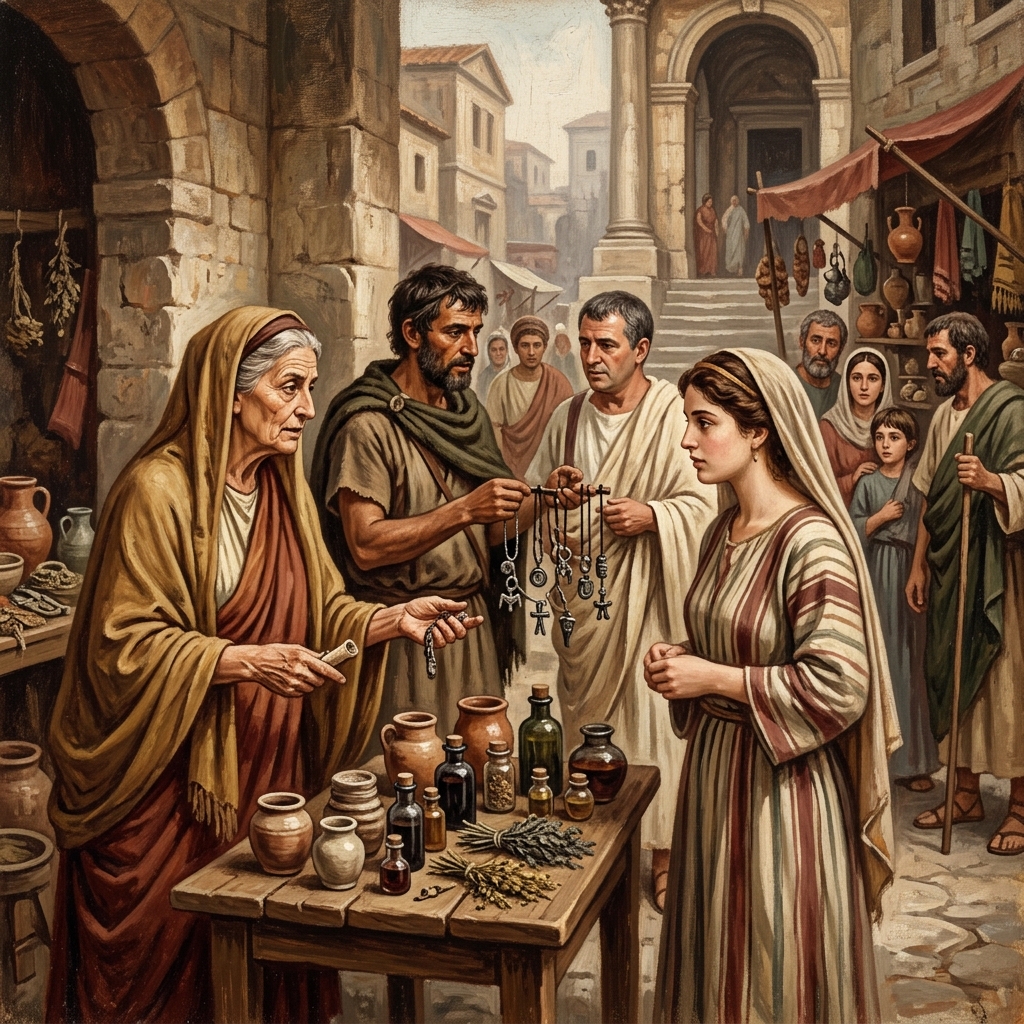
Many bizarre professions straddled the boundary between medicine, religion and magic. ‘Wise women’, fortune-tellers and amulet sellers offered love potions, protective spells and remedies – some were revered as helpers, others persecuted as witches.
The line between these and official professions was blurred: bath attendants, barbers and executioners also made use of herbalism and practices that were popularly regarded as magical. Everyday hardships – illness, famine, infant mortality – drove people to seek out such remedies. From the late 15th century onwards, the onset of the witch hunts significantly exacerbated the situation: what had previously been regarded as the art of healing could suddenly mean death at the stake.
Day-to-day work, tools and dangers
Bizarre professions were often associated with extreme physical and mental strain. The tools reflect the harshness of the work:
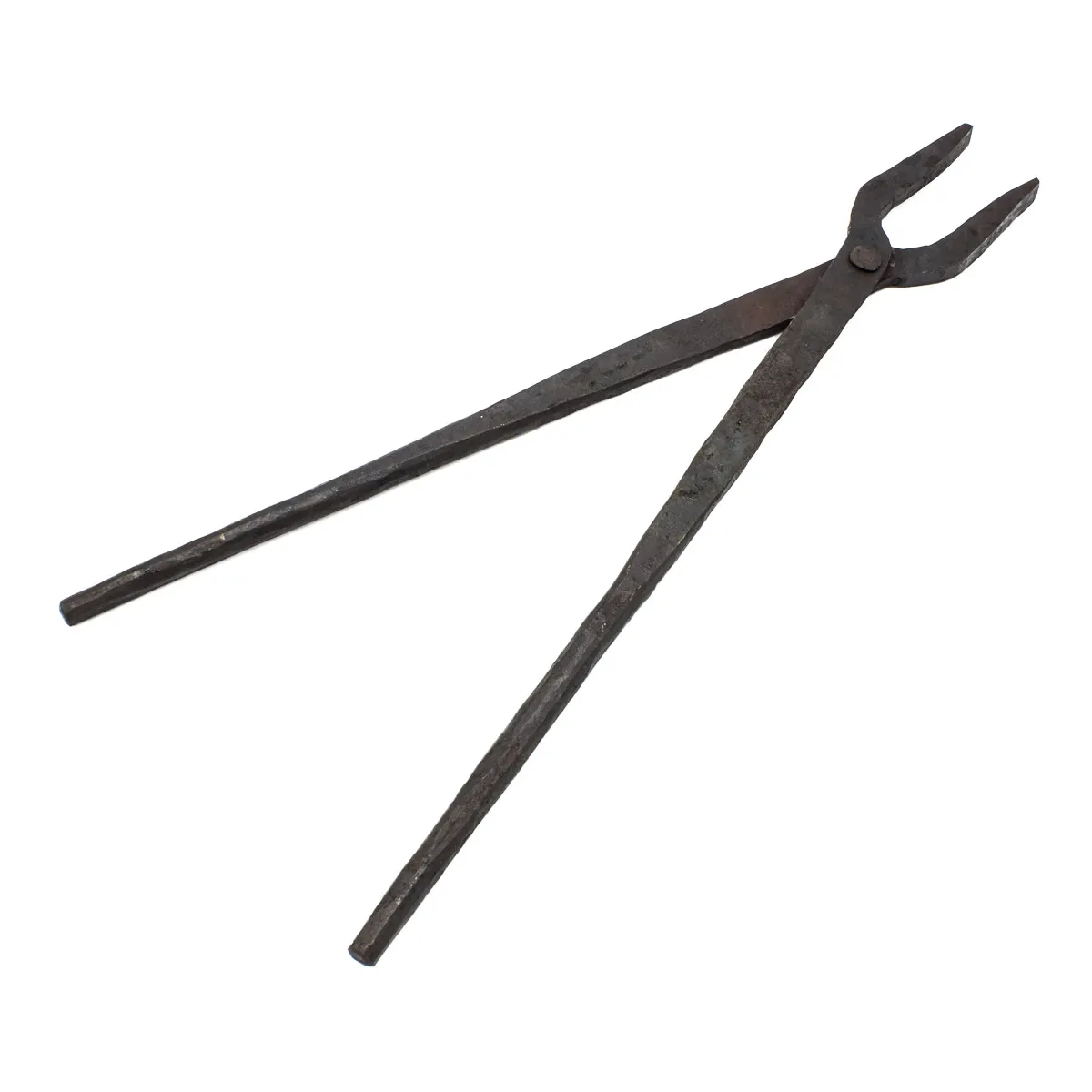
- Executioners: executioner’s sword, executioner’s axe, gallows rope, instruments of torture such as thumb screws and the rack
- Skinner: skinning tools, skinning hooks, knives
- Gravediggers: shovels, pickaxes, planks for grave linings
- Barbers: lice combs, razors, cupping glasses, forceps
The dangers were very real: the risk of infection for barbers, the threat of epidemics for skinning workers, injuries during executions, and psychological strain from dealing with death and suffering on a daily basis. Many of these occupational groups developed informal safety standards – specific techniques, disinfection with alcohol or herbs, protective clothing made of coarse linen.
From the Middle Ages to the present day: what has remained?
Many bizarre professions have disappeared, whilst others have evolved:
- Executioner → modern penal system without public executions and without the death penalty (in Europe)
- Bader → hairdresser, masseur, physiotherapist, surgeon
- Renderer → animal carcass disposal facilities
- Fiddlers → professional musicians and entertainers
These professions live on in museums, at historical festivals and in re-enactment groups. Novels such as *Die Henkerstochter* (The Executioner’s Daughter) explore the history of executioner families. Frantz Schmidt and Meister Hans are now an integral part of history education – from school lessons to guided tours in Nuremberg.
Conclusion: Bizarre professions as a mirror of medieval society
The bizarre arises from distance. What seems exotic to us today was essential for survival in the Middle Ages. Professions such as lice-picker, barber-surgeon, executioner, skinner and gravedigger provide deep insights into the hygiene practices, the administration of justice and the religious beliefs of an era. Many of these professions were indispensable to the functioning of society – from trading at markets to carrying out executions at the gallows.
Social exclusion and legal ‘dishonesty’ are key to understanding the Middle Ages. Anyone walking past the executioner’s tower at the next medieval market, or seeing a barber-surgeon at work at a re-enactment festival, will now know the stories behind the scenes. It’s worth taking a closer look – in museums, in historical sources and, above all, in the life stories of the past.
Frequently Asked Questions (FAQ) about bizarre medieval professions
Did the profession of ‘lice-picker’ really exist, or is it a myth?
The removal of lice and fleas is well documented historically, sometimes as a separate service – often provided by women – in wealthy households and bathhouses. However, ‘lice-picker’ rarely appears in documents as a formal job title. It was more of a paid activity within the scope of domestic services, comparable to washing or combing hair. So lice-picking was a real occupation; the job title is a later attribution.
Why were executioners and hangmen regarded as ‘dishonest’, even though they acted in the name of the law?
In a Christian-influenced worldview, physical proximity to blood, death and torture was regarded as unclean and a threat to the soul. Religious notions of sin and ritual impurity reinforced this perception. Although the executioner acted on behalf of the state, society regarded contact with death as a stain that extended to the entire family – regardless of the legal legitimacy of his actions.
Could a child from a family of executioners or skinning-house workers choose a different profession?
This was extremely difficult due to social stigmatisation and exclusion from the guilds. Only in rare cases was it possible to break free – for example, through a princely or imperial privilege, marriage into a respectable family in a distant location, or by deliberately relocating. The example of Frantz Schmidt shows that even after decades of loyal service, imperial intervention was necessary to officially restore the family’s honour.
How historically accurate are novels such as *Die Henkerstochter*?
Oliver Pötzsch’s ‘The Executioner’s Daughter’ series is based on a real family of executioners, the Kuisls from Schongau, of whom the author himself is a descendant. The broad context – social status, duties, social exclusion – is largely accurate. However, the details and plotlines are embellished with fiction. It is advisable to make a conscious effort to distinguish between fact and fiction and to consult historical sources for further context.
Can such professions still be seen ‘in action’ anywhere today?
Yes – in heritage villages, on city tours (such as executioner tours in Nuremberg or Rothenburg), in re-enactment groups and at medieval markets. Modern depictions, however, are significantly toned down and presented in an educational manner. Anyone visiting the Executioner’s House in Nuremberg gets to experience history first-hand – without the brutal reality of the original.


