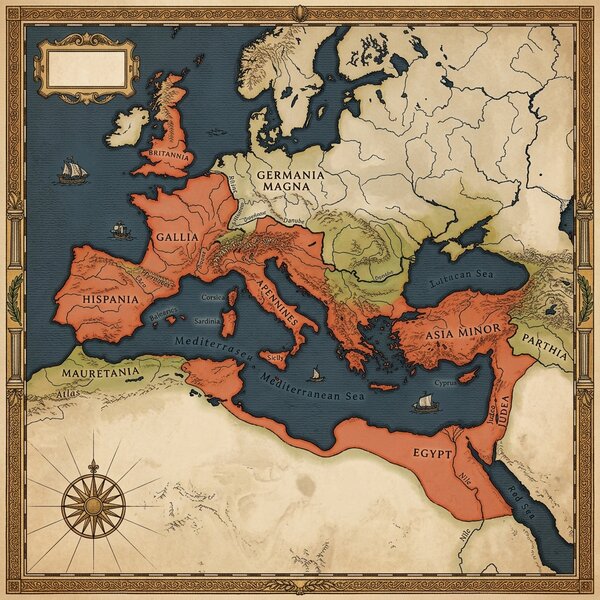

The Crusades are among the most defining events of the Middle Ages and shaped the lives of people in Europe and the Middle East for over two centuries. What began as a cry for help from Byzantium developed into a complex movement involving religion, politics, economics and personal advancement.

What to expect in this article
- What are the ‘Crusades’?
- Background and history of the Crusades
- Motives of the Crusaders: religion, politics, economics and society
- Definition, numbering and development of the Crusade movement
- The course of the most important Crusades (1095–1291)
- Life, daily routine and experiences in the context of the Crusades
- Criticism, interpretation and aftermath of the Crusades
- The Crusades in LARP and reenactment
- FAQ – Frequently asked questions about the Crusades
 Reading time approx. 11 mins.
Key facts at a glance:
- Timeframe: The Crusades were military campaigns sanctioned by the Roman Catholic Church between 1095 (Council of Clermont under Pope Urban II) and approx. 1291 (Fall of Acre), primarily directed against Muslim powers in the eastern Mediterranean.
- Religious basis: The movement combined the idea of penance with the concept of a just war – participants were granted a plenary indulgence. The Crusade was a mixture of pilgrimage (peregrinatio) and armed expedition.
- Crusader states: Between 1099 and 1291, four Latin territories emerged in the Levant – the Kingdom of Jerusalem, the County of Edessa, the Principality of Antioch and the County of Tripoli.
- Everyday history: The lives of the crusaders, settlers, women and merchants were shaped by extreme conditions, multi-ethnic coexistence and cultural exchange.
- Mixed legacy: Alongside religious fervour and violence (the massacre in Jerusalem in 1099), there was significant cultural transfer – Arabic numerals, medical knowledge and trade goods found their way to Europe.
What is meant by ‘Crusades’?
The term ‘Crusade’ itself is a creation of the early modern period, only coming into common use from the 16th century onwards. In the Middle Ages, people spoke of ‘taking up the cross’ (crucesignatio), the ‘Journey to Jerusalem’ (iter Hierosolymitanum) or the ‘Crossing’ (passagium). These terms highlight the nature of the campaign as an armed pilgrimage.
The classic Crusade movement spanned the years 1095 to 1291. Later campaigns against the Ottomans continued into the 15th century. The concept of the Crusades encompassed not only the Holy Land, but also the Baltic region (Teutonic Order), the Iberian Peninsula (Reconquista until 1492) and intra-European conflicts such as the Albigensian Crusade (1209–1229). The Crusades were not purely religious undertakings – they combined the power politics of the Papacy, the economic interests of Italian maritime republics and the personal advancement of knights and nobles.
Prerequisites and background to the Crusades
The Crusades cannot be understood without considering the developments since the 7th century. Several factors in the Islamic world, in Byzantium and in Western Europe created the conditions for this movement.
Rise of Islam and Islamic expansion: Following the Hijra in 622, Muslim armies conquered vast territories in rapid succession. Damascus fell in 635, Jerusalem in 638 under Caliph Umar, and by 711 the expansion had reached Spain. Control of the holy sites passed from Byzantium to various Islamic dynasties.
Byzantine crisis: The decisive turning point came with the Battle of Manzikert in 1071. The Seljuks under Alp Arslan defeated the Byzantine army and conquered large parts of Asia Minor. Emperor Alexios I Komnenos (1081–1118) appealed to the West for help in 1095.
Situation of Christian pilgrims: The situation for pilgrims fluctuated. Under the Fatimids, access to the holy sites was often possible. Following the Seljuk takeover, reports of raids and obstructions became frequent – a key argument for the preaching of the Crusades.
Intra-church developments: The Schism of 1054 had divided Christendom. The reformist papacy strengthened the popes’ claim to universal leadership. A crusade offered the Pope the chance to unite Christendom.
Social conditions in Europe: The 11th century brought population growth (from approx. 38 million around 1000 to 54 million around 1100), a hunger for land and feuds among the nobility. The ‘peace movement’ (Pax Dei from 989, Treuga Dei from 1027) sought to curb violence – the Crusade channelled it outwards.
Motives of the Crusaders: Religion, Politics, Economy and Society
The participants’ motives were varied and evolved over the two centuries of the Crusade movement. The high nobility, knights, peasants, townspeople, clergy and women had different objectives.
Religious motives: The Crusade was regarded as an act of penance. At the Council of Clermont in 1095, Pope Urban II proclaimed a plenary indulgence for all participants. The cry “Deus lo vult!” (God wills it!) became the battle cry. The Crusaders saw themselves as armed pilgrims on a mission to liberate the holy sites.
Political motives: For the Papacy, the Crusade offered an opportunity to demonstrate its leadership role vis-à-vis the Emperor. Kings such as Louis VII of France gained domestic political prestige. Nobles such as Bohemond of Taranto established their own principalities in the East – for example, Antioch in 1098.
Economic motives: The Italian maritime republics – Venice, Genoa, Pisa – benefited enormously. In 1202, Venice provided 200 transport ships for 85,000 silver marks. The Crusade tithe (introduced in 1188 as the Saladin tithe: a 10% income tax) financed the campaigns. Merchants gained privileges in ports such as Acre.
Social factors: For ‘younger sons’ with no claim to an inheritance, the East offered opportunities for advancement. Impoverished knights and common people joined the crusades out of poverty, discontent or a thirst for adventure. Women took part as companions, nurses and even rulers – Queen Melisende of Jerusalem reigned from 1131 to 1153.
Preachers such as Bernard of Clairvaux mobilised support for the Second Crusade in 1146–1147. Reports of atrocities against Christians in the East reinforced the willingness to participate.
Definition, chronology and development of the Crusades
The traditional count recognises seven major Crusades to the East, but modern research interprets the term more broadly.
| Crusade | Period | Key figures |
|---|---|---|
| First | 1096–1099 | Urban II, Godfrey of Bouillon |
| Second | 1147–1149 | Bernard of Clairvaux, Conrad III, Louis VII |
| Third | 1189–1192 | Frederick Barbarossa, Richard the Lionheart, Philip II |
| IV | 1202–1204 | Innocent III, Venice |
| Fifth | 1217–1221 | Egyptian campaign, Damietta |
| Sixth | 1228–1229 | Frederick II, Treaty of Jaffa |
| Seventh/Eighth | 1248–1270 | Louis IX (Egypt, Tunis) |
From the 13th century onwards, the privileges of the Crusades extended to the Albigensian Crusade against heretics (1209–1229, an estimated 200,000 to 1 million dead), the Reconquista in Spain and the campaigns of the Teutonic Order in the Baltic region.
Religious orders of knights emerged – the Knights Templar (1119), the Knights Hospitaller and the Teutonic Order (1190). These orders took on the construction of fortresses, the protection of pilgrims and, later, their own rule. From the late 13th century onwards, enthusiasm for the Crusades waned. Failures, enormous costs (Louis IX’s crusade cost 1.2 million livres) and new internal enemies diverted attention.
Chronology of the major Crusades (1095–1291)

The First Crusade (1096–1099)
Urban II’s call initially triggered the so-called People’s Crusade. Peter the Hermit led disorganised masses who, on their way, carried out massacres of Jews in the Rhineland – between 5,000 and 12,000 people died in Speyer, Worms and Mainz. These persecutions mark an early manifestation of anti-Semitism that cast a shadow over the history of the Church.
The organised armies of knights reached Constantinople, conquered Nicaea (May 1097) and besieged Antioch for eight months. On 15 July 1099, Jerusalem fell after a siege. The ensuing massacre of Muslims and Jews – estimates put the death toll at between 10,000 and 70,000 – remains a symbol of devastation. Four Crusader states were established: the County of Edessa (1098), the Principality of Antioch (1098), the County of Tripoli (1109) and the Kingdom of Jerusalem (1099).
Second and Third Crusades
The fall of Edessa to Zengi in 1144 triggered the Second Crusade. King Conrad III and Louis VII marched into the Holy Land – but the campaign failed at Damascus in 1148. The Third Crusade followed Sultan Saladin’s victory at Hattin on 4 July 1187, in which some 20,000 Crusaders were killed or taken prisoner. Jerusalem was lost. Emperor Frederick Barbarossa drowned in the River Saleph in 1190. Richard the Lionheart captured Acre in 1191 and concluded the Peace of Jaffa in 1192 – pilgrims were granted access, but the recapture of Jerusalem did not materialise.
The Fourth Crusade and the sacking of Constantinople
The Fourth Crusade (1202–1204) took a disastrous turn. Venice diverted the army – first to Zara, then to Constantinople. On 13 April 1204, the crusaders sacked the Christian city, killing between 2,000 and 10,000 people, and established the Latin Empire (until 1261). This event permanently deepened the schism between Latin and Orthodox Christianity.
Later Crusades
The Fifth Crusade (1217–1221) was directed against Egypt; the siege of Damietta failed. In 1229, during the Sixth Crusade, Emperor Frederick II secured the surrender of Jerusalem through diplomacy – without a fight, via the Treaty of Jaffa with Sultan al-Kamil. Control lasted for about a decade. Louis IX led two crusades: the Seventh (1248–1254) ended with his capture in Egypt at Mansura in 1250. The Eighth ended in 1270 before Tunis, where Louis died of an illness.
The end of the Crusader states
In 1244, the Khwarezmian Turks finally conquered Jerusalem. The Mamluks under Sultan Kalawun systematically captured the remaining fortresses. On 18 May 1291, Acre fell – 60,000 besiegers faced some 15,000 defenders. With the fall of Acre, lasting Latin rule in the Levant came to an end.
The Children’s Crusade (1212)
This phenomenon remains a matter of debate in terms of source criticism. Reports speak of thousands of young people from the Empire and France who wanted to reach the Holy Land. Many were enslaved in Genoa or Marseille. The event symbolises the mixture of religious enthusiasm and social hardship.
Life, daily routine and experiences in the context of the Crusades

Daily life of the Crusaders on the march
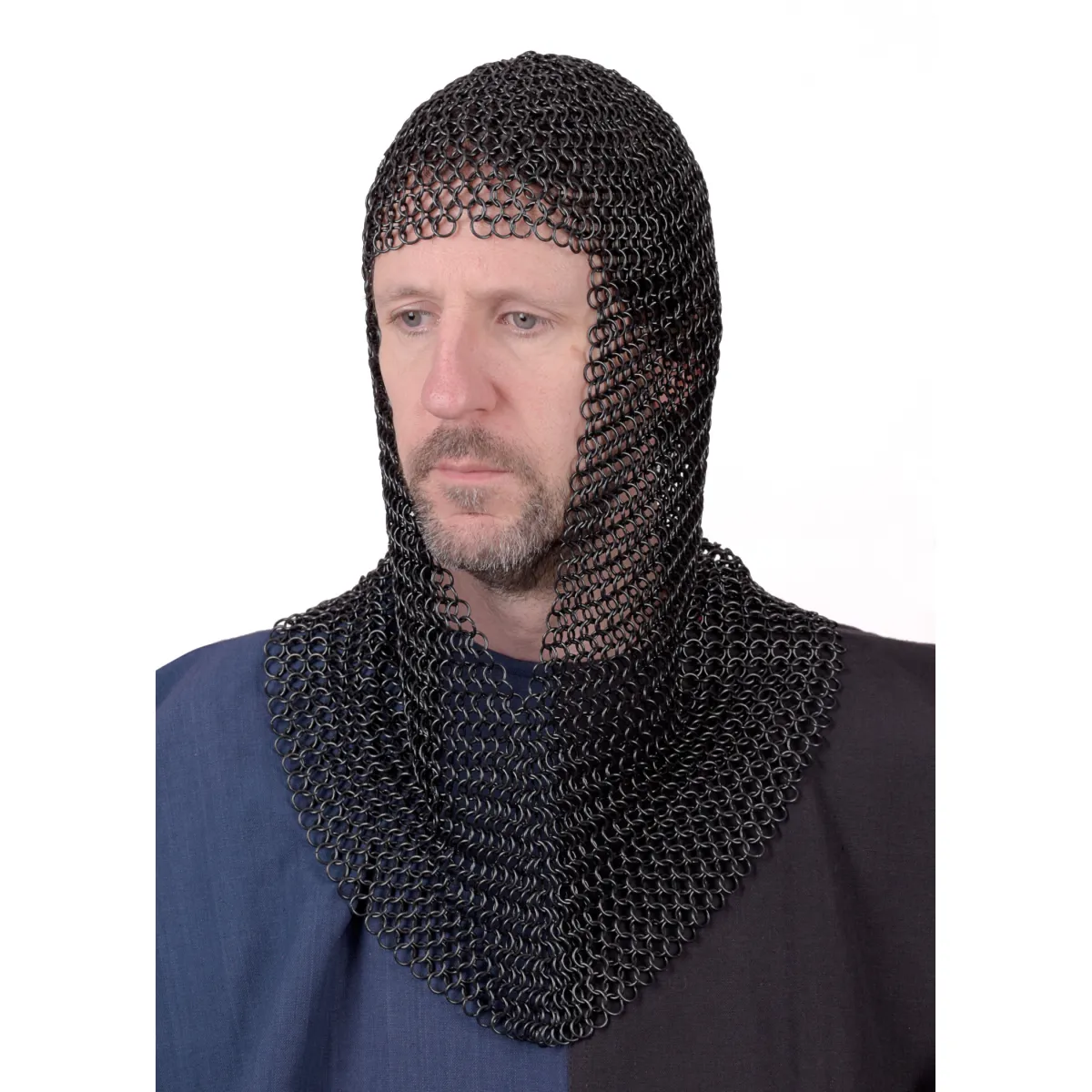
The crusaders marched in columns, covering 20–30 kilometres a day. Their equipment – chainmail weighing 20–30 kg, shield and lance – was an enormous burden. Diseases such as dysentery claimed the lives of 50–70% of the fighters in the First Crusade. Daily life was characterised by supply problems (heat, water shortages), religious rituals (masses before battles, veneration of relics), disciplinary issues and the constant fear of epidemics and enemy raids.
Life in the Crusader States
The Crusader states were multi-ethnic. In the Kingdom of Jerusalem, Latin Christians lived alongside Eastern Christians (Greeks, Syrians, Armenians), Muslims and Jews. Cities such as Jerusalem, Acre and Tyre were divided into different quarters. The Assizes of Jerusalem (c. 1200) separated the laws of the ‘Franks’ from those of the local population. Acre had around 50,000 inhabitants and was an important trading centre.
Women and families
Women played important roles. Melisende of Jerusalem ruled from 1131, initially alongside her husband Fulk, then alone (1143–1152). Eleanor of Aquitaine accompanied the Second Crusade. Ordinary women worked as pilgrims, carers and traders under difficult conditions.
Economy and trade
Ports such as Venice, Genoa and Acre became hubs of long-distance trade. Imported goods included spices and sugar, silk and cotton, medical knowledge, and techniques such as sugarcane cultivation and fortification. The Arsenale of Venice was established from 1104 onwards in response to growing transport needs.
Religion and Piety
Pilgrimages to the holy sites – the Holy Sepulchre, Golgotha, the Mount of Olives – remained central. Around 1,000 pilgrims a year visited Jerusalem after 1099. Daily life was permeated by processions, the veneration of relics and a mixture of deep faith and superstition.
The ‘other side’
The Muslim population under Crusader rule paid tribute. Trade relations crossed religious boundaries – markets in Acre served all groups. The Ayyubids under Saladin and later the Mamluks tolerated Christian traders in their territories.
Criticism, interpretation and aftermath of the Crusades

The assessment of the Crusades was already controversial in the Middle Ages and remains so to this day. Following the failure of the Second Crusade, authors such as Walter Map criticised the excesses. Theologians such as Alanus Anglicus argued more strongly for conversion rather than violence. The sacking of Constantinople in 1204 caused widespread horror.
In 2000, Pope John Paul II asked for forgiveness for the ‘sins of the Crusades’. Scholars continue to debate the narrow versus broad definition of the Crusades, the religious versus economic and political interpretation of their motives, and whether they should be viewed as acts of defence or expansion.
Cultural and knowledge transfer
Through contact with the Islamic world, significant knowledge found its way to Europe: the reception of Aristotle via Arabic translations, Arabic numerals (Fibonacci 1202), medical knowledge (Ibn Sina) and navigational skills. Schools of translators, such as that in Toledo, played an important role in this.
Memory and legacy
In the Latin West, the Crusades were long glorified (chivalric romances, Tasso’s ‘Gerusalemme liberata’ 1581). In the Islamic world, it was not until the 19th/20th century that the term al-hurub al-salibiyya emerged as a symbol of Western aggression. The term ‘Crusade’ is also used metaphorically today to refer to intensive campaigns – a historically sensitive usage due to its colonial connotations.
The Crusades in LARP and Reenactment
The Crusades era is one of the most popular settings in historical re-enactment and LARP. And for good reason: it offers a rich selection of characters from a wide variety of cultures and social classes – from the Norman knight in chainmail to the Templar in a white cloak, right through to the Byzantine mercenary who views the Crusader fervour with cynicism.
Anyone portraying a Crusader, Hospitaller or pilgrim needs the right look: chainmail, tabard, pilgrim’s badge, belt fittings and appropriate accessories make the character believable. At vehi-mercatus you’ll find clothing and equipment for medieval characters – from the simple pilgrim to the fully armoured knight of the High Middle Ages.

FAQ – Frequently asked questions about the Crusades
Were the Crusades purely wars of aggression or wars of defence?
The medieval perspective emphasised defence – aid for Byzantium after Manzikert in 1071, protection of pilgrims, and the reconquest of Christian territories. From a modern perspective, however, the Crusades contained clear elements of expansion. The Crusaders conquered territories that had been Muslim since the 7th century. A simple classification as ‘defence’ or ‘attack’ falls short – both elements were present.
What role did the orders of knights play during the Crusades?
The three most important orders were the Knights Templar (founded c. 1119: protection of pilgrims, banking, dissolved in 1312), the Knights Hospitaller (military from the 12th century: hospitals, fortress construction, later Cyprus/Rhodes) and the Teutonic Order (founded in 1190 in Acre: later rule in Prussia and Livonia). These orders built fortresses such as Krak des Chevaliers, protected pilgrimage routes and developed into independent political actors.
How were the Crusades financed and organised?
Funding came from several sources: the promise of a full indulgence motivated participants; the Crusade tithe (from 1188) levied a 10% tax on income; nobles mortgaged or sold estates; merchants and Jewish communities granted loans (Aaron of Lincoln lent Richard I £100,000). The Curia coordinated efforts through legates and crusade preachers, whilst treaties with maritime republics such as Venice regulated transport.
Were there peaceful contacts between Christians and Muslims during the Crusades?
Despite the violence, there were many instances of peaceful contact. Richard the Lionheart and Sultan Saladin negotiated respectfully in 1191–1192. Frederick II concluded a treaty with Sultan al-Kamil in 1229 without a fight. In everyday life, Christians and Muslims shared markets, collaborated on irrigation projects and sought medical treatment across denominational boundaries.
How did everyday life in the Holy Land differ from that in Europe?
The Holy Land was more urbanised – coastal cities such as Acre had an international character. The climate required a different diet (olive oil, dates, sugar cane). Contact with long-distance trade goods was more intense. In contrast, many Europeans lived in rural settings under a three-field system and feudal system with less mobility. The cultural diversity and economic opportunities in the East often surpassed those in Europe.


Letters from the trading house
New arrivals, market dates and offers, straight from Rinchnach. Unsubscribe any time with one click.
Subscribe to the newsletter