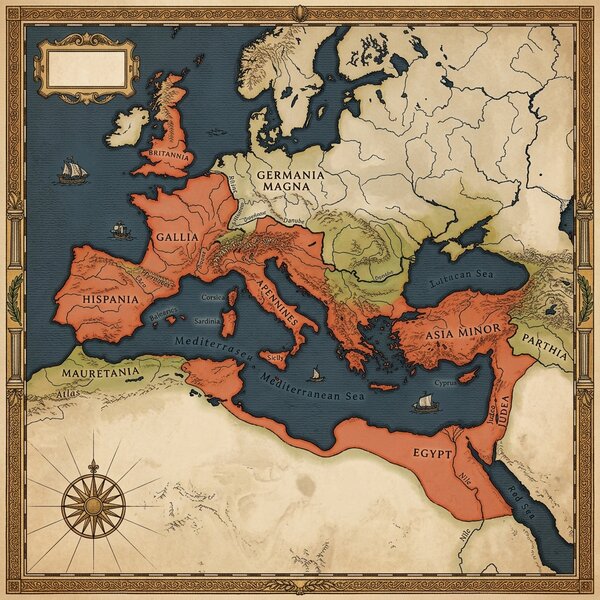
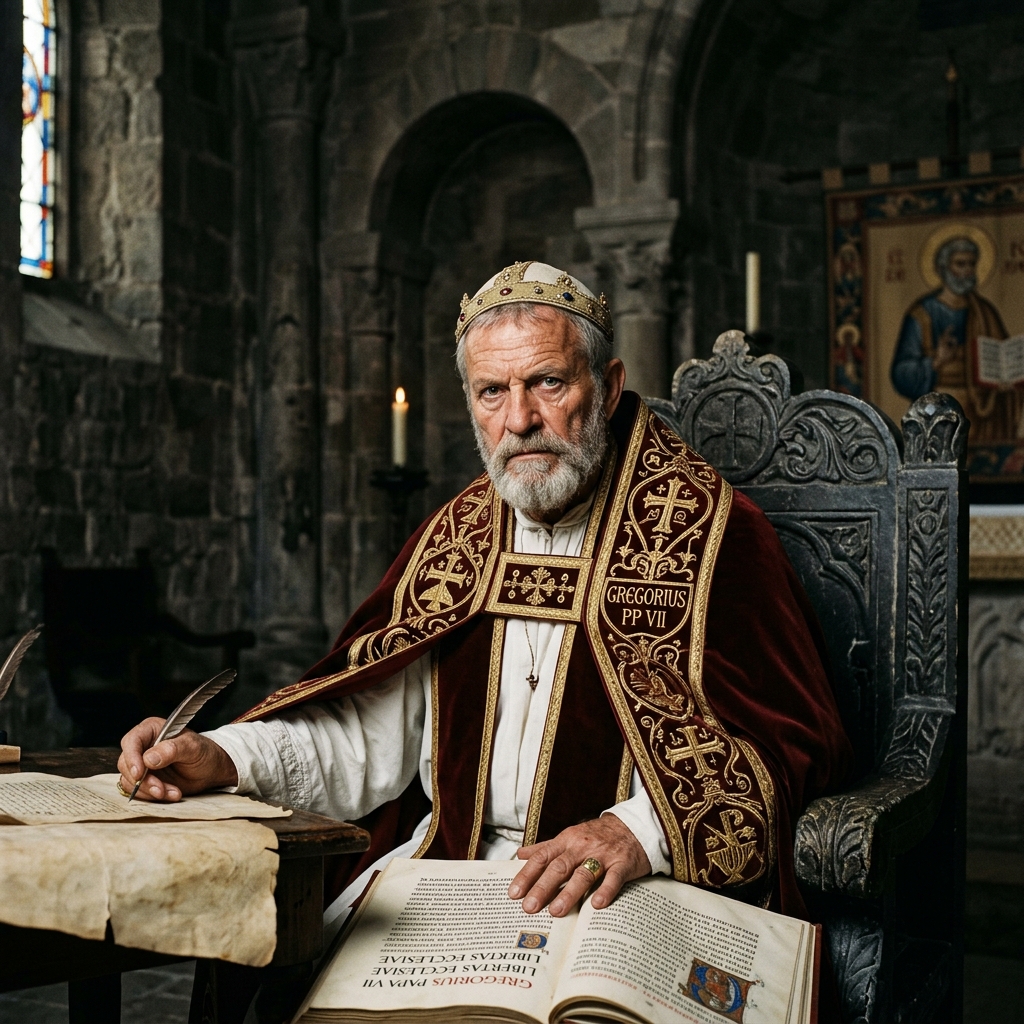
The 11th century marked a turning point in the history of the Church – and at the heart of this upheaval stood a man from Tuscany: Pope Gregory VII. His pontificate, from 1073 to 1085 fundamentally altered the relationship between spiritual and secular power. The Investiture Controversy, the Walk to Canossa and the Dictatus Papae are terms that remain relevant to this day – far beyond the history of the medieval Church.
What to expect in this article
- Key points at a glance
- Origins, youth and rise to power in Rome
- The papal election of 1073 and the programme of the Gregorian Reform
- The Dictatus Papae (March 1075)
- The Investiture Controversy with Henry IV
- The Walk to Canossa (January 1077)
- Further escalation, the antipope and the schism
- War over Rome, exile and death in Salerno
- Reforms, Europe-wide impact and legacy
- Frequently asked questions about Pope Gregory VII
 Reading time approx. 11 mins.
Who was the man who brought Emperor Henry IV to his knees yet died in exile himself? This article explores the life, reforms and enduring legacy of Gregory VII – from his Tuscan origins to his canonisation in 1606.
Key facts at a glance
- Gregory VII, born Hildebrand of Soana around 1015–1020 in Tuscany, reigned as Pope from 1073 to 1085 and is regarded as a radical church reformer who massively strengthened the papacy against secular rulers.
- The Dictatus Papae of 1075 set out 27 principles granting the Pope absolute authority over bishops, kings and emperors – a revolutionary document in the history of the Church.
- The Investiture Controversy with Henry IV escalated into the excommunication of the king, the famous Walk to Canossa in 1077, and the elevation of the antipope Clement III.
- Gregory VII died in exile in Salerno in 1085, uttering the words “I have loved justice and have therefore died in exile.” He was canonised in 1606.
- His pontificate is regarded as a turning point in the separation of spiritual and temporal power, the effects of which were formalised in the Concordat of Worms in 1122.
Origins, youth and rise to prominence in Rome
The exact origins of Hildebrand remain the subject of scholarly debate to this day. Born between 1015 and 1020 near Soana (now Sovana) in southern Tuscany, sources vary between two interpretations:
| Theory | Details |
|---|---|
| Noble origins | Son of the Aldobrandeschi count family |
| Modest circumstances | Child of simple artisan parents |
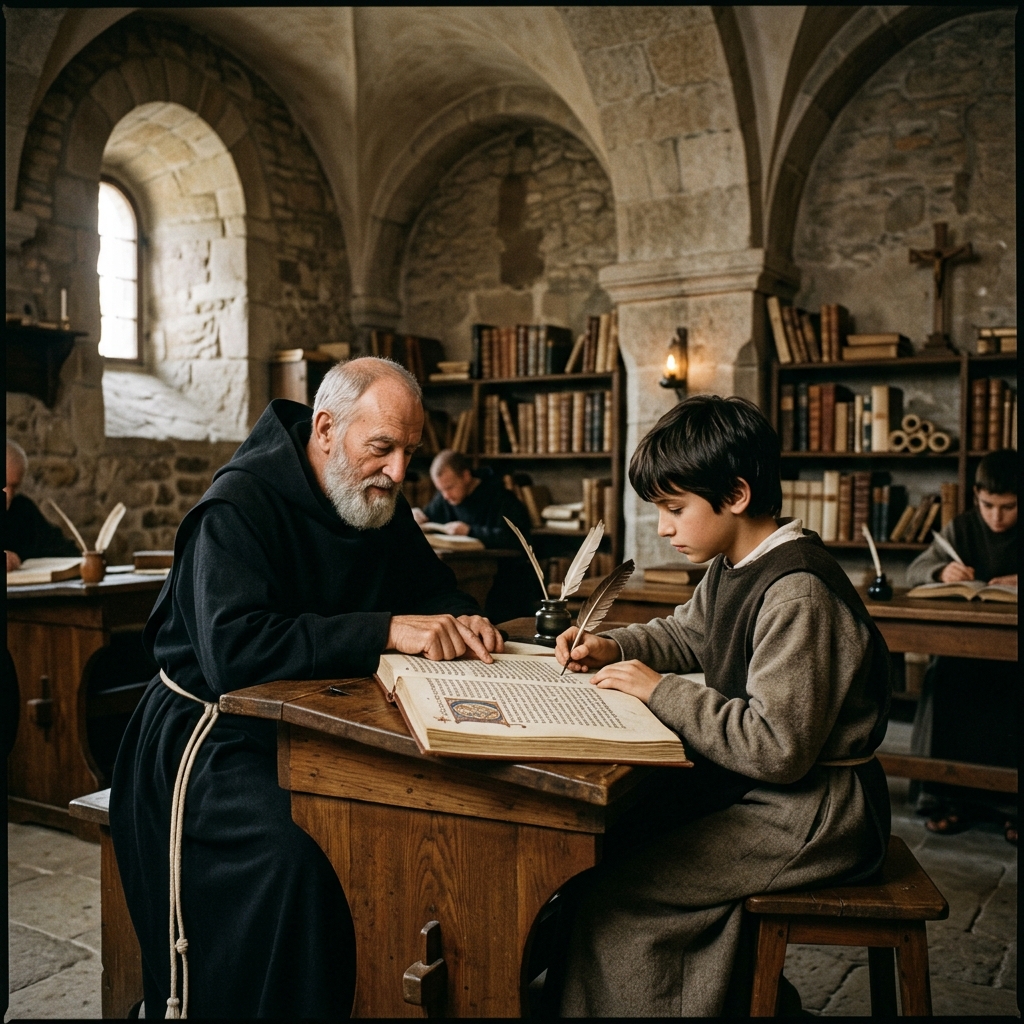
Regardless of his social background, the young Hildebrand received his education at the Convent of St Mary on the Aventine Hill in Rome. This convent had close ties to the Cluniac Reform Movement, whose ideals had a lasting influence on him: strict observance of the Benedictine Rule, deepening of piety, independence from secular lords and direct subordination to the Pope.
His early career began as a monk in Rome, where he quickly established contacts with the reformist popes; . A decisive moment was his close bond with Pope Gregory VI. Following the Synod of Sutri in 1046, at which Henry III had Gregory VI deposed, Hildebrand loyally accompanied his master into exile – including to Cologne. After returning to Rome in 1049 under Pope Leo IX, his influence grew rapidly:
- 1049: Appointed subdeacon
- 1050: Rector of the monastery of San Paolo fuori le Mura
- 1054/1056: Diplomatic missions to France, which expanded his European network
- 1058/1059: Appointment as Archdeacon of the Roman Church
As archdeacon, he controlled the finances, administration and personnel policy of the Curia. Contemporaries described him as effectively more powerful than the popes he served. Under six pontificates – Leo IX, Victor II, Stephen IX, Nicholas II and Alexander II – no significant decisions were taken without his approval.
The Papal Election of 1073 and the Programme of the Gregorian Reform
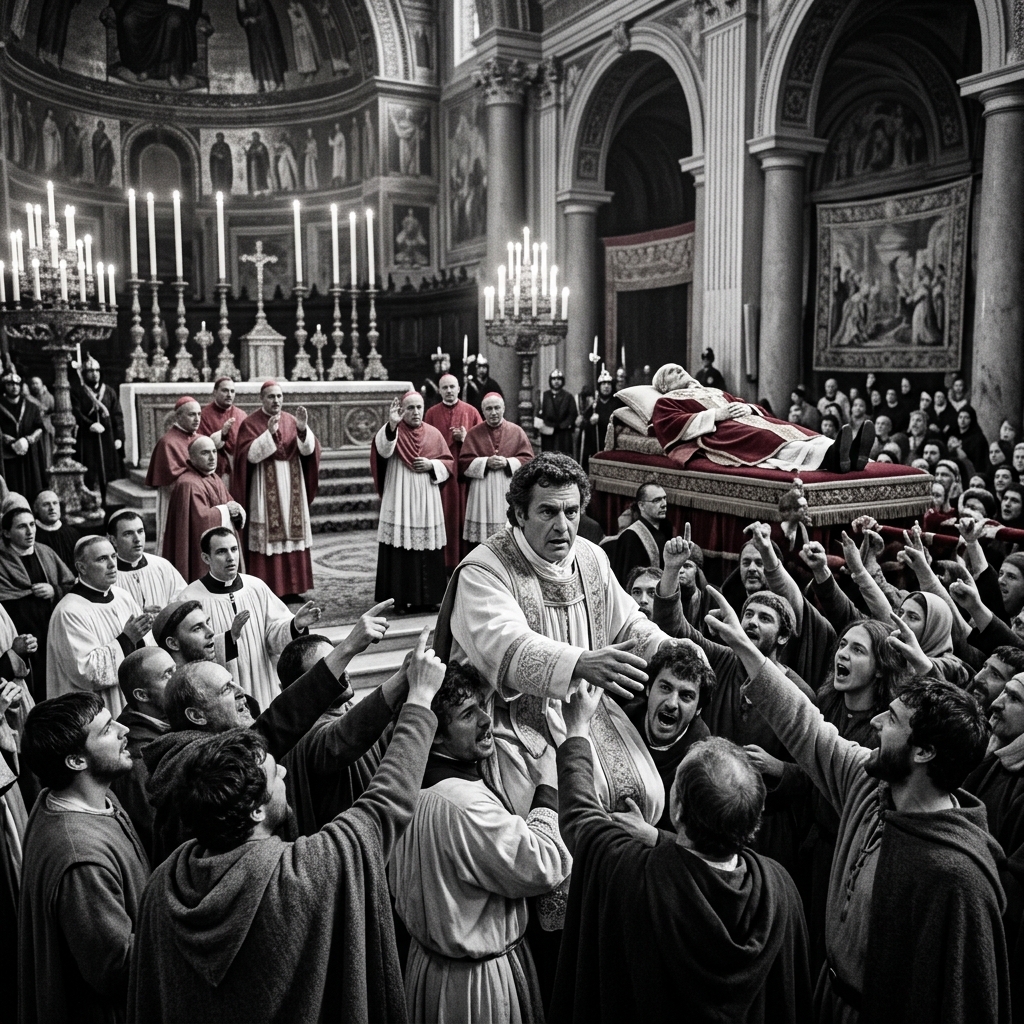
The papal election on 22 April 1073 proceeded in a highly unusual manner. During the funeral service for Alexander II, the clergy, together with the people, proclaimed Hildebrand as the new papal leader by acclamation – without waiting for prior royal consent. This stood in a certain contrast with the Papal Election Decree of 1059, which Hildebrand himself had helped to draft. Nevertheless, his enthronement was regarded as a victory for the Roman reformist faction.
The choice of name was programmatic: by adopting ‘Gregory VII’, he deliberately drew a line back to Gregory VI and the great Church Father Gregory I – a clear signal for consistent reforms, which are today summarised under the term ‘Gregorian Reform’.
The Lenten Synods from 1074
At the annual Lenten synods in Rome, Gregory VII systematically implemented his reform programme. The three central reform objectives were:
- Combating simony: a ban on the buying and selling of ecclesiastical offices
- Enforcement of celibacy: married priests were to lose their offices; laypeople were urged not to attend services led by priests with wives
- Restriction of lay investiture: secular rulers were no longer to be allowed to appoint bishops and abbots
The Dictatus Papae (March 1075)
The central document of his reform policy was the Dictatus Papae – a collection of 27 principles defining papal primacy with unprecedented radicalism. The most important statements:
| Number | Key statement |
|---|---|
| 1 | The Roman Church was founded by the Lord alone |
| 12 | The Pope may depose emperors |
| 19 | The Pope cannot be judged by anyone |
| 22 | The Roman Church has never erred |
| 27 | The Pope can release subjects from their oath of allegiance to unjust rulers |
These guiding principles claimed for the Chair of Peter an authority that extended far beyond purely religious matters. Gregory VII sought not only to combat moral abuses, but also to permanently secure the institutional independence of the Church from secular rule.

The Investiture Controversy with Henry IV
The Investiture Controversy was the central conflict of this era. At its heart lay the question: Who has the right to appoint bishops and abbots to their offices – the Pope or the secular ruler? Henry IV continued to appoint bishops despite the Roman reform decrees. Gregory VII regarded this as a direct attack on the freedom of the Church.
The Synod of Worms (January 1076)
The confrontation escalated dramatically. At the Synod of Worms, Henry IV, together with a portion of the German episcopate, declared Gregory VII deposed. In a notorious letter, he reviled the Pope as a ‘false monk’ and contested his legitimacy.
Gregory’s response (February 1076)
The papal reaction was unprecedented in its severity:
- Excommunication of Henry IV and the imposition of an interdict
- Release of his subjects from their oath of allegiance
- Suspension of the German bishops who had supported Henry
These measures triggered a severe crisis of state and legitimacy within the empire. The princes distanced themselves from Henry and planned a Diet for 1077 at which a new king was to be elected. The pressure on Henry IV grew enormously: either he would ask the Pope for forgiveness – or he would lose his crown.
The Walk to Canossa (January 1077)
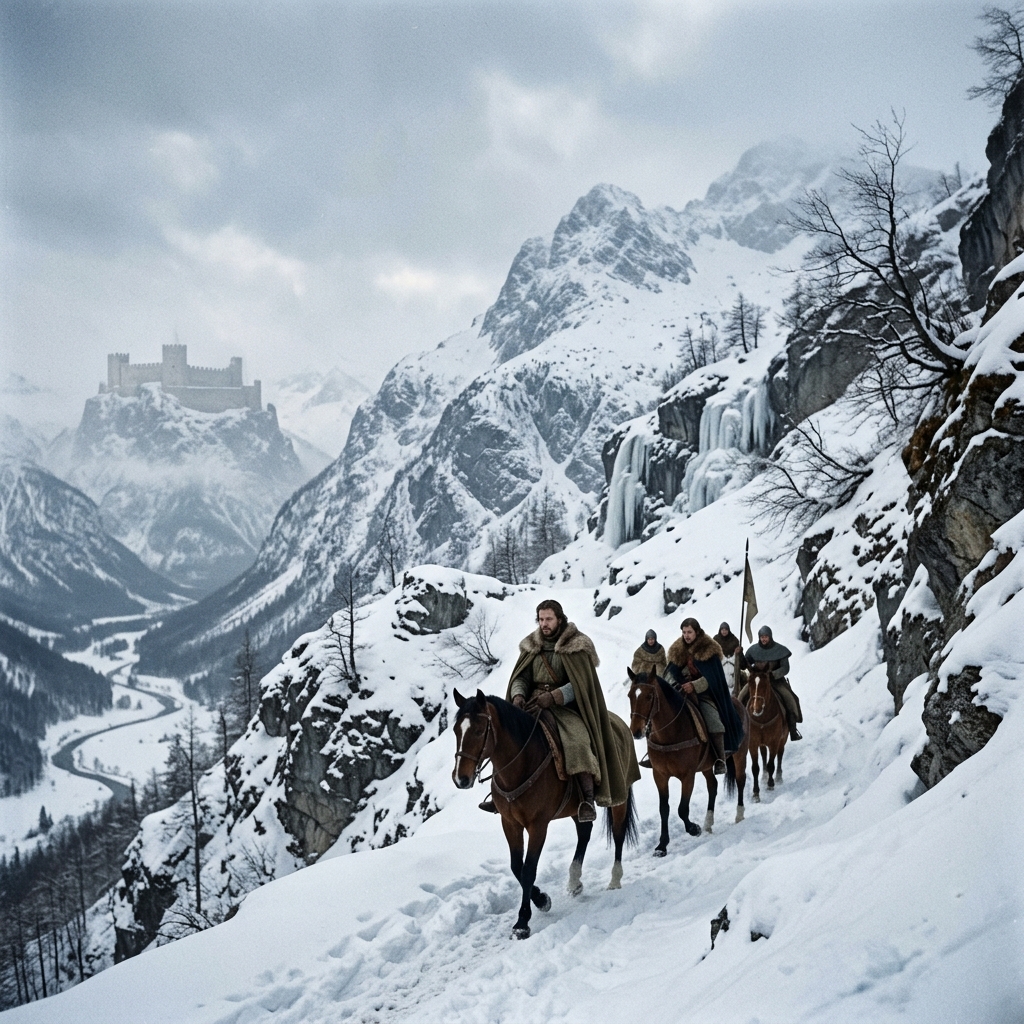
In the winter of 1076/1077, Henry IV set out with only a small retinue across the snow-covered Alps to northern Italy. His destination was the castle of Canossa, belonging to the Margravine Matilda of Tuscany, where Gregory VII was staying. According to later accounts, Henry waited barefoot in a penitential shirt outside the castle for three days until Gregory received him.
The Pope lifted the excommunication – yet the fundamental political issues remained unresolved. Historically speaking, the journey to Canossa was:
- For Henry: a skilful power manoeuvre that weakened the princely opposition within the Empire
- For Gregory: A visible triumph of spiritual primacy over secular power
- For history: A catchphrase for forced submission, which had an impact right up to Bismarck’s Kulturkampf
Renewed escalation, an antipope and schism
The peace following Canossa did not last long. As early as 1077, opposing princes elected Rudolf of Rheinfelden as an antipope, whom Gregory VII increasingly supported. Events unfolded rapidly:
- 1080: Henry was excommunicated once again by Gregory VII.
- Synod of Brixen 1080: Henry and bishops close to him deposed Gregory.
- Antipope Clement III: Archbishop Wibert of Ravenna was proclaimed Clement III – a schism that was to last until the year 1100.
War over Rome, exile and death in Salerno
The escalation led to open warfare. Between 1081 and 1084, Henry IV marched into Italy on several occasions with his troops and besieged Rome. In 1084, Clement III crowned Henry Emperor in Rome – a severe symbolic blow to Gregory’s authority.
The Normans under Robert Guiscard marched into Rome in 1084 and freed Gregory – yet their troops plundered the city and left behind massive devastation. The Roman population blamed not the Normans, but the Pope, who had summoned them. Gregory was forced to leave Rome and fled to Salerno.
On 25 May 1085, Gregory VII died in exile. His last recorded words became the epitaph of his life:
“I loved justice and therefore died in exile.”
He was buried in Salerno Cathedral. His subsequent recognition took place in two stages:
| Year | Event |
|---|---|
| 1584 | Beatification by Pope Gregory XIII. |
| 1606 | Canonisation by Pope Paul V |
Reforms, Europe-wide impact and legacy
Gregory VII shaped the papacy into a supranational institution that claimed to stand above kings and emperors. This understanding fundamentally altered the medieval concept of sovereignty and continues to have an impact to this day.
The European dimension of the Gregorian Reform
His policies extended far beyond the Holy Roman Empire: in Poland and Hungary, he promoted independent church structures; in Scandinavia, he supported independent archdioceses and freed parts of the local church from dependence on Hamburg-Bremen. The overarching goal was always to bind the regional churches directly to Rome – and not to the Emperor.
Organisational strengthening of the Curia
Under Gregory VII, the Roman Curia was systematically expanded: administration became more written and formalised, legates’ missions were systematised, regular Roman synods were held, and ecclesiastical decision-making processes were increasingly centralised in Rome. The Registrum epistolarum – Gregory’s extensive collection of letters – impressively documents this development and remains an important primary source for research into the 11th century to this day.
The end of the Investiture Controversy: the Concordat of Worms, 1122
The conflict continued after Gregory’s death. It was not until the Concordat of Worms of 1122 that a viable compromise was reached:
- The Emperor renounced the investiture with ring and staff – the ecclesiastical symbols
- The Pope recognised the secular sovereign rights in the conferral of regalia
This laid the foundation for the future separation of church and state – a legacy that can be traced directly back to Gregory VII.
Cultural heritage: “We’re not going to Canossa!”
The “Journey to Canossa” became a catchphrase for forced humiliation before a higher power. Bismarck’s famous declaration “We shall not go to Canossa!” during the Kulturkampf of the 1870s shows how vivid this image remained centuries later. Churches that have Gregory VII as their patron saint, and his feast day on 25 May, bear witness to his enduring legacy in the Catholic world.
Frequently asked questions about Pope Gregory VII
When exactly was Gregory VII born, and how reliable is this information?
No exact date of birth has been handed down. Research dates his year of birth to around 1015 to 1020, with some accounts extending as late as 1030. These estimates are based on later biographical details, the stages of his career, and indirect sources such as the Vita Gregorii VII by Paul of Bernried (1128). Medieval birth registers were rarely kept for people outside the high nobility.
Was Gregory VII actually a monk from the Abbey of Cluny?
Older accounts often described Hildebrand as a Cluniac monk. Modern historical research takes a more nuanced view: formal membership of the Cluny order cannot be conclusively proven from the sources. His reform ideas were, however, strongly influenced by Cluny, and encounters with Abbot Hugh of Cluny are documented.
What significance did Gregory VII have for the development of celibacy?
Gregory VII systematically tightened the existing requirements for priestly celibacy through his synods from 1074 onwards. He forbade married priests from exercising their ministry and prohibited the faithful from attending their services. There was considerable resistance, but in the long term these measures contributed significantly to making celibacy in the Latin West a binding norm.
Were there any attempts by Gregory VII to organise a crusade?
Yes. Around 1074/1075, Gregory VII planned an armed expedition to support the Byzantine Empire against the Seljuks. He also saw this as an opportunity to overcome the schism between Rome and Constantinople. The plan failed due to internal church conflicts and a lack of support from secular rulers. The first officially proclaimed crusade did not begin until 1095 under his successor, Urban II.
What exactly does the term ‘Investiture Controversy’ mean?
The term refers to the conflict between the Pope and secular rulers over the right of investiture – that is, the solemn installation of bishops and abbots into office through the presentation of a ring and staff. Secular rulers claimed this right because bishops also held important political and economic positions. Gregory VII regarded lay investiture as an infringement on the freedom of the Church. The dispute formally began in 1076 and did not end until the Concordat of Worms in 1122.
How does modern scholarship view Gregory VII – tyrant or reformer?
Opinions vary widely – even among his contemporaries, he was regarded either as a relentless hardliner or as a holy defender of ecclesiastical freedom. Modern scholarship largely regards him as a consistent reformer with great claims to power, as the first ‘absolutist’ ruling pope and as the fundamental architect of the institutional independence of the Church. His legacy remains ambivalent: he had a lasting influence on the structures of the medieval Church, but also left behind a divided Europe and a schism that lasted for decades. The Dictatus Papae is still regarded today as the foundational document of papal primacy.
What distinguishes Gregory VII from his predecessors as a reforming pope?
Before Gregory VII, popes such as Leo IX and Nicholas II had already initiated reform measures. Gregory distinguished himself through the radicalism and consistency of his demands: he was not content with moral appeals, but enforced reforms institutionally – with synodal decrees, legates, excommunications and the Dictatus Papae as a theoretical foundation. He was the first pope who not only articulated the claim to supremacy over secular rulers, but also attempted to enforce it politically.



Letters from the trading house
New arrivals, market dates and offers, straight from Rinchnach. Unsubscribe any time with one click.
Subscribe to the newsletter