



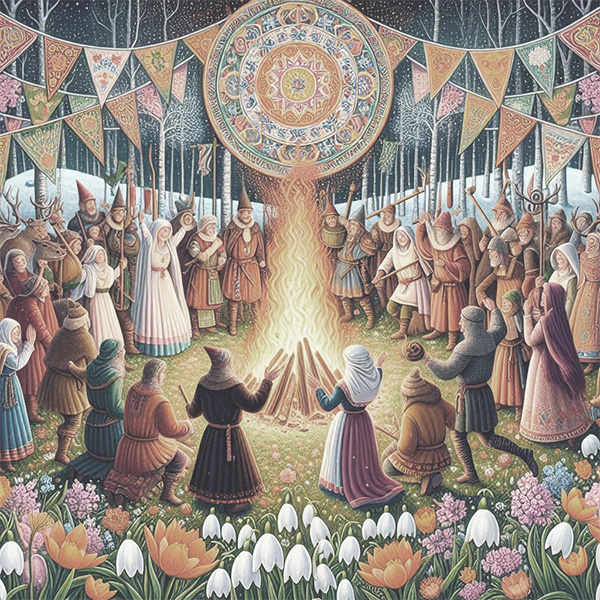
Imbolc is a Celtic festival celebrated on 1 February that marks the beginning of spring and the return of light. It is an important festival that focuses on purification and renewal. In this article, you can learn more about the origins, traditions and spiritual significance of Imbolc.
What you can expect in this article
- The most important facts at a glance
- Imbolc and its significance
- Origin and development of the annual festival Imbolc
- Brigid: The goddess of light and healing
- Candlemas and candle blessing
- Rituals and traditions associated with Imbolc
- All-round washing and cleansing
- Incense rituals and plant magic
- Spring oracles and meditation
- The connection to other festivals
- Modern celebrations
- Creative ideas for Imbolc celebrations
- Imbolc in different cultures
- The influence of Imbolc on the present day

- Reading time approx. 15 min.
The most important facts at a glance
- Imbolc is a Celtic festival celebrated on 1 February, symbolising the transition from winter to spring. The festival honours the goddess Brigid. It is traditionally celebrated on the second new moon of the Celtic calendar.
- Traditions such as candle blessing, ritualised washings and the weaving of Brigid crosses were rituals performed during Imbolc. Purification and fertility were the main themes accompanying this festival.
- Modern celebrations of Imbolc include spiritual practices and creative rituals, celebrating the hope of renewal and light.
Imbolc and its significance
The annual festival of Imbolc is celebrated on 1 February and marks the beginning of spring and the feast day of Saint Brigid. Imbolc is also known as the Celtic moon festival, celebrated on the second new moon of the Celtic calendar. This festival celebrates the return of light. During this time, body and spirit are to be cleansed.
According to Celtic tradition, the transition from winter to spring begins in February, and the light within us grows, our love and hope increase. The festival of light is intended to support the change of spirit, the purification of the spirit that accompanies spring.
Imbolc marks the end of winter and welcomes the return of light. It is a time when we prepare for the warmer days ahead and welcome new beginnings.
Origin and development of the annual festival of Imbolc
The origins of Imbolc can be traced back to prehistoric times. Archaeological finds indicate that festivals marking the changing seasons were already being celebrated in the Bronze Age. The early Celtic tribes lived in close harmony with nature, and their festivals were deeply rooted in the agricultural cycle. The Celts left no written records, so we can only speculate about their original traditions. The name Imbolc is associated with the Old Irish word "oimelc", which means "milk of the sheep". This term refers to spring and the birth of lambs. Life blossoms and returns in spring.
Imbolc celebrated both the survival of the people after winter and the approaching spring. It was a time of thanksgiving for surviving the dark winter and a time of preparation for the coming light and spring season, when nature and new crops would grow.
The availability of milk meant food security for people after the harsh winter months.

Brigid: The Goddess of Light and Healing
One of the central figures of Imbolc is the goddess Brigid, one of the most famous deities in the Celtic pantheon. Brigid was the goddess of fire, poetry, healing and fertility. She was worshipped both as the virgin goddess of spring and as the mother goddess who gives and nourishes life. Brigid was often associated with sacred flames and springs, which were considered to have healing powers. Her connection to Imbolc lies in the themes of light and renewal.
Brigid represents the increasing light that dispels the darkness of winter, as well as the fertility that the coming year would bring. Brigid was honoured with rituals in which fire and water played central roles. People lit candles and fires to invoke her presence and blessings for the new year. With the Christianisation of Ireland, the goddess Brigid was transformed into the Christian Saint Brigid of Kildare. Her feast day, 1 February, remained, and many of the customs associated with her were retained.
One Imbolc custom is to hang white silk ribbons with bells outside so that Brigid can transfer her healing powers to these ribbons.

Candlemas and candle blessing
At Imbolc, candles were blessed to honour the light of spring and Brigid. Lamps and candles are lit for the festival of light. An atmospheric atmosphere was created during Imbolc by a sea of candlelight to symbolically remind us of the warmth and hope of spring.
Candlelight rituals have their origins in the ancient practice of celebrating the annual cycle to honour the light of the sun and the growing power of nature. In the Christian tradition, this became "Candlemas", which was celebrated on 2 February. On Candlemas, candles were also blessed and processions were held to celebrate the return of light.
Rituals and traditions for Imbolc
The moon festival is rich in rituals and traditions that reflect the need for light, purification and fertility. Straw crosses or dolls were woven and used as offerings to bless the fields. These Brigid crosses were hung in homes and stables as protective talismans to ward off misfortune and invoke the blessings of the goddess Brigid.
Many candles were lit on this holiday. These candles and fires were intended to summon the growing power of the sun and spring.
An enchanting custom for the Festival of Lights is to hang white silk ribbons with bells outdoors. The goddess was then supposed to consecrate them during her journey.
All-round washing and cleansing

The Celts performed ritual washings during the Monmdfest, often adding herbs or essential oils to the water. The aim was to let go of personal concerns or worries.
Water, in the form of springs and wells, signified purification and healing. At this time, it was customary to visit sacred springs to say prayers and make offerings. The healing power of water was supposed to cleanse the body and mind and strengthen them for the coming year.
Fire, on the other hand, symbolised the growing light and warmth of spring. Lighting candles and torches was supposed to drive away winter and awaken life.
Incense rituals and plant magic
Incense rituals were also used, often in combination with various herbs, to create a protective and cleansing atmosphere.
- Incense blend: Rosemary, mugwort, lavender and juniper for cleansing the home and promoting clarity and protection.
- Herbs dedicated to the goddess: Dried sage, oak moss and mint to honour the goddess.
Special plants for the annual cycle of festivals:
- Snowdrops: These delicate flowers are considered harbingers of spring and symbolise hope, purity and new life.
- Hawthorn: A tree that embodies protection, purification and renewal. It is ideal for rituals of transformation.
- Birch: The birch stands for new beginnings and purity. Birch branches can be used as decoration or magical tools.
- Rosemary: Rosemary is ideal for purification and protection. It helps to clear old energies and make room for new ones.
- Lavender: Promotes healing and calm. It is particularly suitable for bringing light and positivity to dark winter days.
- Chamomile: For relaxation and prosperity. Chamomile tea or incense brings inner harmony.
Rituals with plants
- Cleansing rituals: Use birch branches or brooms made from natural materials to symbolically sweep negative energies out of your home.
- Candle and herb magic: Tie herbs such as thyme or rosemary to white candles to symbolise light and purification.
- Plant offerings: Place seeds or dried herbs at the foot of a tree or on a consecrated area to honour fertility and growth in nature.

Spring oracle and meditation
Oracles and meditation can be used to gain clarity and inspiration for the coming year. One special practice is the Light Child Meditation:
Preparation:
Find a quiet place where you will not be disturbed. Set up a small altar with candles, white or yellow flowers (e.g. snowdrops) and symbols of new beginnings (seeds, crystals such as citrine or rock crystal). Wear comfortable, light-coloured clothing to reinforce the theme of light. Place a white or gold candle in front of you and light it to symbolise the energy of growing light.
The Light Child Meditation
- Arrival and breath: Sit comfortably, close your eyes and focus on your breath. Breathe in deeply through your nose and out through your mouth. Feel yourself becoming calmer with each breath.
- Connection to the Earth: Imagine roots growing from your body into the earth. They connect you to the energy of Mother Earth.
- Awakening the light child within you: Imagine that deep inside you, a little light child is sleeping. It rests in your heart – a radiant, warm light that has been protected by the darkness of winter. Visualise how this light child slowly awakens as the first rays of spring sunshine gently tickle it. The child of light stretches, opens its eyes and begins to glow warmly. Its light spreads throughout your heart.
- The growing light: With each breath, the light grows stronger. It spreads from your heart throughout your entire body until you are enveloped in warm, golden light from head to toe. This light is not only the light of the sun – it is the light of your own creativity, hope and strength. Feel how the light grows within you and fills you with warmth, courage and joy.
- Connection with the world: The light continues to expand and connects with the earth and nature around you. Imagine how the light awakens the seeds in the earth, opens the buds on the trees and calls life back into the world.
- Set an intention: In this moment of light and clarity, invite your intention for the coming year. What do you want to grow in your life? What do you want to work on? What should the light child within you nourish?
- Conclusion: Let the light slowly return to your heart, where it can rest safely and continue to shine. Thank the earth, the light and yourself for this moment. Open your eyes when you are ready.
The connection to other festivals
Imbolc is one of the four main festivals in the Celtic calendar, which also includes Beltaine (1 May), Lughnasadh (1 August) and Samhain (31 October). These annual festivals share common themes of transition and renewal and mark important turning points in the cycle of nature. While Samhain marks the beginning of the dark season, Imbolc symbolises light and new beginnings.
The connection between Imbolc and the other Celtic seasonal festivals shows the connection to nature. Celtic stories and traditions offer valuable insights into how our ancestors perceived the world and its seasons.
Modern celebrations
Today, Imbolc is being rediscovered and celebrated, especially by followers of Neopaganism, Wicca and other modern pagan traditions. Today's moon festival focuses on the original themes of renewal, fertility and light. Rituals such as lighting candles, reciting poems in honour of the goddess Brigid and performing cleansing rituals are carried out.
Many people use this time to reflect on their goals and wishes for the coming year. At a time of change in nature, many people use the festival to connect with nature and take action to protect the environment.
Creative ideas for Imbolc celebrations
Decorations and a sea of lights
A sea of lights made of candles and silk ribbons creates a pleasant atmosphere.
The colours red, green, white, silver and gold in the decorations symbolise new beginnings, hope and the return of light. Spring flowers can also be incorporated into the decorations to celebrate the arrival of spring.
Food and drink for the festival

Traditionally, oat and herb bread is served at Imbolc, which is rich in various herbs and refined with citrus fruits.
Ingredients:
- 250 g oatmeal (finely ground or tender oatmeal)
- 200 g wheat flour (or spelt flour)
- 1 teaspoon salt
- 1 teaspoon baking powder
- 1 teaspoon bicarbonate of soda
- 2 tbsp honey or maple syrup (for a touch of sweetness, symbolic of the abundance to come)
- 350 ml buttermilk (or plant-based alternative with a dash of lemon juice)
- 2 tbsp olive oil (or melted butter)
- 2 tbsp fresh herbs (e.g. rosemary, thyme, chives or parsley – according to taste)
- 1 teaspoon dried herbs (e.g. oregano or marjoram to intensify the flavours)
- Optional: sunflower seeds or pumpkin seeds for the topping (symbol of fertility)
Preparation:
- Preheat the oven: Preheat the oven to 200 °C (top/bottom heat) or 180 °C (fan oven). Line a baking tray with baking paper or use a greased loaf tin.
- Mix the dry ingredients: In a large bowl, combine the oats, flour, salt, baking powder and bicarbonate of soda. If you want to use sunflower or pumpkin seeds, you can fold a few into the mixture.
- Prepare the herbs: Finely chop the fresh herbs and mix with the dried herbs. Add the herbs to the dry ingredients and stir evenly.
- Add the liquid ingredients: In a separate bowl, mix the buttermilk, honey (or maple syrup) and olive oil well. Slowly add the mixture to the dry ingredients and knead everything into a soft dough. The dough may be slightly sticky.
- Shape and decorate: Shape the dough into a round loaf or place it in a loaf tin. If you like, sprinkle the surface with a few extra oats or seeds for a decorative look.
- Baking: Bake the bread for about 30–40 minutes until the crust is golden brown and the bread sounds hollow when tapped on the bottom. If you are unsure whether the bread is done, you can insert a wooden skewer – it should come out clean.
- Cooling: Allow the bread to cool completely on a wire rack before cutting.
Imbolc in different cultures
Imbolc, also known as Candlemas, is the first festival in the Celtic calendar and symbolises the transition from winter to spring. The celebration of Imbolc continues to this day in rural areas of Ireland and is celebrated as the festival of light of Saint Brigid.
Imbolc is now celebrated by many neo-pagans on 1 or 2 February, with 2 February being more popular in the USA, possibly because of its connection with Candlemas. Some modern Imbolc celebrations involve observing animals such as snakes and badgers, which is seen as a precursor to Groundhog Day celebrated in North America. Traditional foods for Imbolc include dairy products, bread, chamomile tea and mulled wine, all of which symbolise abundance and new beginnings.
The influence of Imbolc on the present day
Imbolc is a deeply rooted Celtic festival that celebrates the return of light and the beginning of spring. From its ancient origins and the role of the goddess Brigid, to its diverse customs and modern celebrations, to your own Imbolc celebration, this festival offers a variety of traditions and rituals.
Whether as a spiritual festival or a cultural tradition, Imbolc invites us to pause and celebrate the renewing power of spring. It is a reminder that after the darkness of winter, light and life always return. May Imbolc bring hope, light and renewal.


