

What does a mocking slingshot projectile from Israel have in common with a mysterious sanctuary in Burgundy and a dispute over the colours of ancient temples? They are all among the most fascinating discoveries that have reshaped our understanding of antiquity in recent years.
What you can expect in this article
- What we mean by ‘antiquity’
- Archaeological sensation in France: the sanctuary at Mancey
- Ancient warfare: a sling projectile with a mocking inscription from Hippos
- The colours of antiquity: from the white myth to the colourful reality
- How modern research is changing our view of antiquity
- Antiquity in LARP and re-enactment
- FAQ on Antiquity
 Reading time approx. 6 mins.
Antiquity – roughly from the 8th century BC to the 6th century AD – was neither monochrome nor monotonous. Recent excavations, pigment analyses and digital reconstructions reveal a world that was more colourful, multi-layered and surprising than long assumed.
Key points at a glance:
- Recent excavations in France (the sanctuary at Mancey) and Israel (Hippos on the Sea of Galilee) are transforming our understanding of the ancient Mediterranean world.
- Inscriptions on ancient ammunition, offerings and ritual meals provide concrete insights into the religion, warfare and daily life of this era.
- Antiquity was more colourful than long assumed – reconstructed pigments on temples and statues refute the ‘white myth’.
- Modern technologies such as 3D scanning and pigment analysis are helping researchers to understand the past in greater detail than ever before.
What we mean by ‘antiquity’
In historical studies, the term ‘antiquity’ covers the period from the 8th century BC to around the 6th century AD and focuses on the civilisations around the Mediterranean – particularly Greece and Rome. This era was not a monochrome ‘white marble age’, but socially and culturally diverse – and surprisingly colourful.
Recent archaeological discoveries bring to life, through concrete finds, what ‘Antiquity’ truly means: religion, war, everyday life and culture in all their complexity.
Archaeological sensation in France: The Sanctuary of Mancey

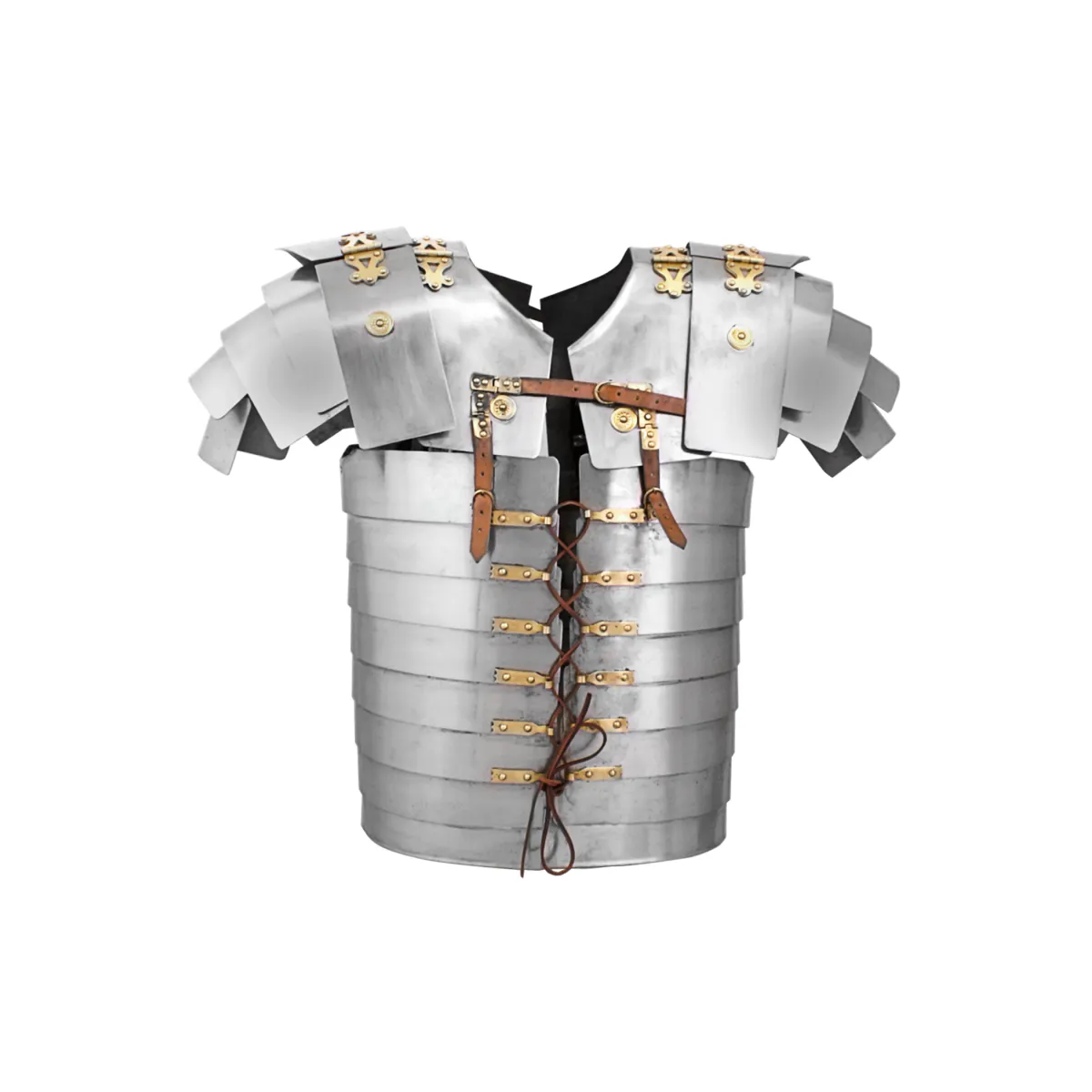
The Sanctuary of Mancey, dating from the Roman Imperial period of the 3rd to 4th centuries AD, is located in the Saône-et-Loire department in Burgundy. What was initially interpreted as a rural settlement proved, through the finds, to be a significant place of worship.
- Systematic excavations have been underway since 2023 and have already documented over 20,000 objects.
- The unique spatial structure comprises several stone mounds and a clearly demarcated sacred area of approximately one hectare.
- Ongoing investigations promise further insights into cult practices and the regional elite.
Layout of the cult site: mounds, vestibule and sacred chamber
The architectural layout provides important clues to its cultic functions:
| Element | Function |
|---|---|
| Six stone mounds | Symbolic or ritual markers |
| Elongated mound | Central orientation of the site |
| Sacred precinct | Approximately one hectare, enclosed by walls |
| Vestibule | Led visitors to the sacred chamber |
The oldest layers of the chamber date to around 280 AD – the site was evidently used for ritual purposes over several generations.
Ritual meals, offerings and social elites
Finds such as animal bones, pottery and coins help archaeologists reconstruct rituals:
- Almost 10,000 individual finds were recovered around the vestibule and sacred chamber.
- These are interpreted as the remains of ritual meals and offerings.
- The high quality of certain vessels points to the involvement of a local elite.
- Following a period of destruction, a hearth was constructed – the place of worship remained in use until the end of the 4th century.
Ancient warfare: sling shot with a taunting inscription from Hippos
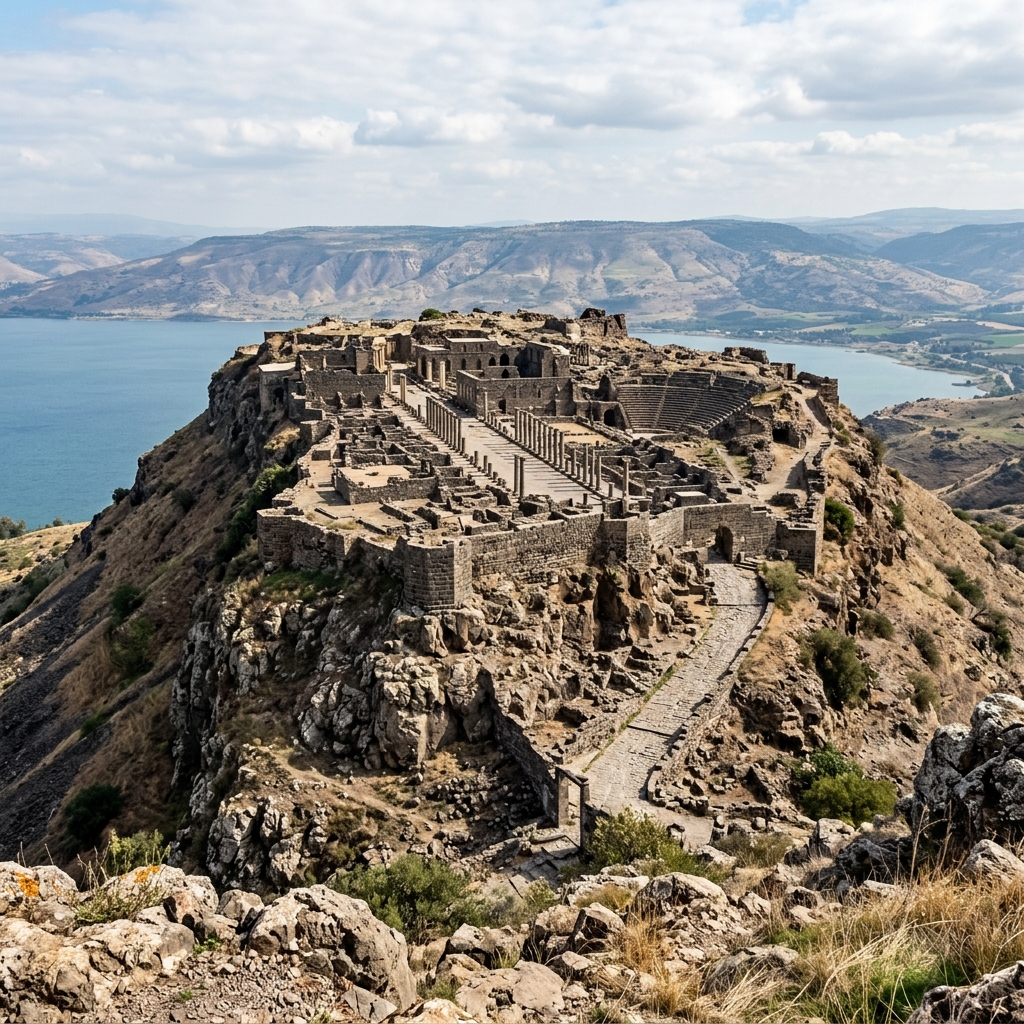
The city of Hippos (Sussita) lies on a plateau above the Sea of Galilee in Israel and belonged to the Decapolis League – an alliance of Greek-influenced cities in the eastern Mediterranean.
- Researchers found a lead sling bullet dating back some 2,100 years bearing the inscription “μαθου” – translated as “Learn!” or “Take that!”
- The projectile dates from around 101 BC and originates from conflicts with the Hasmoneans under Alexander Jannaeus.
- It is the oldest known sling projectile bearing a taunting message to the enemy.
- The University of Haifa, led by Michael Eisenberg, is directing the excavations and documenting this form of psychological warfare.
Ancient ammunition: technology, range and symbolism
Sling projectiles were central in antiquity because they were inexpensive and effective:
- During the Hellenistic period (3rd–1st centuries BC), sling stones and lead projectiles were widely used.
- Skilled throwers could reach distances of up to 300 metres.
- Typical markings: tridents, lightning bolts and scorpions as symbols of gods or impending doom.
- The specimen bearing the inscription ‘Learn!’ illustrates psychological warfare through direct address to the enemy.
Hippos: a mountain town with a long history
Hippos is strategically situated on a plateau and is well documented in ancient sources as part of the Decapolis:
- Since 2023, the site has been open to visitors as an archaeological park.
- A hoard of around 100 Byzantine gold coins dating from around 614 AD attests to the site’s long history of use.
- Christian tradition links Hippos with the ‘city on a hill’ from Matthew 5:14 – though this interpretation is not certain.
- Current excavations provide a nuanced picture of life in a Greco-Roman city with a temple, agora and fortifications.
The colours of antiquity: from the white myth to the colourful reality

The notion of ‘white Greece’ stems from weathered marble and neoclassical aesthetics – it is incorrect. Antiquity was colourful, and this can now be scientifically proven.
- Traces of colour at the Parthenon, Delphi and the Palace of Knossos prove that these structures were originally painted.
- Modern analyses use UV light, X-ray fluorescence and chemical pigment analysis.
- Typical pigments: Egyptian blue, ochre, cinnabar, malachite green.
- Arte documentaries impressively showcase the colourful ancient world with colourful 3D reconstructions.
How modern research is changing our view of antiquity
Every new excavation and every new scientific method sharpens our overall picture of antiquity:
- Sites such as Mancey and Hippos demonstrate the close connection between religion, politics and everyday life.
- Digital documentation makes finds comparable and accessible worldwide.
- Interdisciplinary collaboration between archaeology, history and the digital humanities enables new interpretations.
- Our understanding remains dynamic – future finds and technical advances will continue to develop it.

Antiquity in LARP and re-enactment
Antiquity is one of the most fascinating settings for historical re-enactment. Whether a Roman legionnaire, a Greek slinger or a priestess of a sanctuary – the finds from Mancey and Hippos show just how multifaceted and vibrant this era really was. If you want to create an authentic Roman outfit, you’ll find the right equipment for ancient re-enactment here. We’re also the right place to come for ancient armour and other equipment.
FAQ on Antiquity
Since when have experts referred to the ‘Ancient World’ and when does it end?
The term is a modern academic category. It usually refers to the period from the 8th century BC to 476 AD (the fall of the Western Roman Empire) or up to the 6th century (Late Antiquity under Emperor Justinian). The exact boundaries vary depending on the research context.
Were all ancient buildings and statues really painted in bright colours?
Many, but not all, objects were painted. Important temples and sculptures were often vividly painted. Bronze and some natural stones remained unpainted. The picture is more nuanced than the romantic ‘white of antiquity’ – and more exciting.
How reliable are the dates of finds such as those at Mancey or Hippos?
Dating is based on ceramic typology, coin finds and scientific methods such as radiocarbon dating. They are considered reliable, but margins of error of 20–50 years are common. Those wishing to delve deeper will find detailed information on the methodology in the scientific publications of the participating institutions.
Can you visit sites such as Hippos or the sanctuary at Mancey?
Hippos has been open as an archaeological park since 2023. Depending on the excavation season, Mancey can only be visited on a limited basis or via a guided tour. You can obtain up-to-date information from local authorities or the excavation team.
As a non-specialist, how can I find reliable information about new discoveries?
Look out for publications from universities, museums and established scientific media. For example: publications from the University of Haifa or reports from participating institutions. Check the context of the find, the dating and the researchers responsible for each report – this distinguishes reliable reports from sensationalist journalism.


Letters from the trading house
New arrivals, market dates and offers, straight from Rinchnach. Unsubscribe any time with one click.
Subscribe to the newsletter

