


What was everyday life really like behind the thick walls of a medieval castle? Beyond fairy tales and fantasy films, life in the castle was characterised by hard work, a strict hierarchy and a constant struggle against the cold, hunger and external threats. This article takes you into the world of Central European castles between 1050 and 1500 – not as a glorified romanticised vision of knighthood, but as a realistic portrayal of a complex community.

What to expect in this article
- What does ‘life in a castle’ mean?
- Types of castles and their locations
- Castle layout: everyday spaces
- The people at the castle: social classes, roles and duties
- Daily life and routine behind the walls
- Food, drink and food storage
- Hygiene, health and living conditions
- Work, agriculture and the economy around the castle
- Faith, festivals and entertainment at the castle
- Danger, sieges and protection in everyday castle life
- From the Middle Ages to the present day: castles as places of remembrance
- Castle life in LARP and re-enactment
- Frequently asked questions about life at the castle
 Reading time approx. 14 mins.
Key facts at a glance:
- Life in a castle during the Middle Ages (c. 1050–1500) was a far cry from the romanticised portrayal in films and games – cramped conditions, a meagre diet and rudimentary hygiene characterised the daily lives of all residents.
- A castle served simultaneously as a residence, a fortification, an administrative centre and an economic hub, where several dozen to over a hundred people lived and worked together.
- The class distinctions between the lord of the castle, knights, craftsmen and servants determined every aspect of daily life – from food and sleeping quarters to duties.
- The seasons dictated the rhythm: long working days in summer, isolation and indoor work in winter, whilst festivals provided rare highlights in an otherwise harsh daily existence.
- In Germany, Austria and Switzerland, there are now over 20,000 castle ruins or preserved castle complexes which, as museums, youth hostels or event venues, bring medieval life to life.
What does ‘life in the castle’ mean?
When we speak of life in a castle, we mean the concrete everyday life within the fortified residential complexes of the High and Late Middle Ages – that is, roughly from the 11th to the 15th century. This era encompasses the heyday of the Staufer dynasty around 1200, when castle construction in the Holy Roman Empire reached its peak, with over 10,000 documented sites in the German-speaking world alone.
It is important to make a distinction: medieval castles differ fundamentally from the palaces of the early modern period. Whilst palaces such as Versailles or Schönbrunn focused on comfort, large windows and stately gardens, a knight’s castle was characterised by thick stone walls with narrow arrow slits, few windows and a clear focus on defence over comfort.
Famous examples of authentic medieval castles:
- Wartburg Castle near Eisenach (first mentioned in 1080)
- Eltz Castle on the Moselle (documented since 1157)
- Hohensalzburg Fortress (since 1077)
- Marksburg Castle on the Rhine (never completely conquered until the 17th century)
The focus of this article is not on battles and sieges, but on what happened in between: living, working, eating, sleeping and the coexistence of a diverse community behind the walls.
Types of castles and their location
A castle’s location had a decisive influence on the daily lives of its inhabitants. Essentially, we distinguish between three types:
Hilltop castle
The hilltop castle, situated on hilltops or rocky outcrops, was the most common type of castle – archaeological research shows that around 1300, some 70% of all German castles belonged to this type. The strategic advantages: panoramic surveillance of valleys and trade routes, natural protection provided by steep slopes, and difficult access for attackers. The disadvantage: laborious transport of supplies by pack animals or on foot, which limited the availability of fresh goods and exacerbated winter isolation.
Lowland castles and moated castles
Lowland castles on flat terrain and moated castles with surrounding ditches secured river crossings, bridges and toll points. Eltz Castle, with its steep slopes and surrounding streams, is a classic example of a moated castle in the lowlands.
| Castle type | Advantages | Disadvantages |
|---|---|---|
| Hilltop castle | Strategic vantage point, natural protection | Difficult transport, isolation |
| Lowland castle | Better supplies, proximity to market | Greater risk of attack |
| Moated castle | Moat as protection | Risk of flooding |
According to 14th-century account books, transport costs at hilltop castles could account for up to 20–30% of annual household expenditure. Later extensions such as outer bailey and enclosure complexes increased living space by 50–100% and created room for workshops and livestock.
Castle layout: everyday spaces
The layout of a medieval castle followed clear functional principles. Every building and every room had its fixed place in the architecture of daily life.
The keep
The keep was a massive tower, often 20–30 metres high, but not a cosy place to live. It served as a watchtower to monitor the surroundings, as a last refuge in the event of attacks, and as a storehouse for grain and valuable goods. Its sheer presence conveyed a sense of psychological security, although climbing the steep ladders made everyday use difficult.
The Great Hall
The lord of the castle’s main building was the great hall – the centre of social life. The great hall could reach considerable dimensions, such as 20 × 10 metres in the case of the Romanesque great hall at Wartburg Castle or the Imperial Hall at Nuremberg Imperial Castle. This is where banquets, court hearings, council meetings and the communal sleeping quarters for the staff were held.
In the High Middle Ages, there were hardly any private rooms; it was not until the Late Middle Ages that the bower rooms emerged as heated living and sleeping quarters for the lord of the castle’s family.
The castle chapel
The chapel formed the spiritual centre of the castle. Daily or weekly masses, baptisms, weddings and memorial services took place here. The 13th-century St Catherine’s Chapel at Katzenelnbogen Castle is an example of such sacred spaces, which defined the castle as a devout microcosm.
Farm buildings
Running the estate required numerous buildings:
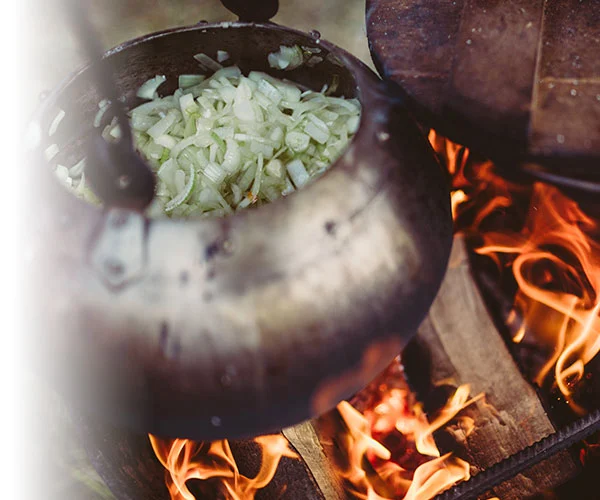
- Large kitchens with central stoves and flues (processing 100–200 loaves of bread daily)
- Cellars for salted meat (enough to last 6–12 months under siege)
- Stables for 20–50 horses
- Smithies for weapon repair
- Storage depots and barns
The castle courtyard
During the day, the castle courtyard was a hive of activity: wood was stacked, livestock kept, tanning and woodworking carried out, and small gardens provided herbs and vegetables. When it rained, the courtyard turned into a muddy mess, forcing many activities indoors.

The people at the castle: social classes, roles and duties

A large castle housed 50–150 people all year round – far more than just a solitary knight and his wife. The community was organised along strict hierarchical lines.
The lord of the castle and his family
At the top stood the lord of the castle – a count, baron or ministerial (a knight who was not a free man and owed service). His duties: administering a domain of 500–5,000 hectares of land, waging feuds and forging alliances, exercising jurisdiction over peasants and subjects, and collecting taxes and levies. The lady of the castle managed the household, supervised 20–50 members of staff and represented her husband in his absence.
Military personnel
The military personnel comprised 5–20 knights and squires on rotating guard duty. Their daily duties: guard duty at gates and walls, maintenance of weapons and armour, training with sword, lance and longbow (4–6 hours daily for youths). A castle ordinance from 1403 lists in detail: two gatekeepers, one steward, four guards, five crossbowmen, four archers and four halberdiers – all bound by an oath of allegiance.
Craftsmen and servants
The craftsmen and servants, numbering 30–70 people, made up the majority of the inhabitants:
| Occupation | Role |
|---|---|
| Blacksmith | Weapon manufacture and repair |
| Baker | Daily bread supply |
| Cook | Meal preparation |
| Cellar master | Management of wine and supplies |
| Stable boy | Caring for the horses |
| Shepherd | Looking after the flocks |
| Carpenter | Woodwork and repairs |
Many lived with their families in the outer bailey and received a stipend: 660 groschen a year for a knight’s clothing, 12 pairs of shoes due to rapid wear and tear.
Administration
The castellan acted as the lord of the castle’s deputy. He collected rents, supervised corvée labour, oversaw maintenance and administered justice in the lower court.
Daily life and routine behind the walls
What was a typical summer’s day like in a castle around 1300? The rhythm was dictated by the sun and the bells.
Morning
At sunrise, the chapel bells rang out for prayer. This was followed by a meagre breakfast: rye bread, oat or barley porridge and light beer (safer than the often contaminated well water). Work began early – farmers went out to the fields, craftsmen opened their workshops, and guards changed shifts.
During the day
The day was dominated by work:
- field work following the three-field system (one-third fallow, yields of 4–6 bushels per acre)
- Bricklayers repaired walls and roofs
- Women spun wool (10–20 metres of fabric per week)
- Scribes drafted documents in the great hall
- Messengers came and went with news
Noble children were taught Latin, arithmetic and manners by clergy – the literacy rate among the nobility was around 10–20%, whilst among peasants it was close to zero. Ordinary children helped with the work from an early age or went into apprenticeships.
Evening
The communal evening meal took place in the great hall, strictly segregated by rank: the lords at the high table with stewed meat dishes, while their subordinates ate slices of bread that had soaked up the juices. This was followed by conversation, stories or music by the fire, before everyone retired and the embers were carefully extinguished.
Seasonal rhythm
In summer, working days lasted up to 16 hours; in winter, only 4–6 hours whilst there was daylight. The cold season brought indoor repair work, weaving, stock-taking and the tending of supplies.
Food, drink and stockpiling
The diet at the castle was simple and heavily dependent on the shelf life of the provisions.
Staple foods
Cereal products accounted for 80–90% of the calorie intake: bread and porridge made from rye, barley or oats, stews with cabbage, onions, peas and lentils, and soups as everyday fare.
Meat and fish
For ordinary people, meat was a rarity – at most once or twice a week. It appeared on the table more frequently at feasts in the lord’s household: pork, beef, mutton. Preservation was achieved through salting, smoking and drying – supplies for sieges lasting 3–6 months.
Drinks
Beer (3–5% alcohol) and wine were everyday drinks – not out of a desire to drink, but because well water was often contaminated. Regional differences shaped drinking culture: Riesling and Moselle wine in the west, beer in northern and eastern Germany.
Spices and luxury
| Category | Examples | Significance |
|---|---|---|
| Imported spices | Pepper, cinnamon, saffron | Status symbols (1–5% of the elite budget) |
| Local herbs | Parsley, dill, lovage | Staples of everyday cooking |
| Luxury imports | Figs, raisins, almonds | 180 groschen a year according to accounts |
Stockpiling
Cool cellars housed barrels, earthenware jugs and raised shelves to keep out rats. Planning had to factor in sieges lasting several weeks or months – a miscalculation could spell the end.
Hygiene, health and housing
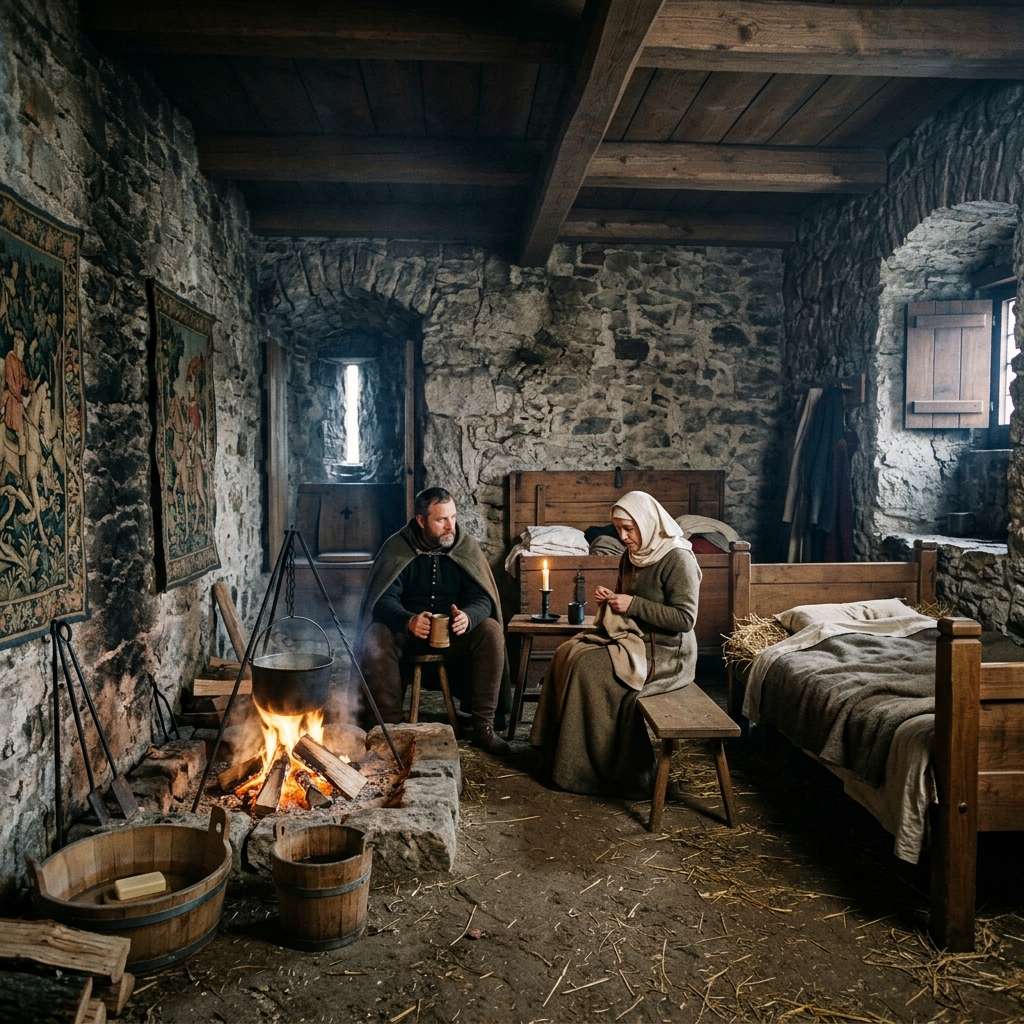
The cliché that there was no hygiene at all in the Middle Ages is not true – but the technical possibilities were extremely limited.
Living in chambers
Heated living quarters were small and rare. Thick stone walls radiated cold – in winter, indoor temperatures often hovered around just 5–10 °C. The furnishings were functional: tapestries to ward off the cold, chests for clothes and valuables, beds with straw mattresses and linen sheets, and movable furniture (hence the name ‘furniture’ – from the Latin ‘mobile’).
Heating and lighting
Lighting consumed 10–20% of the fuel budget. Open fireplaces as the main source of heat, charcoal braziers, pine shavings and tallow candles (burning for 4–6 hours per night) characterised the evening. Smoke, soot and poor air quality were a feature of everyday life in every home.
Toilets
The latrine bay windows were protruding recesses in the castle wall with a vertical shaft. Waste ended up in ditches or on the hillside – stench and disease were the result.
Personal hygiene
Baths in wooden tubs with soap made from ash and animal fat took place for nobles about once a week. Daily washing was limited to hands and face. Hair combs and herbal rinses completed the routine.
Health
Life expectancy was only 30–40 years, greatly reduced by high infant mortality. Common ailments included infections and wound fever, deficiency diseases such as scurvy, and respiratory illnesses caused by smoke. Barbers and healers treated patients with herbs, cupping and bloodletting – methods that often did more harm than good.
Work, agriculture and the economy around the castle
A castle was not an isolated defensive structure, but the centre of an economic system that depended on the surrounding countryside.
Three-field system
From the High Middle Ages (around 1200) onwards, the three-field system became established: one field for winter cereals, one for summer cereals, and one left fallow to allow the soil to recover. Peasants and serfs worked the fields, and the harvests were sent to the castle.
Taxes and services
The peasants within the lord’s domain (typically 10–50 villages) paid taxes in kind in the form of the tithe (10% of grain, eggs and poultry) as well as performing 20–40 days of corvée labour annually for ploughing, transport and construction work. These taxes filled the storehouses and enabled the castle to function.
Trade
Nearby markets and trade routes were vital. Many castles controlled customs posts on rivers such as the Rhine or the Danube, which brought in thousands of groschen annually. The transition from a purely subsistence economy to monetary payments took place gradually in the late Middle Ages.
Craft production
Craftsmen worked in the outer bailey and neighbouring settlements: iron smelting (50–100 kg per month), cloth production and weaving, tanning for leather, and woodworking made the castle largely self-sufficient.

Faith, festivals and entertainment at the castle
The Christian faith structured the year and provided rare highlights in the harsh daily routine.
Religious daily life
The liturgical calendar set the rhythm: prayers in the morning and evening, regular masses in the castle chapel, pilgrimages to regional shrines, and pastoral care provided by a permanent chaplain or itinerant clergy.
Festivities
Festivals were rare occasions – but all the more significant for it: weddings and baptisms, knighting ceremonies, receptions for distinguished guests, as well as Christmas and church holidays. In the great hall, people ate, played music and danced. Minstrels with lutes, fiddles and flutes entertained the company.
Entertainment in everyday life
There was also entertainment outside of festivities:
- Board and dice games (chess, backgammon)
- Hunting as a noble pastime (falconry yielded 5–10 birds a day)
- Storytelling by the fire
- Minnesang and courtly poetry
Wartburg Castle is famous for the legendary Singers’ Contest of the 13th century (around 1206/1207), which inspired courtly love and is still re-enacted at events today. Nevertheless, 90% of the time was labour-intensive, not festive.
Danger, siege and protection in everyday castle life
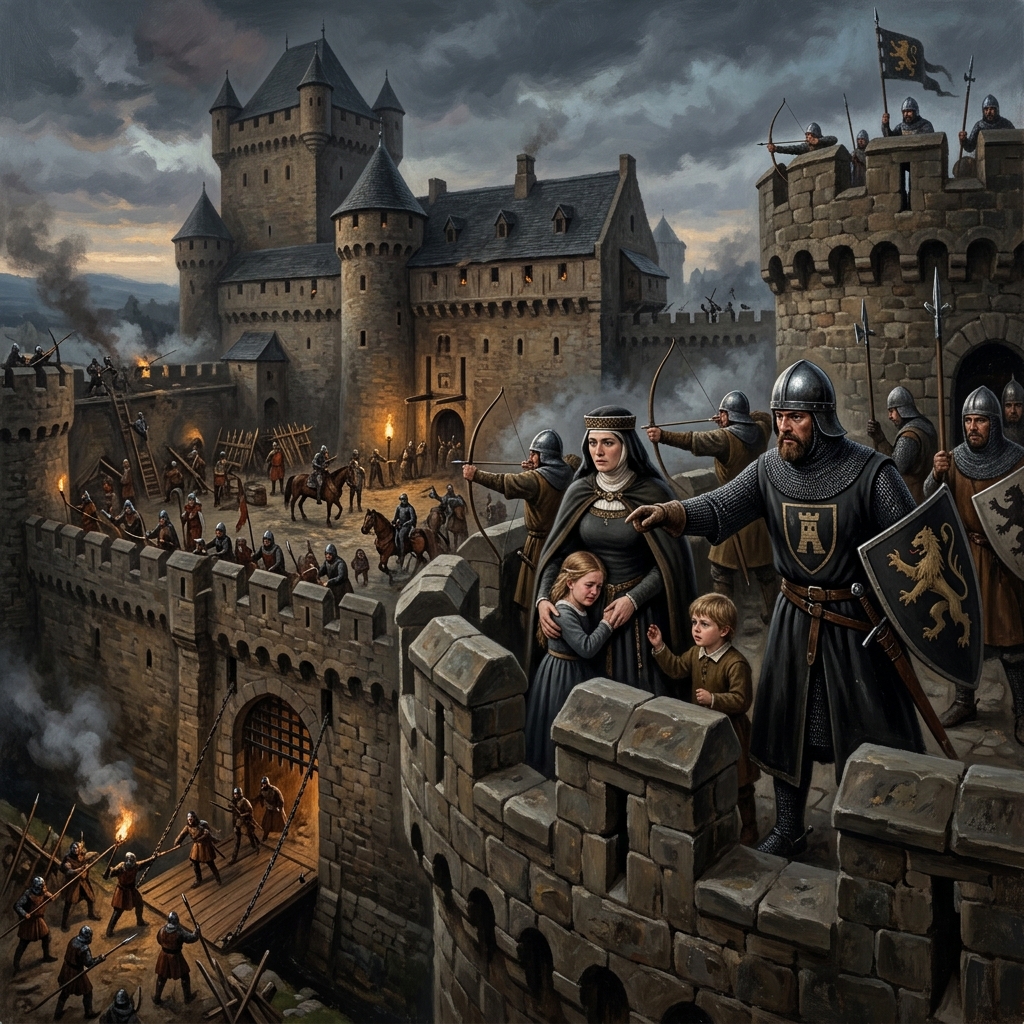
Life at the castle was marked by latent danger: feuds, raids, regional wars, famines and epidemics such as the Black Death from 1350 onwards.
Defensive structures
- Thick castle walls with battlements and arrow slits
- Drawbridges and portcullis at the entrance
- Corridors serving as killing zones between double walls
- Towers for surveillance and long-range defence
Thanks to its tiered defences, Marksburg Castle on the Rhine withstood sieges right up until the 17th century – it was never completely conquered.
Preparing for sieges
Every castle had to be prepared for sieges: sufficient stores to last for months, wells and cisterns within the walls (20–50 m deep), armouries and armoury chambers, as well as planned capacity to accommodate fleeing peasants. Sieges often relied on starvation – endurance was the deciding factor.
Change brought about by firearms
From the 15th century onwards, cannons and handguns fundamentally changed the nature of warfare. Traditional stone walls could no longer withstand the new projectiles. Many castles were abandoned in the 16th and 17th centuries, converted into palaces or destroyed during the Thirty Years’ War (1618–1648).
From the Middle Ages to the present day: castles as places of remembrance
After the Middle Ages, many castle complexes underwent dramatic transformations.
19th-century Romanticism
From around 1800, castle ruins were suddenly regarded as picturesque. Romanticism idealised the Middle Ages, and many sites were restored or rebuilt: Neuschwanstein (foundation stone laid in 1869) as an idealised knight’s castle, the Hohkönigsburg in Alsace (rebuilt 1908–1913) and numerous restoration projects throughout the German-speaking world.
Research and heritage conservation
Organisations such as the German Castles Association (founded in 1899) drive restoration work forward. Archaeological excavations constantly yield new insights into everyday life behind the walls.
Current use
In Germany, Austria and Switzerland, there are now over 20,000 castle ruins or preserved sites. They serve as museums with reconstructed rooms, youth hostels (e.g. Reichenstein Castle), venues for medieval festivals and concerts, and educational centres with re-enactment programmes.
When visiting, it is worth looking specifically for traces of everyday life: soot-stained fireplaces in the kitchens, women’s quarters with small windows, toilet turrets in the outer wall, deep wells in the castle courtyard, as well as smithies and outbuildings. A medieval castle was a small, strictly organised world with its own rhythm, opportunities and hardships – and traces of it are still visible today in many places in Rhineland-Palatinate and other regions.
Castle life in LARP and reenactment
Anyone wishing to portray life in a castle – whether as a lady of the castle at a medieval market, a squire in LARP or a blacksmith at a re-enactment event – will benefit greatly from this knowledge. A character who knows what the cellar master actually managed or what the bower really looked like comes across as more credible and lifelike.
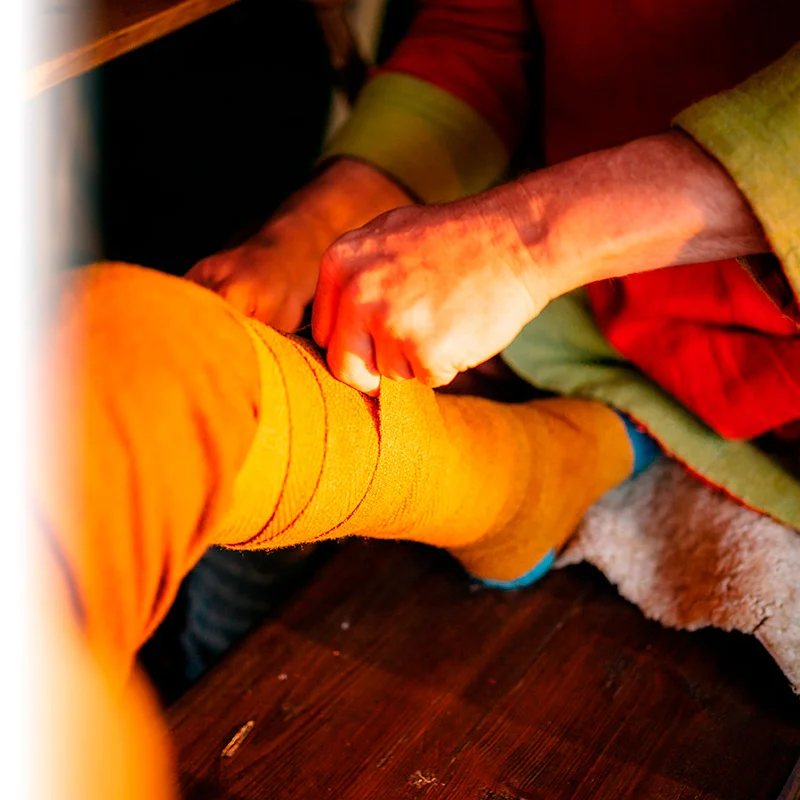
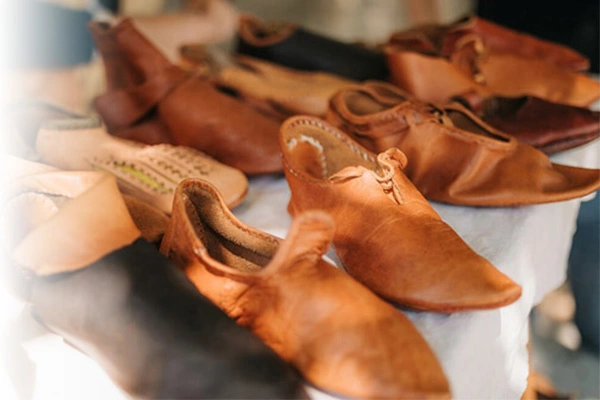
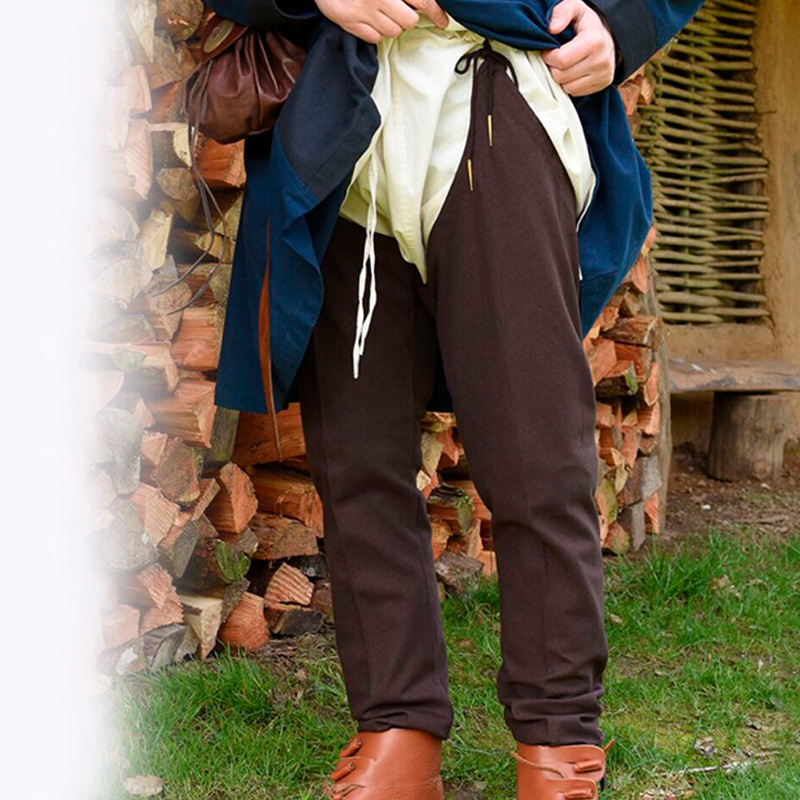
The equipment makes all the difference: a linen shirt as an undergarment, a woollen tunic, a leather belt with a knife, sturdy leather shoes with welted soles – this is the basic outfit that was actually worn within the castle walls. At vehi-mercatus.com you’ll find historically accurate clothing and accessories for all castle-dweller characters – from the humble craftsman to the noble lady of the castle.
Frequently asked questions about life in the castle
How many people typically lived in a medieval castle?
The number varied greatly depending on the size and importance of the complex. Small hilltop castles might house 20–30 people permanently, whilst large provincial castles had over 100–150 residents and staff. During times of festivities or the threat of war, the number could rise to 200 in the short term if peasants from the surrounding countryside sought refuge there with their livestock. A castle ordinance from 1403 lists 20 people for military operations alone – in addition to craftsmen, servants and the noble family.
Were peasants allowed to live permanently in the castle?
Most peasants lived in villages in the surrounding countryside and only came to the castle in an emergency. In the event of raids or sieges, they fled to the outer bailey with their livestock and belongings. Those who lived permanently at the castle were mainly the noble family, servants, craftsmen and military personnel. Peasants were taken into the household at most as farmhands or maids – in which case they also lived on the castle grounds.
How safe was life in the castle really?
Compared to open villages, castles offered relative protection – but they were by no means impregnable. Long sieges, treachery or the advent of cannons in the 15th century could overcome any wall. Furthermore, disease, famine caused by poor harvests and accidents posed considerable risks. Living behind walls meant safety – but no guarantee.
Were there school lessons for children in castles?
Only children from noble families received a systematic education. Tutors or clergy taught reading, writing, Latin and arithmetic. Practical skills were often considered more important: horse riding, the use of weapons and courtly etiquette for noble boys; housekeeping and needlework for girls. The literacy rate among the nobility was only 10–20 per cent, whilst among the common people it was practically zero.
Can you still experience authentic castle life today?
Many castles in Germany, Austria and Switzerland offer insights into everyday life in the Middle Ages. Medieval festivals, re-enactment groups and educational programmes are particularly immersive. Such events take place annually at over 100 German castles – an opportunity to experience history with all your senses.


