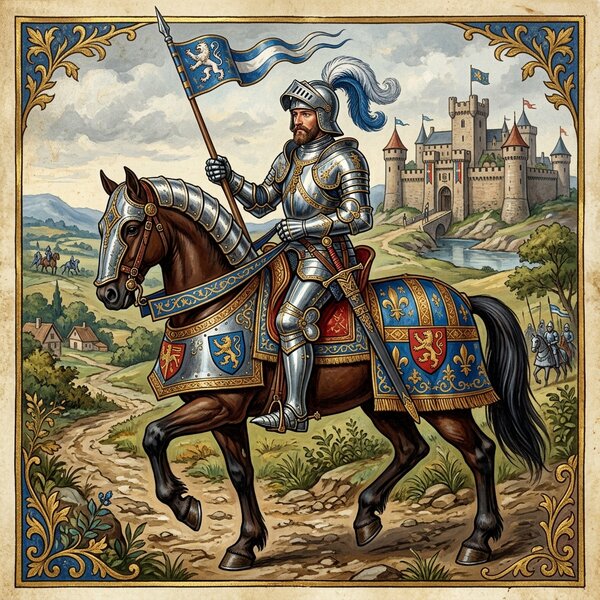

When the air shimmers in the height of summer and even the shade offers little relief, people often talk about the ‘dog days’. The term has a long history, stretching from the ancient Egyptians through Greek and Roman scholars right up to the Middle Ages – and has given rise to all manner of superstitions, old wives’ tales and curious customs.

Here’s what you can expect in this article
- What are the dog days?
- Origins in antiquity
- Why the Romans sacrificed dogs
- Etymology
- Medieval superstitions: prohibitions and precautions
- Noon demons and night spirits: superstition in the Balkans
- Farmers’ proverbs: What the ‘dog days’ are said to reveal about the year
- The ‘dog days’ are no longer astronomically accurate
- Regional variations in tradition
- Summary
 Reading time approx. 6 mins.
What are the Dog Days?
The ‘Dog Days’ refer to the hottest weeks of summer, in Central Europe usually from 23 July to 23 August. The name derives from the constellation Canis Major (Latin for ‘the Greater Dog’), with its brightest star, Sirius, which is therefore also known as the ‘Dog Star’. It takes 30 to 31 days from the constellation’s rising until it is fully visible.
The Latin technical term is dies caniculares, literally ‘days of the little dog’. Terms in other languages are also derived from this: ‘dog days’ in English, ‘la canicule’ in French, and ‘la canìcola’ in Italian.
Origins in antiquity
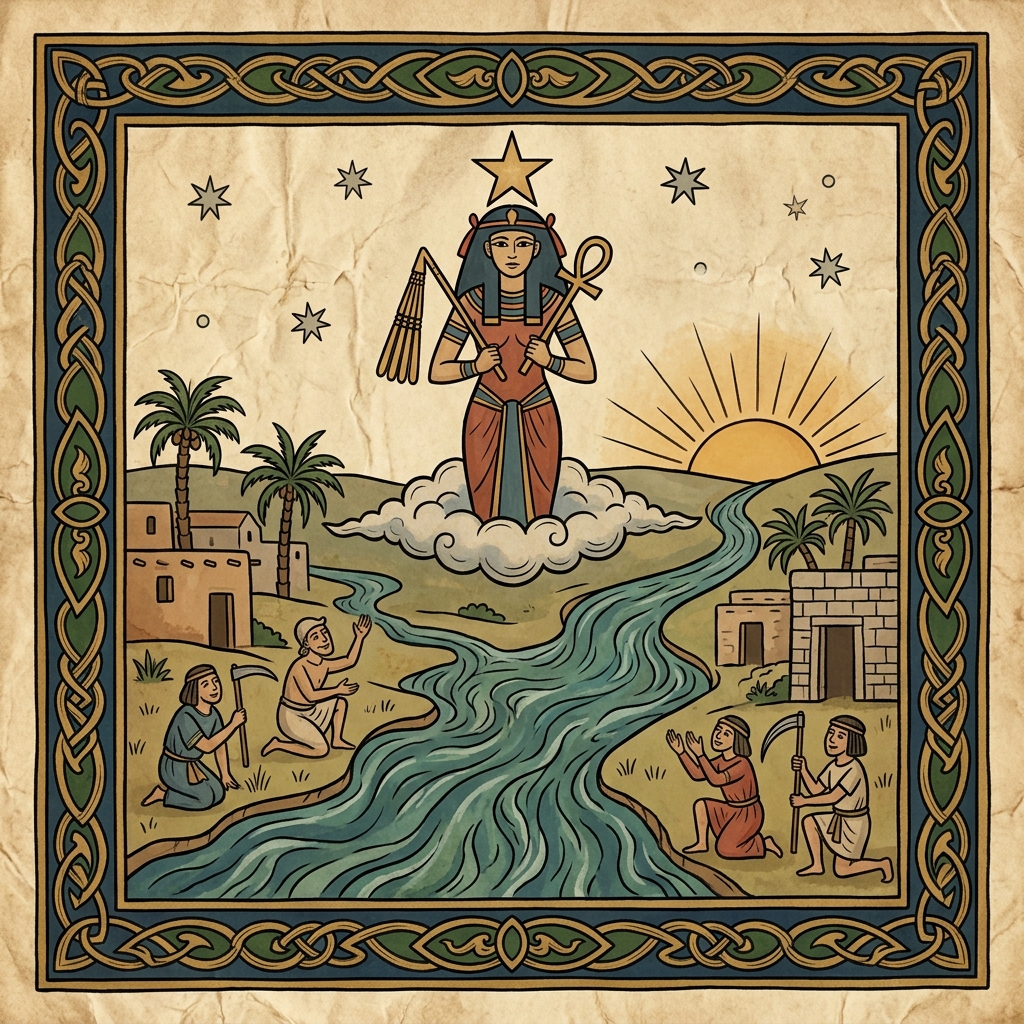
Egypt
In the third millennium BC, Sirius embodied the goddess Sopdet for the Egyptians. Its first reappearance in the morning sky after weeks of invisibility (heliacal rising) coincided with the start of the Nile flood, a crucial event for agriculture.
Greece
The Greeks explained the heat with a myth: the ‘fire’ of Sirius merged with the sun’s heat. The physician Hippocrates also linked this period to severe bile-related illnesses.
Rome
The Romans regarded the dies caniculares as a dangerous time for people, animals and fields. According to tradition, anyone born under the sign of the Dog Star was considered a hot-tempered but unhappy person – though they were supposedly spared from death by drowning. This astrological belief probably dates back to Babylonian traditions. Arab astronomers later described Fata Morgana phenomena in the summer heat as the ‘saliva of the Dog Star dripping from the sky’.
The Romans also saw a connection between the Dog Star and wine: a particular vine disease was named after it – canicula. According to the traditional German rules of viticulture, however, this belief was not known in this country.
Why the Romans sacrificed dogs
It sounds absurd at first, but on closer inspection it makes a certain amount of sense in the context of the ancient world: the Romans believed that dogs were more likely to go mad on hot days if they did not have enough water. This fear of rabies explains the Roman practice of sacrificing dogs during the dog days.
Similar customs are also documented elsewhere: in ancient Argos, all dogs that crossed one’s path were killed in honour of Apollo. In Leipzig, dogs were put to death twice a year – during Lent and the dog days – whilst in Rostock, such a custom is documented as late as 1742, carried out by the town executioner. Among the peoples of the Balkans, the so-called ‘Dog Day’ was a related protective ritual against rabies: dogs were swung on a rope swing to drive away the supposed demon of the disease.
Etymology
The German term ‘Hundstage’ only became established in the 15th century. Previously, people spoke of the ‘huntlichen tagen’. Numerous ideas from Roman superstition were incorporated into German folk beliefs.

Medieval superstition: prohibitions and precautions
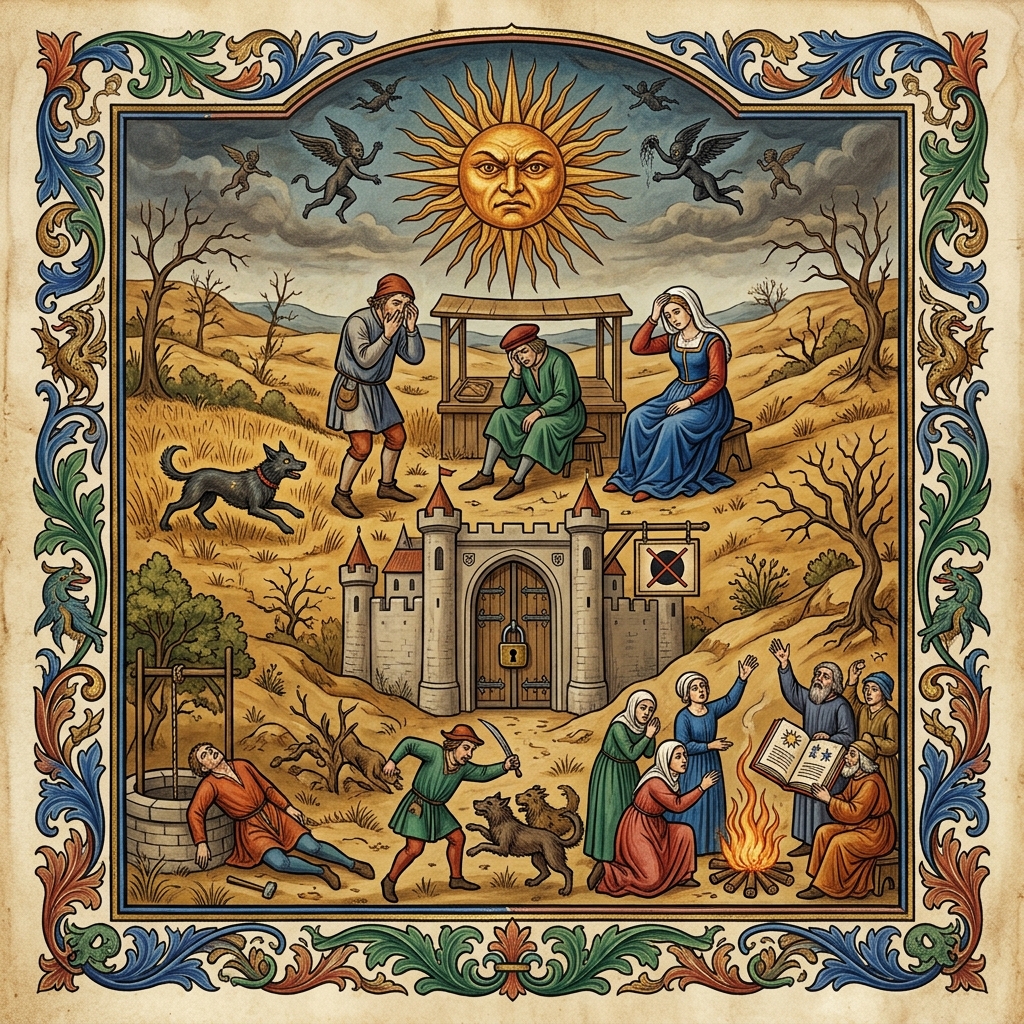
In the Middle Ages and early modern period, the dog days were regarded in many places as a time of misfortune; in some places, church services were even temporarily suspended during this period, and calendar rhymes issued stark warnings about the coming days. The following rules were handed down:
| Rule | Traditional reason |
|---|---|
| Do not go swimming | The water was considered poisonous; people feared rashes or drowning |
| Do not drink water from open bodies of water | In Swabia, it was believed that poisonous tadpoles (‘Hundsknöpf’) would contaminate the water |
| Do not wash your hair | It was said to lead to hair loss or headaches |
| No bloodletting | Presumably, people feared that the blood could not be staunched |
| Do not get married | A wedding was thought to lead to an unhappy marriage |
| No felling of trees | The wood would supposedly not burn |
| Do not chop herbs | This work, too, should be avoided during the dog days |
| Observing the ants | Large anthills heralded a wet, cold autumn |
Bathing was considered particularly dangerous on the feast days of Mary Magdalene (22 July), St James (25 July) and St Lawrence (10 August). In the Halberstadt region, it was even said that no crow would drink during the dog days. And according to a Swiss tradition, there is said to be one hour each day during this period when the blood of a killed animal does not clot.
Even the ancient Greeks and Romans believed that during the dog days, some springs would become colder than usual. In southern German folklore, ‘moonstruck people’ – a colloquial term for night-walkers or sleepwalkers – were also said to make their nightly wanderings at this very time.
Noon demons and night spirits: superstition in the Balkans
Superstition surrounding the ‘dog days’ was particularly pronounced among the South Slavs and in the Balkans. There, people feared the ‘horned noon’, an evil midday spirit said to wreak havoc especially on St Elijah’s Day (20 July). According to Hungarian belief, someone was bound to suffocate from the heat on that day.
The Albanians, for their part, feared night spirits during the sultry Dog Days nights: these were said to break into houses, where they would sing, play and dance, steal money and clothes from the sleepers, and even take the horses from their stables. In the morning, it is said, everything was returned – but the money was scratched, the clothes were dirty and the horses were drenched in sweat.
Farmers’ proverbs: What the dog days are said to reveal about the year ahead
- “Bright and clear dog days portend a good year.”
- “Whatever the weather is like when the Dog Star rises, it will stay that way until it sets.”
- “Whatever the Dog Days bring, the winegrower must pay the price.”
- “If the Dog Days are full of sunshine, the year will be quite fruitful.”
- “If it rains on the first day, it will rain for fourteen days.”
These sayings are based on traditional folk wisdom and have no scientific basis.
The ‘dog days’ are no longer astronomically accurate

The period from 23 July to 23 August was established in the Roman Empire, when Sirius rose with the sun at that time. Due to the precession of the Earth’s axis – a cycle of around 26,000 years – the actual heliacal rising of Sirius has shifted since then. In Germany, it can now be observed from 30 August at the earliest. Nevertheless, the traditional term ‘dog days’ continues to be used to refer to the hottest weeks of summer.
Regional variations in tradition
Historically, the exact duration of the ‘Dog Days’ was not specified uniformly everywhere:
| Region / Source | Traditional period |
|---|---|
| Monte Cassino Calendar (c. 785 AD) | 14 July to 11 September |
| Upper Bavaria | ‘45 dog days’ |
| Silesia | Beginning in some cases as early as 23 June |
| Swabia | Begins on 22 July (St Mary Magdalene’s Day) |
| West Bohemia & the Ore Mountains | 24 July to 24 August |
| Basel-Landschaft | 17 July to 28 August |
| Bagnes (Switzerland) | 16 July to 27 August |
So there was never really any agreement on exactly which days count as the ‘Dog Days’.
Summary
The term ‘Dog Days’ combines astronomical observations, ancient mythology and medieval superstitions from across Europe.
Note: The prohibitions, customs and folk sayings described here reflect historical folk beliefs. They are provided for cultural and historical information and do not constitute health advice.



Letters from the trading house
New arrivals, market dates and offers, straight from Rinchnach. Unsubscribe any time with one click.
Subscribe to the newsletter