


In the Middle Ages, Carnival was a festival of celebration and joy that took place shortly before the strenuous period of Lent. The festival had its origins in pagan customs and developed into Shrove Tuesday. In this article, you will learn all about the origins, development and special customs of Carnival in the Middle Ages.

What you can expect in this article
- The most important facts at a glance
- Introductory thoughts
- Origins of Carnival
- Development of carnival and medieval costumes
- Customs and traditions
- Role of the Church
- Regional differences
- Social significance
- This is how a medieval day during carnival might have unfolded

- Reading time approx. 15 min.
The most important facts at a glance
- The origins of carnival date back to pagan times, when people celebrated the end of winter, and in the Middle Ages it became a festival preceding Lent.
- In the Middle Ages, carnival enabled a unique reversal of social hierarchies and offered the population a creative platform for exuberance and humour. Medieval costumes emphasised the diversity and meaning of the costumes. These costumes represented different characters from all social classes.
- Regional differences shaped medieval carnival, from pagan rituals in Alemannia to elegant masked balls in Venice – each place expressed its own individuality!
Introductory thoughts
Nowadays, carnival is a big party where both children and adults dress up in imaginative costumes. From princesses to brave knights to fearsome Vikings – the choice of medieval costumes seems endless. But what is behind this tradition? What role did dressing up play in medieval carnival?
Children could slip into the role of a heroic knight, complete with armour and sword, or perhaps they preferred to be a sorceress? Adults liked to dress up as queens or damsels. Gentlemen liked to choose medieval costumes ranging from kings to druids. These costumes were based on real medieval clothing, which was usually adorned with bright, strong colours and magnificent details.
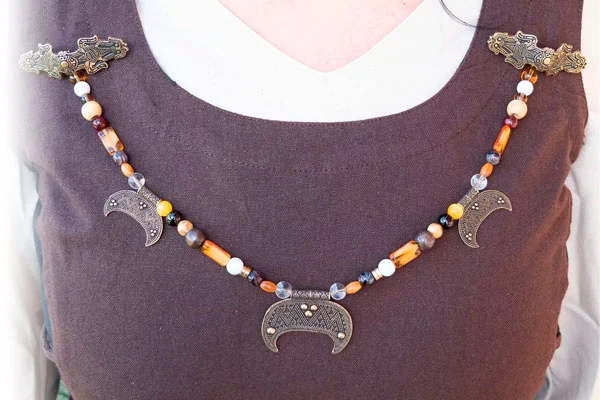
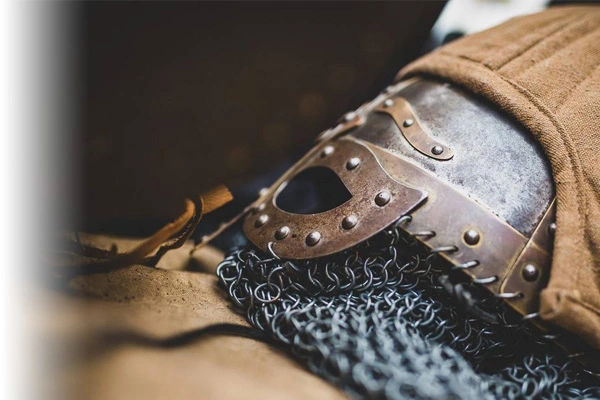
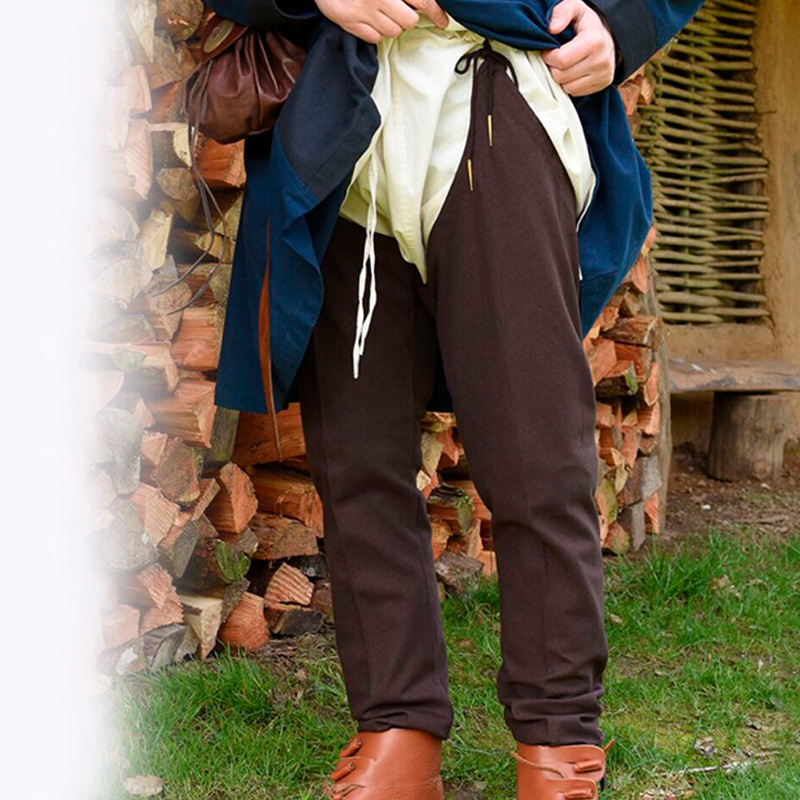
Nowadays, there is a wide range of products that replicate these medieval clothes. From authentic garments and accessories to detailed armour and weapons – everything a medieval heart desires is available.
But how did these customs come about? What drove people in the Middle Ages to organise such elaborate celebrations? To understand this, we need to take a look at the origins of carnival.
The origins of carnival
The origins of carnival go back a long way in history. In ancient times, various cultures already celebrated extravagant festivals at the end of winter. The Romans celebrated Saturnalia, a festival in honour of the god Saturn, during which normal social rules were suspended. Germanic tribes celebrated the end of winter and the beginning of spring. These medieval celebrations were full of costumes and the reversal of social norms, offering people a welcome respite from their hard everyday lives.
With the Christianisation of Europe, many of these pagan customs were incorporated into the Christian calendar of festivals. Before the 40 days of abstinence during Lent, Carnival offered a wonderful opportunity to celebrate once again. The 40 days of fasting served as preparation for Easter, the most important Christian festival. Thus, carnival became a festival of joy and abundance before the period of deprivation began.
Interestingly, costumes already played an important role in these early celebrations. People dressed up as gods, animals or mythical creatures. The preference for dressing up and leading a different life has survived to this day and is the central point of modern carnival. The type of costume played an important role in attracting attention and giving the costume an identity.
Development of carnival and medieval costumes
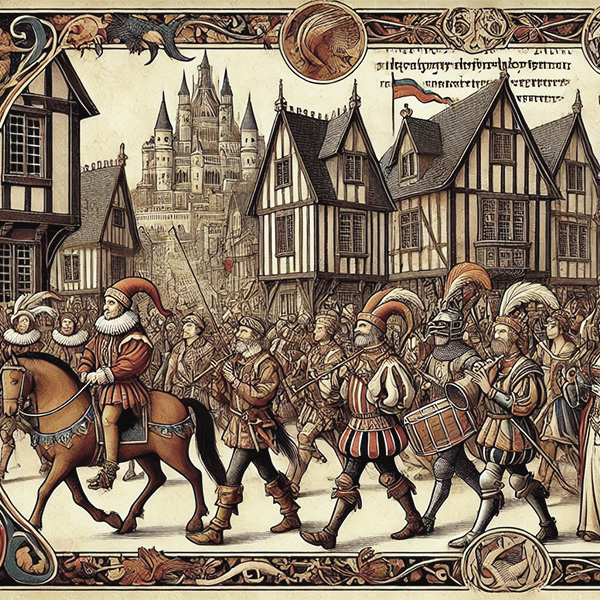
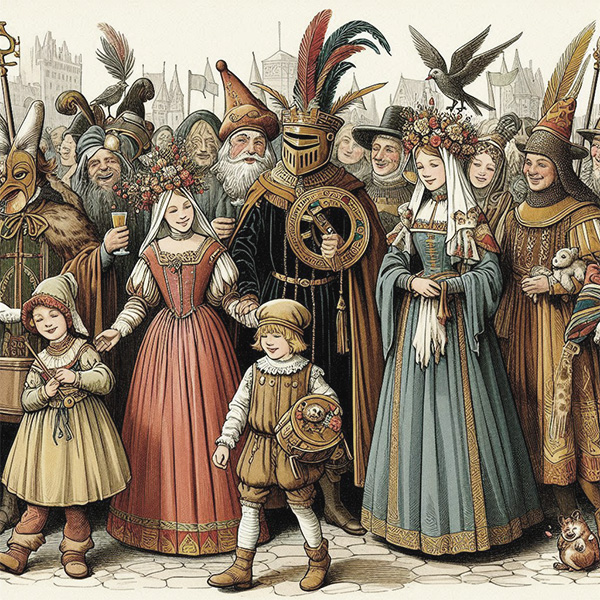
In the Middle Ages, carnival as we know it today began to take shape. The Church tolerated and integrated many of the folk customs as they supported the religious precepts of Lent. People used the carnival season to let off steam and celebrate extensively before Lent. In the towns and villages of the Middle Ages, carnival celebrations were often characterised by exaggeration and fun. It was a short period of time when social differences no longer applied. Peasants and ordinary citizens could dress up like nobles, and there were parades, masked balls and other celebrations. People enjoyed taking advantage of this rare opportunity to express their creativity and humour in a colourful and lively atmosphere.
Popular among the people were, for example:
- Kings
- Castle maidens
- Princesses
- Knights (knight costume)
Dressing up together offered an escape from everyday life and allowed people to be someone else for a short time. This tradition of dressing up has survived to this day and is an integral part of modern carnival celebrations.

Customs and traditions
The customs of medieval carnival were diverse and varied from region to region. One of the best-known traditions was dressing up. Masks and costumes played a central role, as they allowed people to be someone else for a day. These costumes could be humorous, grotesque or even frightening.
In many towns, people marched through the streets in processions accompanied by music, dancing and all kinds of pranks. These parades were intended to illustrate the battle between winter and spring. A straw doll representing winter was often burned at the end of the parade to drive out winter and welcome spring.
Before the start of Lent, stocks of meat, fat and sugar were used up, which led to lavish feasts. Pastries such as doughnuts and pancakes were particularly popular and are still typical carnival treats today.
Role of the Church
The Church played an ambivalent role in medieval carnival. On the one hand, it tolerated the celebrations because they prepared people for the coming Lent. On the other hand, it viewed the excesses and often crude jokes with scepticism. Preachers and clergy regularly warned of the moral dangers lurking in the exuberance of carnival.
Nevertheless, the Church also recognised the integrative power of carnival. Pagan customs were adopted and Christianised. The old customs were incorporated into the liturgical calendar, which gave the Church control over the celebrations. Many elements of carnival were given religious meanings, such as the expulsion of winter, which was now also portrayed as the victory of good over evil. Characters such as Robin Hood, known as courageous avengers of social justice, also found their place in the celebrations and contributed to the diversity of costumes. The Church was both the guardian of morality and the keeper of old traditions.

Regional differences

The way Carnival was celebrated was not uniform, but varied greatly from region to region. In parts of Switzerland, Germany and France – all Alemannic areas – the so-called "Alemannic Fastnacht" emerged. This Fastnacht was strongly influenced by pagan customs and included many ritual elements associated with the fertility of spring and the expulsion of winter. The parades and carnival masks in these regions were often wild and archaic. Figures such as the "fool" or the "witch doctor" appeared, symbolising the chaotic forces of winter.
In Italy, especially in Venice, carnival developed into a magnificent spectacle that became known far beyond the country's borders. Venetian masked balls were famous for their splendid and elegant celebrations and attracted visitors from all over Europe. The masks for the Venetian carnival were artfully crafted from leather, porcelain or papier-mâché. The masks not only concealed the identity of the wearer, but also bridged social boundaries. The Venetian carnival, as everywhere else, was a time of luxury and sensual pleasures, which stood in stark contrast to the upcoming Lent.
Spanish carnival, especially in Catalonia and Andalusia, was a colourful mixture of Christian and pagan elements. Animal masks and costumes representing ancient fertility rites were often worn. The processions were lively and loud, with lots of music and dancing. Particularly striking was the custom at the end of carnival: the "Entierro de la Sardina" (burial of the sardine). A symbolic act that marked the end of the carnival season and the transition to Lent.
In Nice, and France in general, carnival developed into one of the country's most important festivals. The carnival in Nice was famous for its flower parades, in which floats with elaborate floral decorations were paraded through the streets. This "Bataille de Fleurs" (flower battle) was a colourful spectacle, a feast for the senses.
Social significance
Carnival in the Middle Ages had an important social function. It not only offered people an opportunity for entertainment and fun, but also served as an outlet for expressing social tensions. At a time when life was mainly characterised by hard work and strict social hierarchies, carnival allowed for a reversal of the status quo. These jokes and socially critical behaviour had no consequences and were not considered subversive. The carnival celebrations were accepted as a necessary and legitimate outlet for society.
The communal celebrations strengthened social bonds and cohesion within the community. The customs and rituals, the communal celebrating and laughing created a sense of togetherness.
This is how a medieval day during carnival might have unfolded
Dawn: preparations and first celebrations
The day began early, as the villagers were already busy with preparations at sunrise. The streets were decorated, often with branches, ribbons and cloths. Men and women slipped into their homemade costumes and masks. People used their costumes to reverse their social status – peasants became nobles, respectable citizens became fools.
Morning: Parades and fool's games
During the morning, the villagers gathered in the market square or on the main street. This was often the starting point for the fools' parades, in which floats decorated with scenes from everyday life or mythology made their way through the village. These floats were designed by fixed groups who worked on them throughout the year. Typical and popular themes for the floats were mockery of the local authorities or church. Figures such as fools or the devil played a central role.
During the parade, drummers and pipers contributed to the exuberant atmosphere. There was singing and laughter. There was even confetti, made from dried leaves or ash. Girls and boys ran enthusiastically alongside the parade floats and collected small gifts or sweets distributed by the adults.
Midday: Feast and communal meal
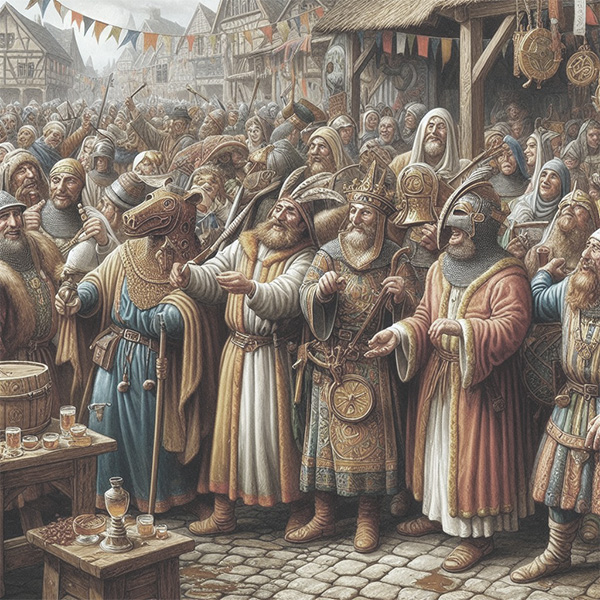
At lunchtime, most people returned for a large communal feast, either in the village hall or outdoors, weather permitting. The tables were laden with meat, bread, cheese, eggs and other delicacies that had to be avoided during Lent. Plenty of wine and beer was served, and people enjoyed the food to the full.
During the meal, travelling minstrels performed stories and songs. The meal was also often accompanied by humorous dialogues, jesters' jokes or jugglers to make those present laugh and lighten the mood.
Afternoon: games and competitions
Games and competitions were held in the afternoon. These ranged from sack races and tug-of-war to wrestling and fencing competitions. There were also eating contests and the traditional "cock plucking", in which a cockerel was hung from a pole and the participants, blindfolded, tried to grab it.
"Cat chasing", in which a cat was trapped in a barrel that was then smashed, was another medieval game played during carnival. These games, which often seem cruel to our modern sensibilities, were an expression of the medieval understanding of entertainment at the time.
Evening: dance and music
As darkness fell, the day ended with dancing and music. People danced, sang and celebrated by the light of torches and bonfires. Minstrels and minstrels provided musical entertainment, and couples danced exuberantly to the melodies of bagpipes, flutes and drums.
The dancing was often wild and unconventional, in contrast to the otherwise formal courtly dances.
Late night: rituals and farewells
The day often ended with symbolic rituals. A popular ritual was the burning of a straw doll representing winter or evil. The villagers gathered around the fire, sang songs and offered blessings for a good harvest and a happy year. They had left their everyday worries behind for a day and let off steam in the community before the strict period of fasting began.
You may also be interested in these articles: Medieval carnival costumes ;


