







For thousands of years, humans have drawn on the healing power of nature. From the earliest advanced civilisations in Babylon and Egypt, through the monastic medicine of the Middle Ages – where monks and nuns meticulously cultivated their knowledge of herbs and grew them in gardens – to modern phytotherapy, medicinal plants have remained an integral part of medicine. Whether as a tea for digestive problems, an ointment for skin issues or a standardised preparation from the chemist’s: herbal remedies offer you a variety of ways to relieve ailments.

What to expect in this article
- Key insights at a glance
- What are medicinal plants?
- History of medicinal plants – from Babylon to the modern era
- Medicinal plants today: phytotherapy and quality
- Legal aspects and myths surrounding medicinal plants
- 10 key medicinal plants profiled
- Medicinal plants worldwide and their cultural significance
- Using medicinal plants safely: dosage, quality, limitations
- FAQ – Frequently asked questions about medicinal plants
- Conclusion
 Reading time approx. 15 mins.
Key findings at a glance
- Modern phytotherapy uses standardised extracts in accordance with EMA and ESCOP monographs, whilst traditional home remedies usually employ whole parts of plants such as leaves, flowers or roots.
- Medicinal plants can be effective, but they can also cause side effects and interactions – the correct dosage, quality-assured products from a pharmacy and consultation with a doctor are crucial.
- In this article, you will find profiles of ten classic remedies such as St John’s wort (Hypericum perforatum), chamomile, valerian and nettle, with specific uses for sleep, digestion, skin and mental health.
- Historically, knowledge of medicinal plants ranges from the Ebers Papyrus through monastic medicine in the Middle Ages to the modern era with the isolation of pure active ingredients.
- The FAQ section at the end answers common questions about pregnancy, children, interactions and safe preparation.
What are medicinal plants?
When you talk about medicinal plants, you mean plants whose leaves, flowers, roots or seeds can be used internally or externally to alleviate and prevent ailments. The term covers a wide variety – from herbaceous species such as chamomile or sage to woody shrubs such as hawthorn.
The terms medicinal plant, medicinal herb and healing herb are often used interchangeably, but there are subtle differences:
| Term | Meaning |
|---|---|
| Medicinal plant | A useful plant whose parts are used for healing or relief |
| Medicinal plant | Medicinal plant of certified, standardised pharmaceutical quality |
| Medicinal herb | A colloquial term, often emphasising traditional use |
What makes medicinal plants special is their complex composition of various active ingredients. A herb contains not just one active ingredient, but a whole spectrum: essential oils, bitter compounds, tannins, flavonoids, alkaloids and more. These constituents often work together synergistically. For example, the antispasmodic effect of chamomile tea is based both on essential oils such as chamazulene and on flavonoids and mucilage.
An important basic principle applies here: the dose makes the poison. The same plant can have a healing or toxic effect depending on the quantity. Foxglove, for instance, historically provided important cardiac glycosides, but is far too dangerous to use as a home remedy today. You will usually encounter medicinal plants as tea, tincture, extract, oil, ointment or as a standardised ready-to-use medicine from the pharmacy – the form of administration often determines the efficacy and safety of use.
History of medicinal plants – from Babylon to the modern era

The history of herbal medicine dates back to the earliest advanced civilisations. As early as 2000 to 1500 BC, people in Babylon and Egypt were systematically using plants to treat illnesses. The famous Ebers Papyrus from Egypt, dating from around 1550 BC, contains over 700 recipes featuring plants such as garlic, aloe and myrrh – an impressive testament to early medical knowledge.
In antiquity, scholars further systematised this knowledge. In the 1st century AD, Dioscorides wrote his work *De materia medica*, which describes hundreds of plants and their effects and was regarded as the standard work for centuries. Galen further developed these findings and shaped European medicine well into the Middle Ages.
In the Middle Ages, monastic medicine played a central role. Monks and nuns preserved ancient knowledge and systematically cultivated medicinal herbs in their gardens – the St Gallen monastery plan from the year 820 already shows a detailed medicinal herb garden. Hildegard von Bingen (1098–1179) is the best-known example: in her works *Physica* and *Causae et Curae*, she described over 200 plants and their effects on body and soul. Medieval herbal knowledge was not a rigid legacy of antiquity, but was constantly expanded and adapted to local conditions.
At the same time, independent traditions developed elsewhere. In the Indian cultural sphere, Ayurveda emerged, featuring plants such as turmeric and ashwagandha. In China, Traditional Chinese Medicine took shape, with ginseng and astragalus as key remedies. Both systems regard medicinal plants as part of a holistic approach encompassing diet, lifestyle and energy flow.
The modern era marked a turning point: from the 19th century onwards, scientists began to isolate pure active compounds from plants. In 1804, Friedrich Wilhelm Sertürner isolated morphine from the opium poppy – the beginning of modern pharmacology. Yet despite this development, the use of whole medicinal plants remained an important component of medicine, particularly in modern phytotherapy.
Medicinal plants today: phytotherapy and quality
Modern phytotherapy means evidence-based herbal medicine. Unlike traditional folk medicine, it relies on clinical trials, standardised extracts and strict quality control in accordance with the European Pharmacopoeia. The aim is clear: reproducible efficacy and safety.
The active ingredient content of a plant depends on many factors:
- location and soil conditions
- Climate and sunlight
- Harvest time and time of day
- Drying method and storage
For this reason, the dried plant material – known as the ‘drug’ – is tested against strict criteria. In the case of chamomile flowers, for example, the essential oil content must meet a minimum standard before they are approved for medicinal use. You can obtain medicinal plants of this tested quality from a pharmacy; ready-made preparations such as St John’s wort capsules or valerian lozenges contain precisely defined amounts of active ingredients.
Alongside scientifically proven phytotherapy, traditional uses based on centuries of empirical knowledge continue to exist. Not all of these are supported by modern studies, but they can still be valuable. Some plants have been partially replaced by synthetic medicines – such as cardiac glycosides from foxglove – whilst others, such as milk thistle for liver conditions or psyllium for constipation, remain standard treatments.
International organisations such as the EMA (European Medicines Agency), ESCOP (European Scientific Cooperative on Phytotherapy) and the WHO publish monographs on herbal medicines. ESCOP has produced over 70 monographs on medicinal plants, summarising their efficacy, dosage and safety.
Legal aspects and myths surrounding medicinal plants
In the EU, Directive 2004/24/EC (THMPD – Traditional Herbal Medicinal Products Directive) primarily regulates the use of traditional herbal medicinal products. It offers a simplified registration process for medicinal plants that have been used safely for at least 30 years – of which at least 15 years must have been within the EU. This directive does not ban medicinal plants, but establishes quality and safety standards.
A persistent myth claims that medicinal herbs have been banned in the EU since 2011. This claim spread via petitions and chain emails, but is factually incorrect. The transition periods under the THMPD Directive ended in 2011 for certain products – but this did not mean a general ban. Many traditional preparations were re-registered, whilst others were classified as food supplements or foodstuffs. Professional associations such as the Hufeland Society for Integrative Medicine expressly warn against such manipulative campaigns.
For you as a user, the most important thing to remember in practice is:
- Distinguish between medicines and food supplements
- Read the package leaflet carefully
- If in doubt, seek medical advice
10 important medicinal plants profiled

Below, we present ten medicinal plants that are particularly well-known in German-speaking countries. For each plant, you will find information on its habitat, harvesting time, preparation and typical areas of application. This overview does not replace individual treatment advice – for serious or persistent symptoms, you should always consult a doctor or alternative practitioner.
1. Wormwood (Artemisia absinthium)
Wormwood is a silvery-green, strongly aromatic perennial with an intense scent and bitter taste. It has been valued in Europe as a stomach remedy since the Middle Ages – and was also a staple of apothecary gardens in medieval monasteries.
Habitat: Dry, sunny spots along roadsides, on scree slopes and in vineyards, particularly below 1,000 m above sea level in Central Europe.
Harvesting time: Leaves and flowering shoot tips from April to August. Harvest sparingly and with care, as bitter compounds and thujone can be problematic in high doses.
Preparation:
- Tea made from dried herb (steep only briefly due to the bitterness)
- Stomach bitters
- Use essential oil only under professional guidance
Typical uses: Indigestion, loss of appetite, bloating, mild cramps in the gastrointestinal tract, stimulation of bile and gastric juices.
Important: Do not use during pregnancy, while breastfeeding or on children. Avoid prolonged or high-dose use due to the thujone content.
2. Yarrow (Achillea millefolium)
Yarrow is a native meadow plant with feathery ‘thousand-leaf’ leaves and white to pink umbellate flowers. It has been known since ancient times as a herb for women and for treating wounds.
Habitat: Road verges, meadows, semi-arid grasslands and fallow land throughout the German-speaking world.
Harvesting time: Leaves from March to August, flowers from July to September. Choose clean locations away from roads.
Preparation:
- Tea made from leaves and flowers
- Fresh plant juice
- Yarrow baths or compresses
- Herbal vinegar
Effects and uses: Promotes bile flow, relieves cramps and stimulates the appetite. Taken internally for indigestion and mild menstrual discomfort; used externally for minor inflammations and blemished skin.
Note: Cross-reactions may occur in people with an allergy to the Asteraceae family (e.g. to mugwort or ragweed).
3. Valerian (Valeriana officinalis)
Valerian is a perennial herb with a tall, hollow stem and pinkish-white flower heads. It is characterised by the smell of its root, which some people find unpleasant.
Habitat: Damp meadows, stream and river banks, forest edges throughout Central Europe. Flowering season from May to August.
Part of the plant used: Primarily the rootstock, harvested and dried in autumn.
Preparation:
- Tea made from chopped root
- Tinctures
- Standardised dry extracts in coated tablets or capsules
- Often combined with lemon balm, passion flower or hops
Indications: Inner restlessness, nervousness, difficulty falling asleep and exam anxiety. The effect is rather gentle and builds up slowly with regular use.
Note: Daytime drowsiness is possible – do not try this immediately before driving. The full effect often only sets in after a few days of continuous use.
4. Ribwort plantain (Plantago lanceolata)
Ribwort plantain has narrow, lance-shaped leaves arranged in rosettes and inconspicuous brown spikes. It is a traditional remedy for coughs and wounds and can be found in almost any meadow.
Habitat: Dry meadows, roadsides, parks and gardens throughout Europe – a hardy, common plant.
Harvesting time: Leaves from June to October, preferably away from busy roads.
Preparation:
- Fresh plant sap
- Homemade cough syrup (with sugar or honey)
- Tea made from fresh or dried leaves
- Fresh, crushed leaves as a ‘first-aid plaster’ for minor wounds
Effects: Soothes irritated mucous membranes, mildly antibacterial and anti-inflammatory. Used for dry coughs, sore throats, minor injuries and insect bites.
Note: When making your own syrup, ensure clean working practices and a limited storage period. Always seek medical advice for festering wounds or severe inflammation.
5. Stinging nettle (Urtica dioica)
The stinging nettle is often mistaken for a weed, but is extremely rich in nutrients and active compounds. It can grow up to 1.5 m tall and is recognisable by its characteristic stinging hairs.
Habitat: Nitrogen-rich soils, e.g. near compost heaps, close to stables and along stream banks – widespread throughout the German-speaking world.
Harvesting time: Young leaves from March to July, seeds from July to October. Gloves recommended!
Preparation:
- Tea made from fresh or dried leaves
- Fresh plant juice and syrup
- Root as a tincture or tea
- Leaves as a vegetable (e.g. nettle spinach)
Effects: Blood-purifying and mildly diuretic, helpful for rheumatic complaints and mild urinary tract problems. The root is traditionally used for benign prostatic hyperplasia.
Note: Do not self-treat oedema resulting from heart or kidney disease with diuretic remedies – medical consultation is necessary.
6. Eyebright (Euphrasia officinalis)
Eyebright is a delicate meadow plant with small white-violet flowers. The name refers to its traditional use for eye complaints.
Habitat: Nourished meadows, heaths, mountain meadows and moors in Europe. Partially in decline due to intensive agriculture – therefore, do not over-harvest in the wild.
Harvesting time: Above-ground parts from July to October, only in uncontaminated locations.
Preparation:
- Tea for internal use
- Traditionally also used as eye compresses
- Homeopathically prepared remedies
Indications: As a supportive treatment for mild conjunctival irritation, tired, burning or watery eyes caused by computer work or pollen allergy.
Important note: Only use sterile ready-made preparations for self-administered eye washes. Never apply homemade teas directly to the eye – significant risk of infection and irritation!
7. St. John’s Wort (Hypericum perforatum)
St. John’s wort is a yellow-flowering plant with dotted leaves. When the flowers are crushed, a red pigment (hypericin) is released – a distinctive identifying feature.
Habitat: Sunny forest edges, embankments, rough pastures and roadsides throughout Central Europe. Flowering period approximately June to September, traditionally harvested around St John’s Day (24 June).
Parts used: Buds and inflorescences – fresh for red oil, dried for tea or tincture.
Preparation:
- St. John’s Wort oil by maceration in vegetable oil (e.g. olive oil)
- Tea
- Standardised extracts in tablets or capsules
Effect: Mood-lifting for mild to moderate depression, anxiolytic and nerve-strengthening. Meta-analyses show that standardised extracts can be as effective as synthetic antidepressants. Externally, anti-inflammatory and wound-healing.
Important warning: St. John’s wort has significant interactions with other medications. It affects certain enzymes (CYP450) and may reduce the effectiveness of the contraceptive pill, blood thinners and immunosuppressants. Increased skin sensitivity to light is also possible. Always seek medical advice before use.
8. Lady’s mantle (Alchemilla vulgaris)
Lady’s mantle has soft, fan-shaped leaves on which dewdrops collect in the morning. It has been valued for centuries as a traditional herb for women’s health.
Habitat: Meadows, forest edges and damp roadsides in Europe, particularly in the mid- and high mountains.
Harvesting time: Leaves from April to July, inflorescences from May to August.
Preparation:
- Herbal tea
- Tinctures and sitz baths
- Often combined with other women’s herbs such as yarrow or monk’s pepper
Indications: Supportive treatment for irregular cycles, mild menstrual cramps and during the menopause. For external use in cases of mild venous insufficiency and connective tissue weakness.
Note: In cases of heavy bleeding, infertility or severe hormonal imbalances, do not use as a stand-alone self-treatment – a medical diagnosis is necessary.
9. Chamomile (Matricaria chamomilla)
Chamomile is arguably the best-known medicinal plant of all. Its white ray florets and yellow disc florets, as well as its characteristic sweet, aromatic scent, are unmistakable. In medieval monastery gardens, it was one of the most widely used medicinal plants.
Habitat: Fields, meadows, roadsides and wasteland. You can recognise true chamomile by its hollow receptacle and distinct scent – in contrast to the odourless dog’s chamomile.
Harvesting time: Flower heads from May to August. Dry gently in a thin layer to preserve the essential oils.
Preparation:
- Tea and inhalations
- Rinses and sitz baths
- Oil macerates and ointments
- Standardised extracts in drops and capsules
Effects: Antispasmodic, anti-inflammatory and antibacterial. Used for gastrointestinal cramps, flatulence, mild menstrual discomfort, skin inflammation and irritation of the mucous membranes in the mouth and throat.
Note: Although generally well tolerated, reactions may occur in those with an allergy to composite flowers. Avoid hot steam baths if you have severe rosacea or sensitive blood vessels in the face.
10. Marigold (Calendula officinalis)
Calendula is a colourful garden plant with orange-yellow flowers. Documented in monastery gardens since the 12th century, it is now a versatile and tried-and-tested skin remedy.
Location: Prefers sunny, nutrient-rich soils. Often cultivated in gardens, but can also grow wild.
Harvesting time: Pick flowers regularly from June to October – harvest only fully bloomed, dry flowers.
Preparation:
- Ointments, creams and tinctures
- Aqueous extracts and tea
- Primarily for external use
Effects: Anti-inflammatory, promotes wound healing and has mild antibacterial properties. Use for minor cuts and grazes, minor burns (e.g. sunburn) and dry or chapped skin.
Note: Do not treat deep, heavily soiled or infected wounds with home remedies alone – medical attention is required in such cases.
Medicinal plants worldwide and their cultural significance
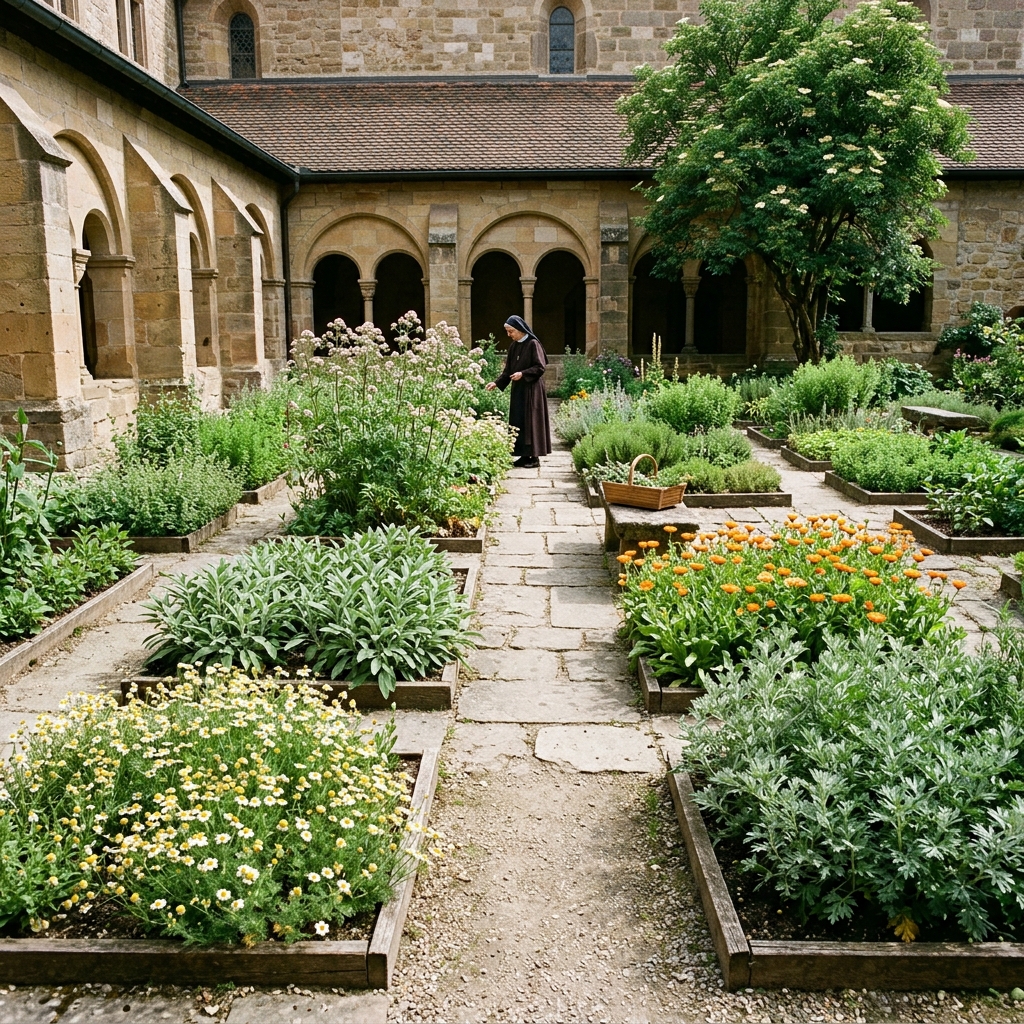
Almost every region of the world has developed its own traditions of medicinal plant use. From Central Europe and the Mediterranean region to China, India, Africa and Latin America, people have been using local plants for healing for thousands of years.
| Region / Tradition | Typical medicinal plants |
|---|---|
| Traditional Chinese Medicine | Ginseng, astragalus, chrysanthemum flowers |
| Ayurveda (India) | Turmeric, ashwagandha, neem |
| Africa | Aloe vera, Hoodia |
| South America | Mate, cinchona bark |
| Medieval monastic medicine (Europe) | Chamomile, valerian, lemon balm, marigold, sage |
Many of these plants are now found worldwide. Curcumin from turmeric is being studied for its role in inflammatory processes, whilst green tea is being investigated for cardiovascular prevention. Traditional knowledge is valuable – but should always be critically assessed against modern research and safety considerations.
Using medicinal plants safely: dosage, quality, limitations
‘Natural’ does not automatically mean ‘harmless’. Herbal remedies can also have side effects and interactions. Here are some practical tips for safe use:
Quality and origin
- Buy medicinal plants from a pharmacy or from certified manufacturers
- Ensure pharmacopoeia-grade quality for therapeutic use
- Follow the dosage recommendations in the package leaflet or from healthcare professionals
Important risk groups
- Pregnant and breastfeeding women
- Children, especially infants
- Older people
- People with liver, kidney or heart problems
- Anyone taking multiple medications
Typical interactions
- St. John’s wort with the contraceptive pill, blood thinners and immunosuppressants
- Ginkgo with blood-thinning agents
- Valerian with central nervous system depressants
Limits of self-medication – see a doctor immediately if you experience these symptoms
- High fever lasting more than 3 days
- Severe pain
- Blood in the stool or urine
- Acute shortness of breath
- Sudden onset of neurological symptoms
A practical tip: Keep a medicinal plant diary in which you note down your intake, symptoms and reactions. This is not only helpful for you, but also valuable for discussions with your doctor.
FAQ – Frequently asked questions about medicinal plants
Can I continue to use medicinal plants during pregnancy and while breastfeeding?
Particular caution is advised during pregnancy and while breastfeeding. Some medicinal plants can induce labour (e.g. sage or cinnamon in higher doses) or may pass into breast milk. Use only mild, well-researched plants in low doses – and always only after consulting your gynaecologist, midwife or paediatrician. You should avoid essential oils for internal use and high-dose tinctures wherever possible.
Which medicinal plants are suitable for children – and which are not?
For children, mild plants in low doses are generally the best option: fennel and chamomile for stomach ache, thyme for a cough, and lime blossom for a cold. Peppermint oil, menthol and some other essential oils can be dangerous for babies and young children – they can cause respiratory arrest or convulsions and should only be used on medical advice. If a child has a fever above 38.5 °C or is in a severely compromised general condition, always consult a paediatrician.
How can I tell the difference between poisonous lookalikes and medicinal plants when foraging?
You should only collect plants in the wild if you have a sound knowledge of botany. Mistaking them for poisonous plants can be life-threatening – for example, wild garlic for lily of the valley or autumn crocus. Only collect with a field guide or an experienced companion, and if in doubt, leave unknown plants alone. For beginners, buying certified medicinal plants from a pharmacy is much safer.
Is there a ‘best’ form: tea, tincture, capsules or ointment?
The ideal form of administration depends on the plant, the symptoms and personal preference. Tea is well suited for contact with mucous membranes (e.g. chamomile for gastrointestinal complaints), capsules offer precise dosing (e.g. St John’s wort for depression), and ointments are ideal for skin problems (e.g. calendula). Ask your pharmacist for advice on which form is best suited to your specific needs.
Where can I find reliable information and good advice on medicinal plants?
Good places to start are GP practices with a specialism in naturopathy, qualified phytotherapists, and pharmacies specialising in herbal medicine. When looking for information online, look for transparent sources, scientific evidence, clear authorship and details of when the information was last updated. If you’re unsure, always speak to a healthcare professional – this is more reliable than forums or social media.
Conclusion
Medicinal plants offer you a wide range of options for supporting your health naturally. From chamomile for digestive complaints to St John’s wort for low moods, a rich spectrum of nature is at your disposal – knowledge that people have developed from antiquity through medieval monastic medicine right up to the present day. But always remember: quality, correct dosage and, where necessary, medical advice are the keys to safe use. If you’d like to explore this further, a visit to a pharmacy or a naturopathic practice is the best first step.


