







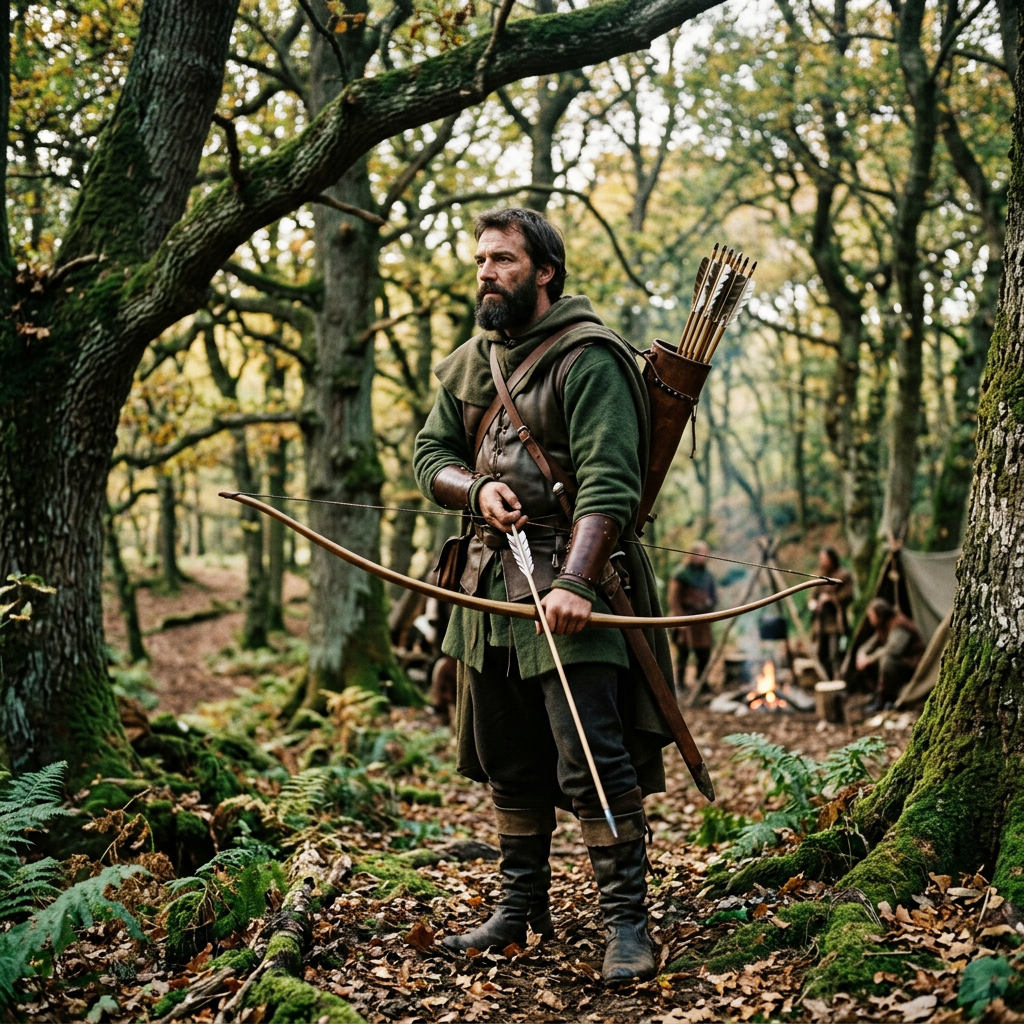
Robin Hood is one of the most famous figures in English folklore – an outlaw from Sherwood Forest who robs from the rich to help the poor, time and again evading the Sheriff of Nottingham. The legend is over 700 years old, and it still tells the same story today: one man against a system he considers unjust.
What to expect in this article
- The origins of the legend
- Possible historical roots
- From outlaw to folk hero: the evolution of the character
- The classic legend: plot and characters
- Robin Hood in film and television
- Robin Hood and the medieval scene
- Conclusion: Why the legend lives on
 Reading time approx. 7 mins.
What makes this character so enduringly fascinating? Where did he come from, how did he change – and what is the historical background? This article provides an overview.
Key facts at a glance:
- Robin Hood first appeared in the late 13th century as a nickname for outlaws – and in ballads of the 14th and 15th centuries as a literary figure.
- Early tales depict him as a dangerous robber, not a noble hero. His glorification came only later.
- Historical precursors are documented: Robert Hod (1225), Roger Godberd, Willelmi Robehod (1262).
- Maid Marian and Friar Tuck were only added to the legend in the 16th century through the May Games tradition.
- The connection to King Richard the Lionheart is a later invention – he plays hardly any role in the oldest ballads.
The origins of the legend
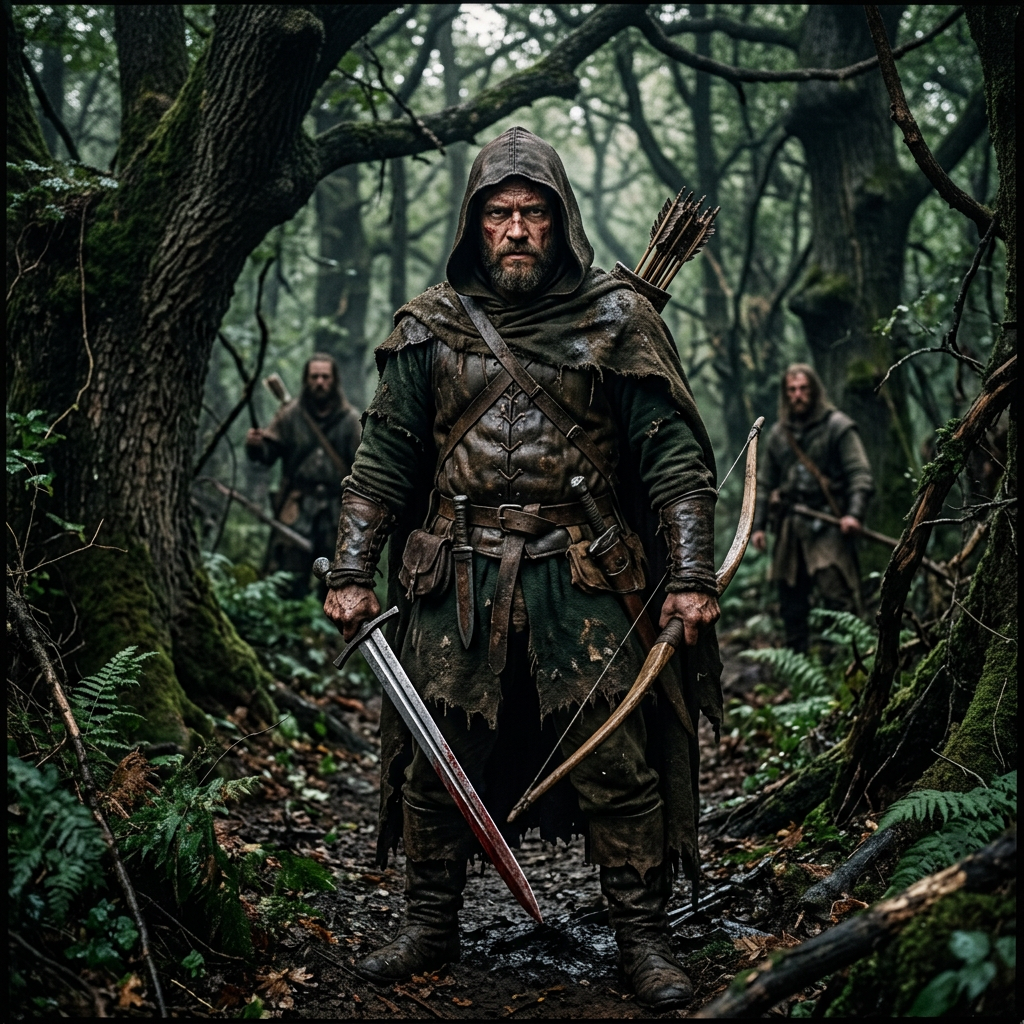
The figure of Robin Hood did not arise from a single text or event, but from a tradition of oral transmission. As early as the late 13th century, ‘Robin Hood’ was a common nickname for outlaws in England – as shown by court and administrative documents of the time. The name was so widespread that it virtually became a generic term.
The oldest surviving literary texts date from the 14th and early 15th centuries:
- Robin Hood and the Monk – c. 1450, one of the oldest surviving manuscripts
- A Gest of Robyn Hode – c. 1450–1510, the most comprehensive early collection of ballads
These early texts depict a different figure from the one familiar from films: Robin Hood is a tough, occasionally brutal outlaw who lives in Sherwood Forest and defies the authorities. The noble robber with a chivalrous code of honour – that came later.
The historical context explains why such figures became popular: the late Middle Ages were a time of massive social tension, in which the tax burden, the power of the Church and feudal arbitrariness shaped the lives of the common people. Outlaws who evaded the system easily became heroes in this environment.
Possible historical roots
Whether a real Robin Hood existed remains unclear to this day – and will likely remain so. Several historical figures may have served as models or namesakes:
| Name | Period | Context |
|---|---|---|
| Robert Hod | 1225/26 | Mentioned in court records in York as a fugitive |
| Willelmi Robehod | 1262 | Documented in Berkshire records as a member of a band of robbers |
| Roger Godberd | c. 1265–1272 | Outlaw and supporter of Simon de Montfort; parallels with the Robin Hood archetype |
Sherwood Forest had a real historical significance in this context: following the Norman Conquest in 1066, the area was declared a royal hunting forest. Anyone who hunted there without permission was breaking forest law – one of the most draconian legal regimes of the Middle Ages. The forest as a refuge for outlaws was therefore not a literary invention, but a lived reality.
From outlaw to folk hero: the development of the character
Early medieval ballads (14th–15th centuries)
In the earliest texts, Robin Hood is not a noble role model. He is rough, direct and fights the authorities with cunning and force – above all against the Sheriff of Nottingham, who embodies state repression. Little John and Will Scarlet appear as early companions. A courtly love story or a code of honour in the chivalric sense: absent.
Romanticisation and noble origins (16th–17th centuries)
From the 16th century onwards, the image changed fundamentally. Robin Hood was transformed into a dispossessed nobleman – someone who had been robbed of his rightful property through intrigue and who now demands justice as an outlaw. This reinterpretation gave the character a nobler aura and greater moral weight.
It was during this period that the best-known supporting characters were introduced: Friar Tuck (the fighting monk) and Maid Marian (Robin’s beloved) originally stemmed from the folk tradition of May Games – spring festivals in which Robin and Marian appeared as the May King and May Queen. Their integration into the Robin Hood legend was a process of cultural transfer, not an original component.
The Romantic idealisation (18th–19th centuries)
In the 19th century, with the Romantic movement and the emergence of national consciousness, Robin Hood became a symbolic figure of English freedom. Writers such as Sir Walter Scott took up the character and linked him to themes such as chivalry and national heritage. The image of the noble robber who fights for the poor and remains loyal to the king whilst taking on tyrannical representatives of the authorities became the canon here.
It was also during this period that the connection to King Richard I the Lionheart (1189–1199) and his brother Prince John as the antagonist became firmly established in the legend. In the oldest ballads, Richard plays hardly any role – this link is a later dramatic invention that provided the story with a historical framework.

The classic legend: plot and characters

In its best-known form today, the Robin Hood legend comprises the following core elements:
- Robin Hood lives with his band in Sherwood Forest and robs wealthy travellers, clergymen and government officials
- The spoils are – at least in the tradition – distributed to the poor
- The Sheriff of Nottingham is the main antagonist: a symbol of state tyranny and corruption
- Robin is loyal to King Richard I and fights against the misrule of his brother, Prince John
- The love story with Maid Marian gives the legend a personal, romantic dimension
The Merry Men
Robin Hood’s companions – the Merry Men – are integral parts of the legend and each have their own distinct role:
- Little John – Robin’s closest confidant and the strongest fighter; appears as early as the oldest ballads
- Will Scarlet – also attested early on, Robin’s cousin in some versions
- Friar Tuck – the fighting monk, an integral part of the legend from the 16th century onwards; embodies an ironic fusion of the clergy and lawlessness
- Much the Miller’s Son – one of the oldest companions mentioned in the ballads
Maid Marian
Maid Marian is not a Merry Man – she is Robin’s lover and, in later versions, a character in her own right. Originally stemming from the May Games tradition, she developed into a courageous ally who supports Robin in his battles. The love story between the two is the emotional centre of the newer versions of the legend.
Nottingham Castle
The Sheriff’s castle is more than just a backdrop – it is the symbol of the state authority against which Robin Hood fights. Historically, Nottingham Castle was a significant Norman fortress that actually played an important role in the power struggles of the English Middle Ages.
Robin Hood in Film and Television
No other figure from medieval legend has been adapted for the screen more frequently. Each adaptation reflects the cultural values of the era in which it was created:
| Decade | Notable adaptation | Defining tone |
|---|---|---|
| 1920s | Robin Hood (1922, silent film, Douglas Fairbanks) | Heroic, spectacular, romantic |
| 1930s | The Adventures of Robin Hood (1938, Errol Flynn) | Classic adventure, colourful |
| 1950s–60s | The Adventures of Robin Hood (TV series, 1955–1960) | Family-friendly, episodic |
| 1970s | Robin Hood (Disney animation, 1973) | Humorous, for children |
| 1980s | Robin of Sherwood (ITV, 1984–1986) | Mystical, dark, folkloric |
| 1990s | Robin Hood: Prince of Thieves (1991); Robin Hood: Men in Tights (1993) | Blockbuster action; parody |
| 2000s–2010s | Robin Hood (BBC series, 2006–2009); Robin Hood (Ridley Scott, 2010) | Realistic, political, historical |
A recurring theme across all adaptations: the fundamental tension between the individual and the system, between justice and the law. Depending on the era, the focus shifts between a thirst for adventure, a political message or a romantic love story – but the character remains recognisable.

Robin Hood and the medieval scene
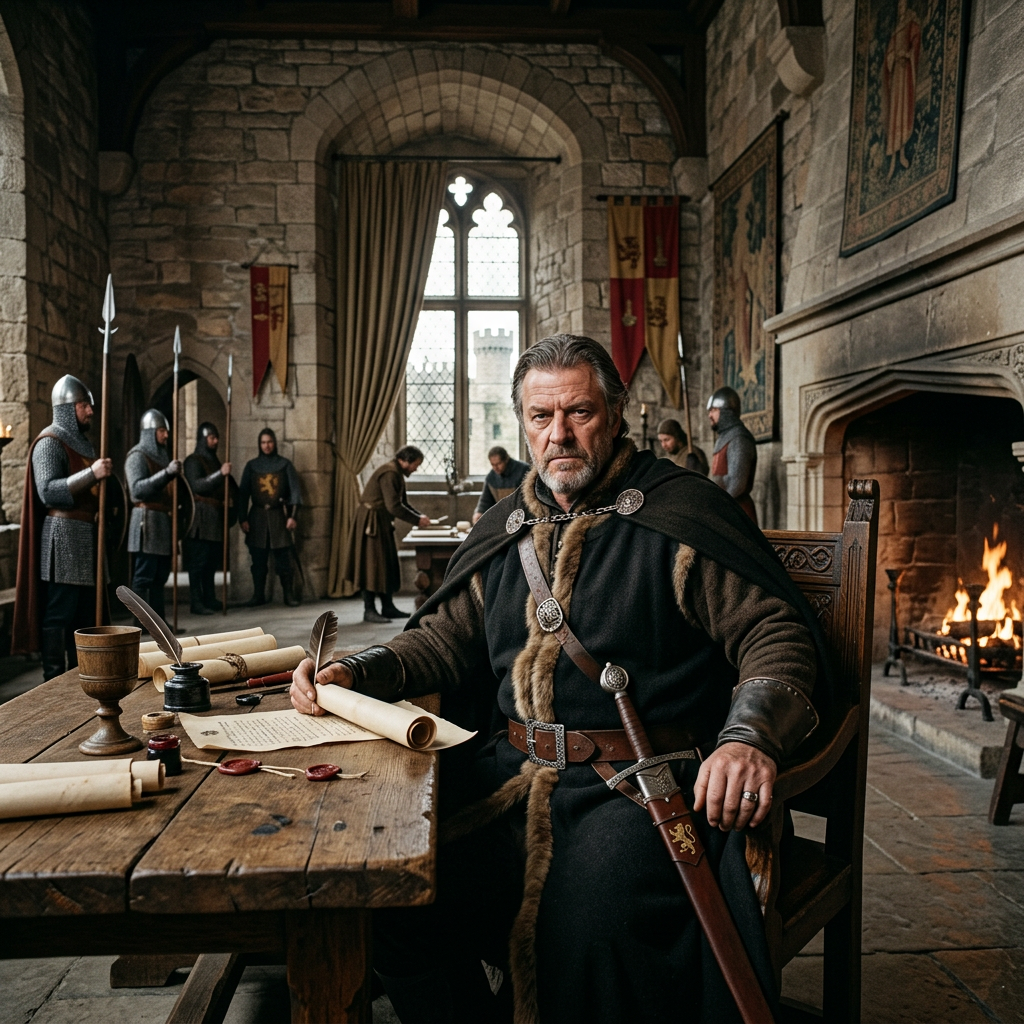
Robin Hood is a rewarding theme for LARP, re-enactment and medieval markets – and at the same time a prime example of how legend and history intertwine. Anyone playing an outlaw from the English High Middle Ages moves within a clearly defined world: forest law, the feudal system, corruption among local officials, the contrast between the Norman nobility and the Anglo-Saxon population.
Knowledge of the historical background – forest law, the May Games, the social tensions of the 13th century – makes a Robin Hood character deeper and more credible than the film version. And the right attire does the rest: at vehi-mercatus you’ll find clothing and accessories that suit the character of the medieval outlaw.
Conclusion: Why the legend lives on
Robin Hood began as a nickname for criminals, became a ballad figure, then a noble robber, then a romantic hero, then a film star. Every generation has reinterpreted him – and in doing so sought the same thing: a story about what happens when law and justice fall apart.
That is what makes him timeless. Not the archery, not the green cloak – but the question of whether a person has the right to stand up against injustice, even if that injustice is legal.


