









How a king under pressure laid the foundations for modern civil liberties in 1215 – without meaning to
📌 At a glance: The Magna Carta was sealed at Runnymede on 15 June 1215. It comprised 63 articles in Latin, was primarily addressed to the English nobility and the Church, and was declared invalid by the Pope a few weeks later. Its long-term impact only became apparent centuries later.
| Date | Place | Ruler |
|---|---|---|
| 15 June 1215 | Runnymede (near Windsor, on the River Thames) | King John Lackland |

What you can expect from this article
- A document that nobody really wanted – and that changed everything
- 1. How it came about: England before 1215
- 2. King John Lackland: How to bring a rebellion upon oneself
- 3. Runnymede: What really happened on that day
- 4. What is in the Magna Carta – and what isn’t
- 5. Repealed, re-enacted, confirmed: the eventful history that followed
- 6. How a feudal document became a symbol of freedom
- 7. What remains of it – and where you can see it today
- 8. Magna Carta and modern human rights: What is true, what is not
- 9. Frequently asked questions about the Magna Carta
- Conclusion: A document that became greater than its creators
 Reading time approx. 13 mins.
A document that nobody really wanted – and that changed everything
There are moments in history that turned out quite differently from what those involved had imagined. 15 June 1215 on the meadows of Runnymede on the River Thames is one such moment. On that day, King John sealed a document making significant concessions to his barons. He did not do so out of conviction. He did it because he had no other choice.
What emerged was not a human rights document – that would be a legend which, whilst fitting for the Magna Carta, is historically inaccurate. It was a peace treaty between a king under pressure and his rebellious barons. A medieval compromise document that primarily protected the nobility, the Church and certain landowners. Ordinary peasants were scarcely mentioned in it.
And yet, this document is today one of the most influential legal texts in the Western world. Not because of what it was – but because of what later generations made of it. This article explains how this came about.
1. How it came about: England before 1215

To understand why an English king went out to a meadow in 1215 and agreed to a charter there that limited his power, one must start some 150 years earlier.
1066: The Norman Conquest changes everything
When William the Conqueror triumphed at the Battle of Hastings, he almost entirely replaced England’s Anglo-Saxon nobility with Norman feudal lords. He introduced a strict feudal system in which all lands belonged to the king and nobles held their estates only as fiefs. This was efficient – and created lasting tension between the Crown and the barons.
1100: Henry I makes an initial concession
At his coronation in 1100, Henry I issued a Charter of Liberties. In it, he promised to respect certain privileges of the nobility and to limit arbitrary taxation. The document had little practical effect – but it existed. And a century later, the barons would pull it out of the drawer and say: Look, a king promised this. We want it in writing now.
1135 to 1154: Chaos strengthens the nobility
The civil war between Stephen of Blois and Empress Matilda – known as The Anarchy – severely weakened the crown. Barons exploited the chaos, built their own castles and gathered troops. The nobility’s self-confidence grew. The idea that a king could not simply do as he pleased became a tangible reality during this period.
1154 to 1189: Henry II establishes the rule of law – and thereby creates tools for future opponents
Henry II was a reformer. He expanded the royal courts, developed the common law and centralised the administration. This was good for order and efficiency – but it also gave the king more instruments of control. Paradoxically, he thereby created precisely the legal tools with which barons could later assert their own rights with precision.
2. King John Lackland: How to bring a rebellion upon oneself
John Lackland – brother of Richard the Lionheart, King from 1199 to 1216 – does not have a good reputation in history. That is not entirely fair, but neither is it entirely undeserved. He reigned at a time when almost everything that could go wrong did go wrong. Sometimes through bad luck, sometimes through his own mistakes.
The military defeats
John inherited an Angevin empire stretching from Scotland to the Pyrenees. In 1204, he lost Normandy to the French King Philip II. The crushing defeat at Bouvines in 1214 put an end to any attempt to recapture the mainland possessions. These failures not only undermined John’s reputation – they also raised the question of why people were paying such high taxes in the first place.
The financial methods
To finance his costly campaigns, John tapped into every source he could reach. He levied scutage, the shield money, more frequently and at a higher rate than any king before him. He demanded exorbitant inheritance taxes and squeezed money out of towns and barons. What made him particularly unpopular was that it was often arbitrary. One never knew what was coming next.
The church dispute
As if that were not enough, he also fell out with the Pope. The dispute over the appointment of the Archbishop of Canterbury escalated in 1208 into an interdict over the whole of England – meaning: no masses, no baptisms, no funerals. In 1209, John was excommunicated. In 1213, he submitted to the Pope, recognised him as his liege lord and paid an annual tribute. A humiliation that sent his reputation plummeting.
The barons react
From 1214 onwards, the barons organised themselves openly. In May 1215, rebel forces captured London – that was the decisive move. Without a capital, there was no control. John had no choice but to negotiate. The barons demanded a written guarantee of their rights. The result of these negotiations was the Magna Carta.
💡 Note: The rebelling barons were not heroes of freedom. They fought for their own privileges, not for the people. The fact that principles were formulated in the process which later benefited everyone was an unplanned side effect.
3. Runnymede: What really happened on that day
The meadow at Runnymede on the Thames, between London and Windsor, was not a place laden with symbolism. It was neutral – that was the crucial point. Here, negotiations could take place without one side being on the other’s territory.
The Articles of the Barons
The barons did not arrive empty-handed. They had prepared their demands in writing: the so-called Articles of the Barons. This catalogue contained demands for limits on royal arbitrariness, protection against excessive levies and guarantees of due process. It served as the basis for negotiations.
Archbishop Stephen Langton as the key
Archbishop Stephen Langton of Canterbury is an often underestimated figure. He acted as a mediator between the two sides, was familiar with Henry I’s Charter of Liberties, and used it as a historical basis for legitimacy. Without his legal drafting work, the document would have been less precise.
The seal, not the signature
One detail that is often misunderstood: John did not sign it. In the Middle Ages, the wax seal was the legally valid sign of consent – and that is what he affixed. Several identical copies were produced and sent to bishops and sheriffs throughout the country so that they could be read out in public. The aim was for as many people as possible to know what the king had promised.

4. What is in the Magna Carta – and what is not
The original Magna Carta of 1215 consisted of 63 clauses in Latin. They covered a wide range of issues: feudal dues, jurisdiction, ecclesiastical freedoms, municipal privileges, and the protection of widows and heirs. Much of it was highly specific and dry reading for the modern reader. But two articles stand out.
⚠️ What is not in the Magna Carta: Universal human rights. Protection for serfs and peasants. Democratic participation. All of this came later – and was retrospectively linked to the Magna Carta. That is its legend, not its content.
Article 39: The beginning of Habeas Corpus
“No free man shall be arrested, deprived of his property, banished or otherwise harmed, except by the lawful judgement of his peers and according to the law of the land.”
That is Article 39. For the 13th century, this was revolutionary. No king may simply lock someone up because he has decided to do so. A legal process is required. This principle is the direct precursor to Habeas Corpus.
Article 40: No right for sale
“We will not sell justice or equity to anyone, nor deny or delay it to anyone.”
That was Article 40 – a direct response to John’s established practice of manipulating court rulings in exchange for payment. Short and clear: justice is not a commodity.
The Committee of 25 Barons – the extraordinary clause
Article 61 was the most extraordinary provision: a committee of 25 barons was to oversee compliance with the Magna Carta. In the event of serious breaches by the king, this committee was authorised to take coercive measures in conjunction with the rest of the realm – including the seizure of royal castles and estates.
This was effectively a legalised clause of resistance. No wonder Pope Innocent III declared the charter invalid a few weeks later. And no wonder that Article 61 was deleted without replacement in all subsequent versions.
5. Repealed, re-enacted, confirmed: the eventful history that followed

The Magna Carta of 1215 had a short shelf life. Just a few weeks after it was sealed, it had already been declared invalid. The fact that it survived nonetheless is down to a series of coincidences and political decisions.
The Pope declares it invalid – and triggers civil war
In August 1215, John sought the support of Pope Innocent III. The Pope declared the Magna Carta to be shameful and unlawful, as it undermined royal authority. The result: the First Barons’ War, in which the barons even invited the French prince Louis to be their rival king. England was once again in chaos.
John’s death saves the charter
John died in October 1216 – in the midst of the civil war. His successor was Henry III, a nine-year-old child. Regent William Marshal – a celebrated knight and one of the most respected men in England – realised that peace was only possible if the barons were brought on board. In 1216, he had a shortened version of the Magna Carta redrafted. Article 61, concerning the barons’ committee, was omitted.
The 1225 version became the legal basis for all subsequent confirmations. Crucially, it emphasised that the king had issued the charter voluntarily – not under duress. That may sound like a minor detail, but it was vital for its legal validity.
| Year | Event |
|---|---|
| 1216 | First revision under Henry III (a minor, under regency) |
| 1217 | Revision and separation of the Charter of the Forest |
| 1225 | Final version under Henry III, now of age |
| 1297 | Confirmation by Edward I (Confirmatio Cartarum) – still the legal basis today |
6. How a feudal document became a symbol of freedom
The true history of the Magna Carta does not begin in 1215, but in the 16th and 17th centuries. English lawyers rediscovered the document – and gave it an interpretation that went far beyond its original meaning.
Sir Edward Coke: The man who created the legend
Sir Edward Coke, one of the most influential legal scholars of the 17th century, interpreted the Magna Carta as proof of ancient English rights of liberty. He argued that these rights predated the king – the king had not granted them, he had merely confirmed them. This was a momentous reinterpretation. Historically, it does not stand up to close scrutiny, but politically it unleashed enormous power.
The major successor documents
- Petition of Right (1628): Affirmed rights against arbitrary arrest and taxation without parliamentary consent
- Habeas Corpus Act (1679): Codified protection against arbitrary detention – building directly on Article 39
- Bill of Rights (1689): Established the rights of Parliament vis-à-vis the Crown and limited royal prerogatives
Impact beyond England
The American Founding Fathers were familiar with the Magna Carta. The Declaration of Independence of 1776, the US Constitution of 1787, the American Bill of Rights – all of these embody the same spirit. Many modern constitutions worldwide refer directly or indirectly to the principles formulated at Runnymede in 1215.
7. What remains of it – and where it can be seen today
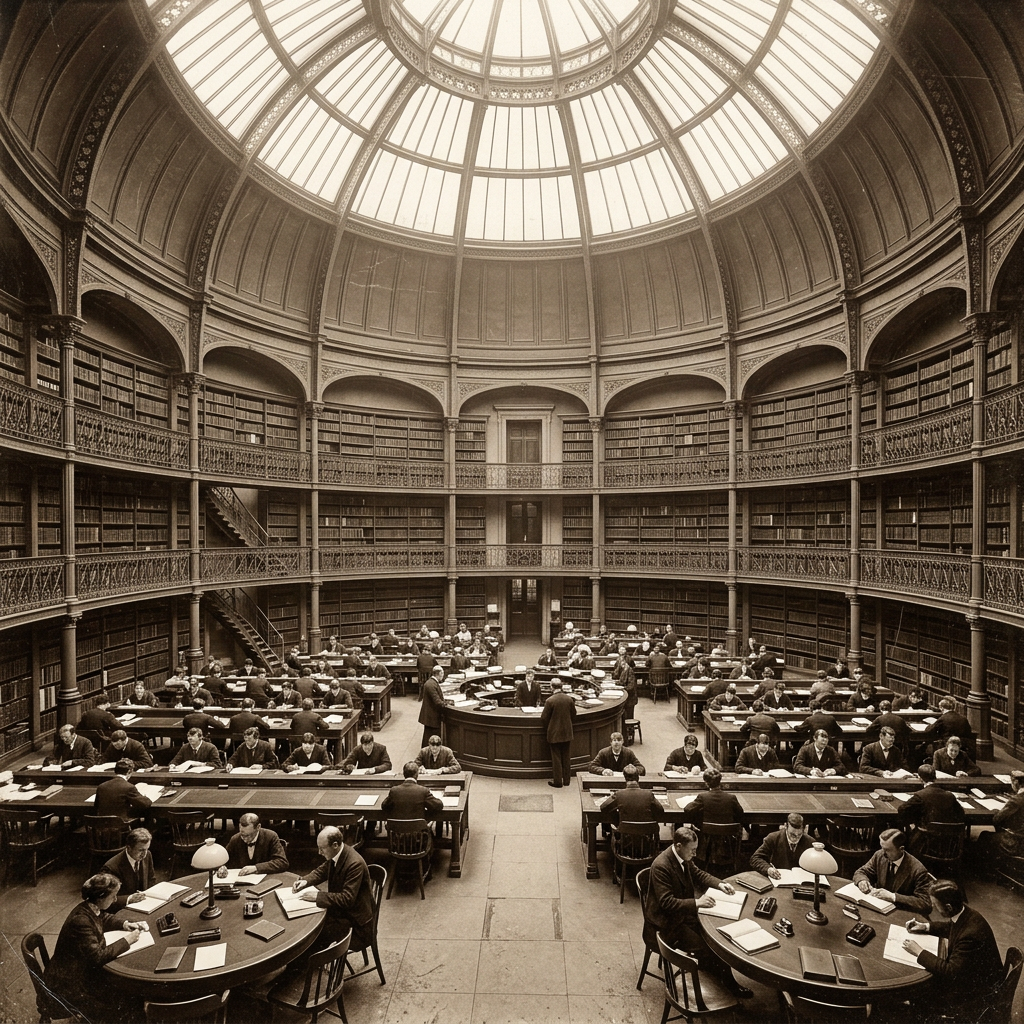
More than 800 years later, four copies of the original 1215 edition have survived. Each is a precious historical artefact and is carefully preserved.
Interesting fact: Researchers identified another copy of the 1300 edition in the archives of Harvard Law School. Using spectral imaging, it was proven to be an original – previously, it had been considered a worthless copy.
| Location | Number of copies |
|---|---|
| British Library, London | 2 |
| Salisbury Cathedral | 1 |
| Lincoln Cathedral | 1 |
What still applies in law
In England and Wales, only a few clauses remain formally in force: the protection of the freedom of the Church, certain privileges of the City of London and general guarantees of liberty. Most of the detailed medieval regulations – feudal dues, forest rights – have long since been superseded by later laws. Legally, their impact is minimal. Symbolically, it is enormous.
Where to see the originals
The British Library in London regularly displays its two copies. Salisbury and Lincoln Cathedrals also offer access, often with explanations and accompanying material. If you wish to see one of the originals, check the institutions’ websites before visiting – exhibition times may vary.
8. Magna Carta and modern human rights: What is true, what is not
To describe the Magna Carta as the birth certificate of human rights is an appealing simplification. It is not wrong – but it needs clarifying.
What is true: Articles 39 and 40 set out principles that recur in modern legal documents. The European Convention on Human Rights guarantees the right to liberty (Article 5) and the right to a fair trial (Article 6). The line of thought is clear.
What is not true: The Magna Carta was not a universal document. It protected a small elite – the nobility, the Church, and free landowners. Serfs and ordinary peasants were scarcely mentioned in it. The leap from feudal noble privileges to universal human rights was a process spanning centuries. The Magna Carta marks the beginning – but only the beginning.
⚖️ The crucial difference: Today’s human rights apply to all people, regardless of status, origin or wealth. The Magna Carta applied to only a few. The fact that its principles were later universalised is what is truly remarkable – not the document itself.
💡 For LARP and re-enactment: The Magna Carta is a fascinating backdrop for medieval events. A character speaking of baronial rights, a royal bailiff collecting taxes, a clergyman insisting on ecclesiastical freedoms – all of this has a historically documented resonance. The tensions between the Crown, the nobility and the Church that led to the Magna Carta are perfect material for a convention setting.

9. Frequently asked questions about the Magna Carta
What exactly does the name mean?
Magna Carta comes from Latin and literally means ‘Great Charter’ or ‘Great Charter of Liberties’. The full name is Magna Carta Libertatum – Great Charter of Liberties. The name distinguished it from shorter documents, in particular the Charter of the Forest, which was separated as a standalone document in 1217. The alternative spelling Magna Charta is also in common use.
Who drafted the text?
Not John himself. The text was drafted by royal and ecclesiastical scribes, based on negotiations between the parties. Archbishop Stephen Langton played a key role: he was familiar with older legal sources, assisted with the legal drafting and acted as a mediator. The barons submitted their demands as the Articles of the Barons. It was a collaborative effort – medieval teamwork under immense pressure.
Did the Magna Carta also apply to ordinary peasants?
Hardly. Most of the clauses protected the high nobility, the Church and certain free landowners. Serfs remained heavily dependent on their landlords and benefited almost not at all from the guarantees. It was only later interpretations – particularly in the 16th and 17th centuries – that extended the term ‘free man’ to broader sections of the population. This was a reinterpretation, not an implementation of the original text.
Which parts are still valid today?
In England and Wales, only a few clauses remain: protection of religious freedom, certain rights of the City of London, and general guarantees of liberty. The Confirmation of 1297 forms the legal basis. Most medieval regulations have long since been superseded by later laws. Legally: minimal impact. Historically and symbolically: enormous.
Can the originals be seen today?
Yes. Four copies of the 1215 edition survive: two in the British Library in London, one in Salisbury Cathedral, and one in Lincoln Cathedral. All are regularly accessible to the public or on display in special exhibitions. Check the website of the relevant institution before visiting – opening times and access may vary.
Conclusion: A document that became greater than its creators
The Magna Carta arose out of necessity, pressure and mutual mistrust. No one involved on 15 June 1215 set out to make history. John wanted to buy time. The barons wanted to secure their privileges. What emerged was a medieval compromise – one that was overturned again just a few weeks later.
The fact that this document became a symbol of the rule of law, the separation of powers and the protection of the individual against state arbitrariness is what is truly astonishing. It shows that historical significance often does not arise at the moment of its creation, but in the way subsequent generations take up and reinterpret a legacy.


